Accident Towing: What to Do and Who to Call After a Car Crash
Accident Towing: What to Do and Who to Call After a Car Crash
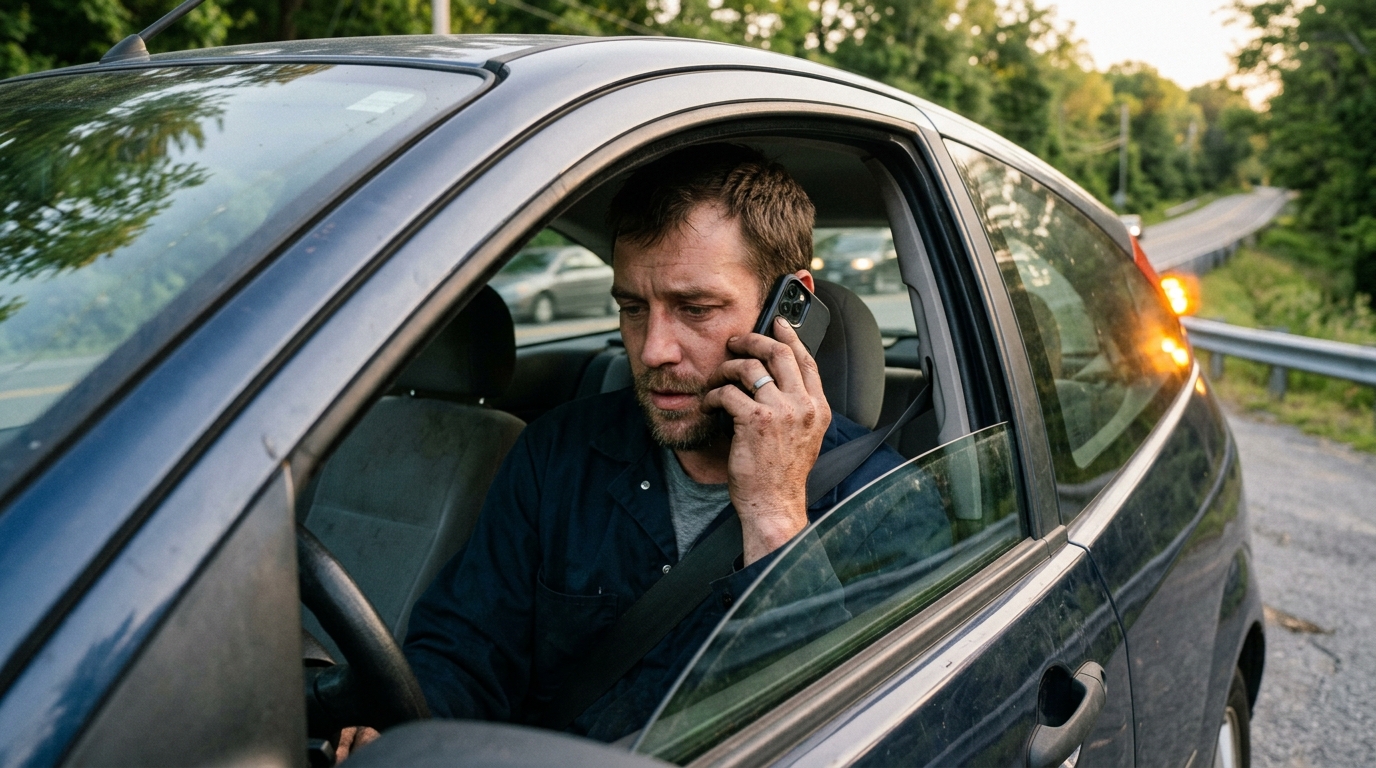
There's a specific kind of panic that hits right after a collision. Your hands are shaking, traffic is still moving around you, and somewhere in the middle of checking if everyone is okay, you realize your car isn't drivable anymore. This is a different situation than a dead battery or a flat tire on the highway. Accident towing involves police, insurance, sometimes injuries, and a car that may have structural damage you can't fully see. If you've searched "accident car towing near me," you're not just looking for a tow, you're looking for someone who knows how to handle a scene like this correctly.
This guide walks through what actually needs to happen after a crash, what a proper accident towing company does differently, and how to make sure your vehicle and your claim are both protected.
The First Few Minutes Matter More Than You Think
Before towing even enters the picture, safety comes first. If you're able to, move to the shoulder or a safe area away from traffic, turn on your hazards, and check on everyone involved. Call 911 if there are injuries or if the vehicles are blocking a lane. Once the police have been notified and a report is being filed, that's when you start thinking about getting the car off the road. Many drivers don't realize that in Illinois, if a vehicle is disabled and blocking traffic, it may be towed by whoever the responding officer calls first unless you specify a preferred company. This is why having a number saved ahead of time, before you ever need it, actually matters.
Why Accident Towing Is Not the Same as a Regular Tow
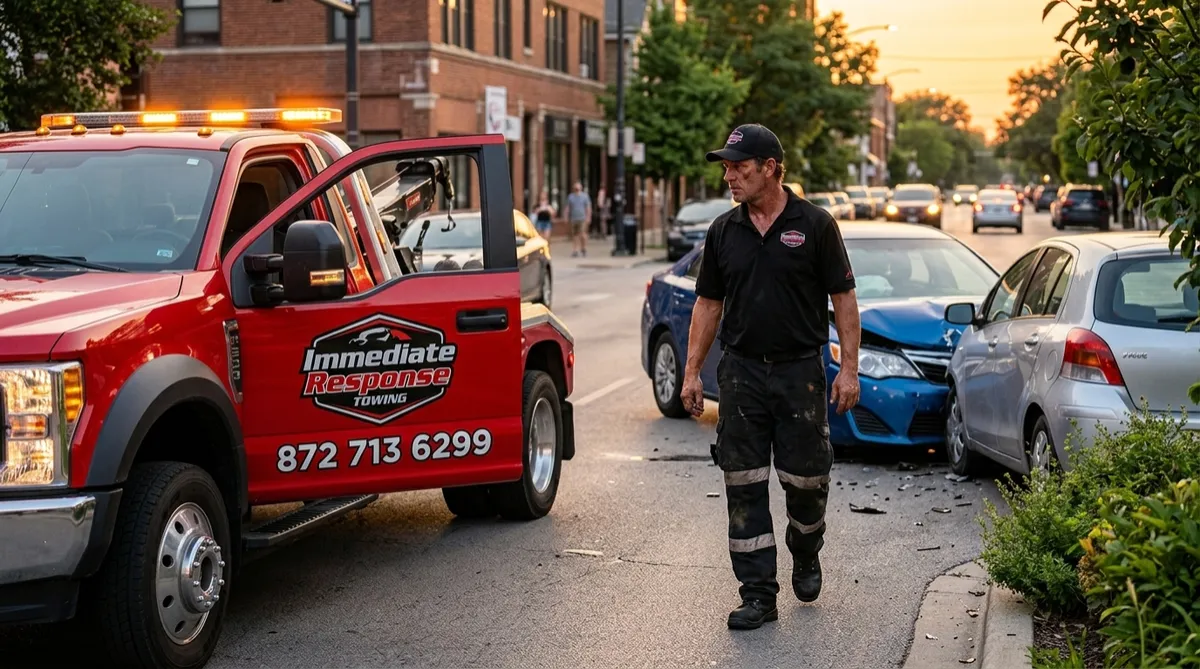
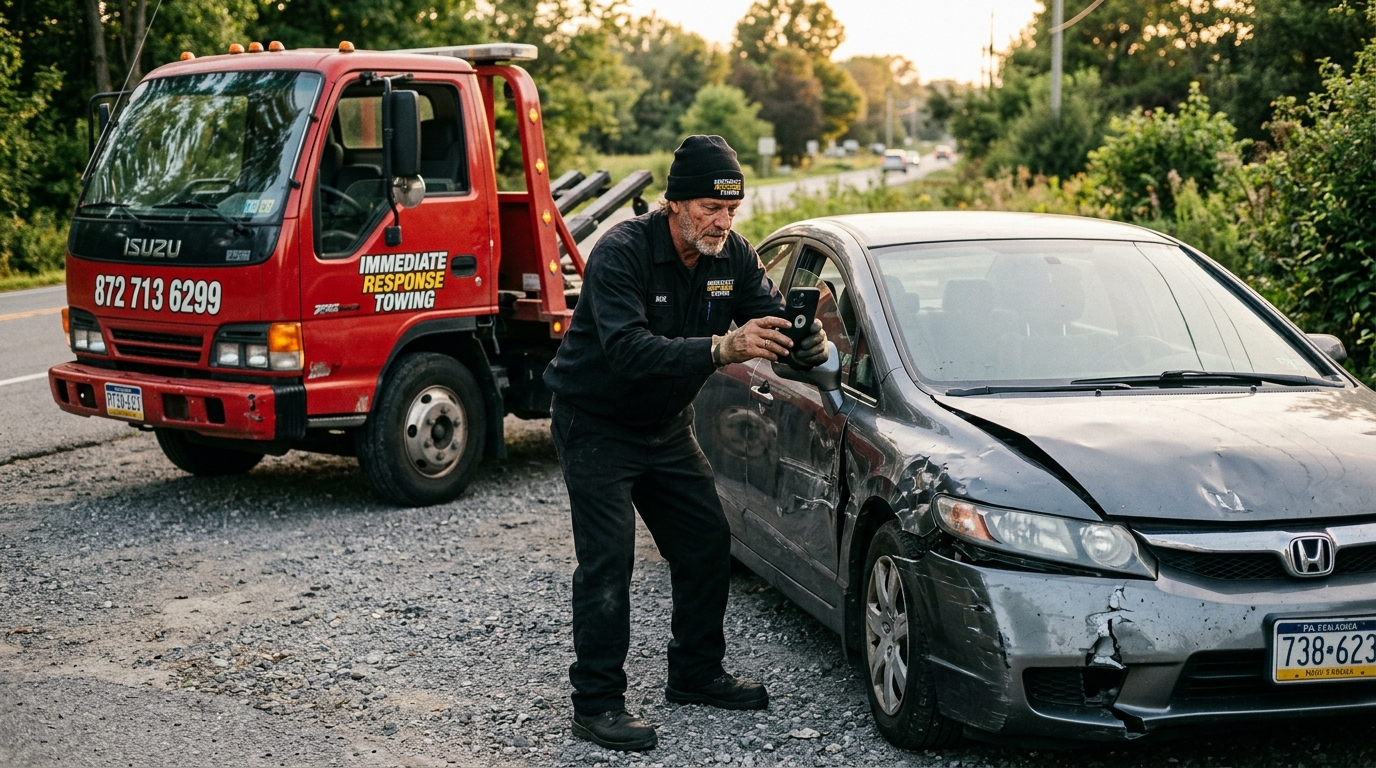
A standard breakdown tow is fairly simple. The car isn't starting, it gets hooked up, it goes to a shop. Accident towing has more moving parts. The vehicle may have a bent frame, a locked steering column, leaking fluids, or debris that needs to be handled carefully so it doesn't create a hazard for other drivers. A trained accident towing crew inspects the vehicle before loading it, documents visible damage with photos for your records, and uses a flatbed in almost every case since a car with unknown structural issues should never be pulled by its wheels. This documentation step is one of the biggest differences between an accident tow and a routine one, and it's something worth asking about when you call.
What a Good Accident Towing Service Should Offer
When you're comparing accident towing services, a few things separate a company that handles this well from one that's just trying to get a truck out the door. Clear communication about where your car is being taken matters, since after an accident you're not always in a position to decide on the spot. The ability to work directly with your insurance company on documentation is another sign of experience, since accident tows often need paperwork that a regular tow doesn't. Storage options matter too, since your car may need to sit at a secure lot while your claim is processed rather than heading straight to a repair shop. A dispatcher who asks the right questions, like whether the car is driveable at all, whether airbags deployed, and where police want it moved to, is doing the job the way it should be done.
Finding an Accident Towing Company Near You
Searching "accident towing company near me" in the middle of a stressful moment isn't ideal, which is why it helps to know what to look for before you're in that position. Response time is critical since a disabled vehicle sitting in a lane is a hazard to everyone else on the road. Proper equipment matters, specifically flatbed trucks rather than hook and chain setups, since accident vehicles need to be handled gently. Licensing and insurance on the towing company's end protects you too, since you want to know your already damaged vehicle is in responsible hands during transport. You can connect with a dispatcher through Immediate Response Towing Chicago any time you need a straightforward answer on availability and next steps after a crash.
Working With Insurance After an Accident Tow
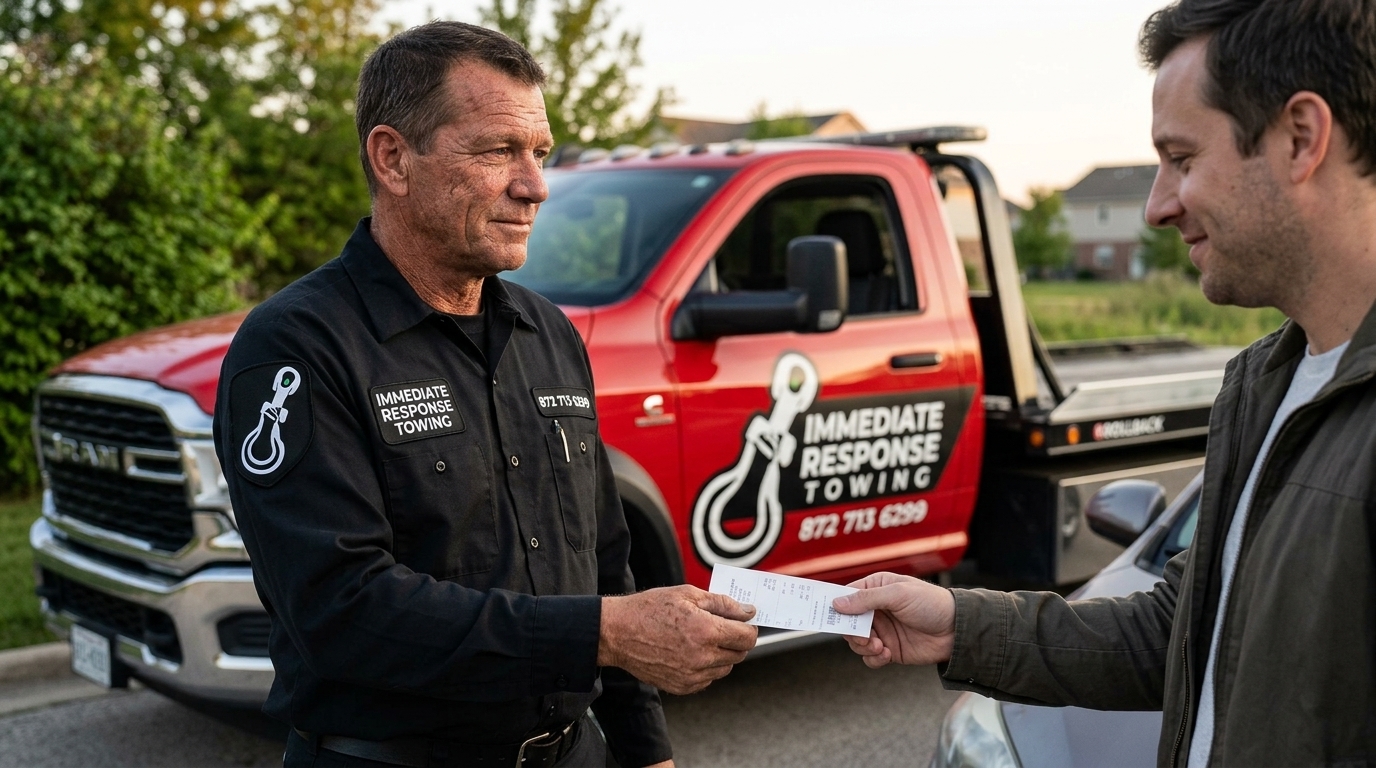
One thing that catches a lot of drivers off guard is the paperwork side of accident towing. Keep a copy of the tow receipt, the police report number, and any photos taken at the scene, since your insurance adjuster will likely ask for all three. Most policies cover towing after an accident under either your collision or roadside assistance provisions, but it's worth confirming with your provider beforehand so there are no surprises. If your car is being held at a storage lot rather than taken straight to a shop, ask about daily storage fees, since these can add up while a claim is being processed. A driver reviewing paperwork with a tow operator at this stage is a moment that happens far more often than people expect, and it's one where a patient, experienced crew makes a real difference.
After the Tow, What Comes Next
Once your vehicle has been safely moved, the next steps are usually a damage assessment, a decision on repair versus total loss, and coordination between your shop and your insurer. None of that changes the fact that the towing itself needs to be done right the first time, since a poorly handled tow can complicate an insurance claim or cause additional damage to a car that's already compromised.
Accidents are never planned, but knowing what proper accident towing looks like means one less thing to worry about when it happens. A careful crew, clear documentation, and a company that treats your vehicle like more than just cargo can turn a chaotic moment into a manageable one.