
Car Broke Down and Won't Start? A Symptom by Symptom Guide
My Car Broke Down and Won't Start: A Calm, Symptom by Symptom Guide to What to Try and When to Stop
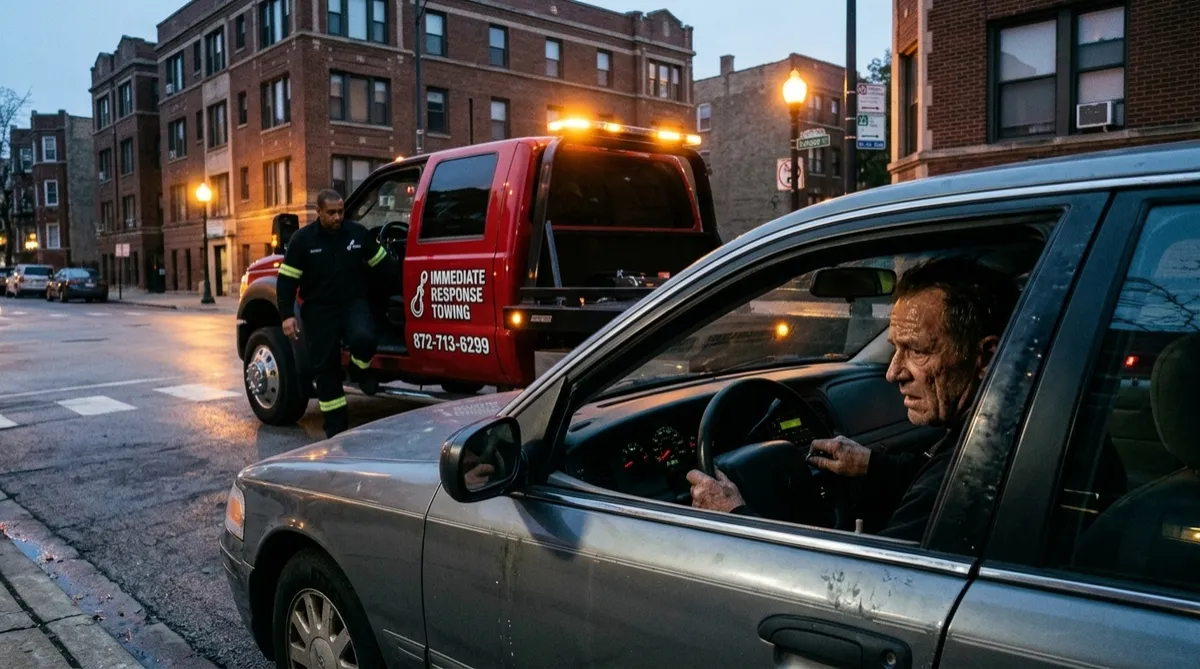
You turn the key, press the button, or tap the screen, and nothing happens the way it should. Maybe there is silence, maybe a click, maybe a long grinding crank that never catches. Either way, your car broke down, and your day just changed. The trouble with a car breakdown is that panic makes it hard to think clearly, and the internet is full of advice that ranges from helpful to risky. This guide gives you a calm, practical path. You will learn how to read what your car is telling you, safe things to try when you want to get a car to start, when to stop before you do damage, and how to get the car moving to a mechanic if it simply will not cooperate.
First, Make the Scene Safe
Before you troubleshoot anything, check where you are. If you are in a live lane or on a busy road, your first job is safety, not diagnosis. Turn on your hazard lights, set the parking brake, and, if the car can still move and it is safe, steer it out of traffic. If you cannot, stay buckled in with the doors closed on a fast road, or move well away from the lane if it is quiet and safe to do so.
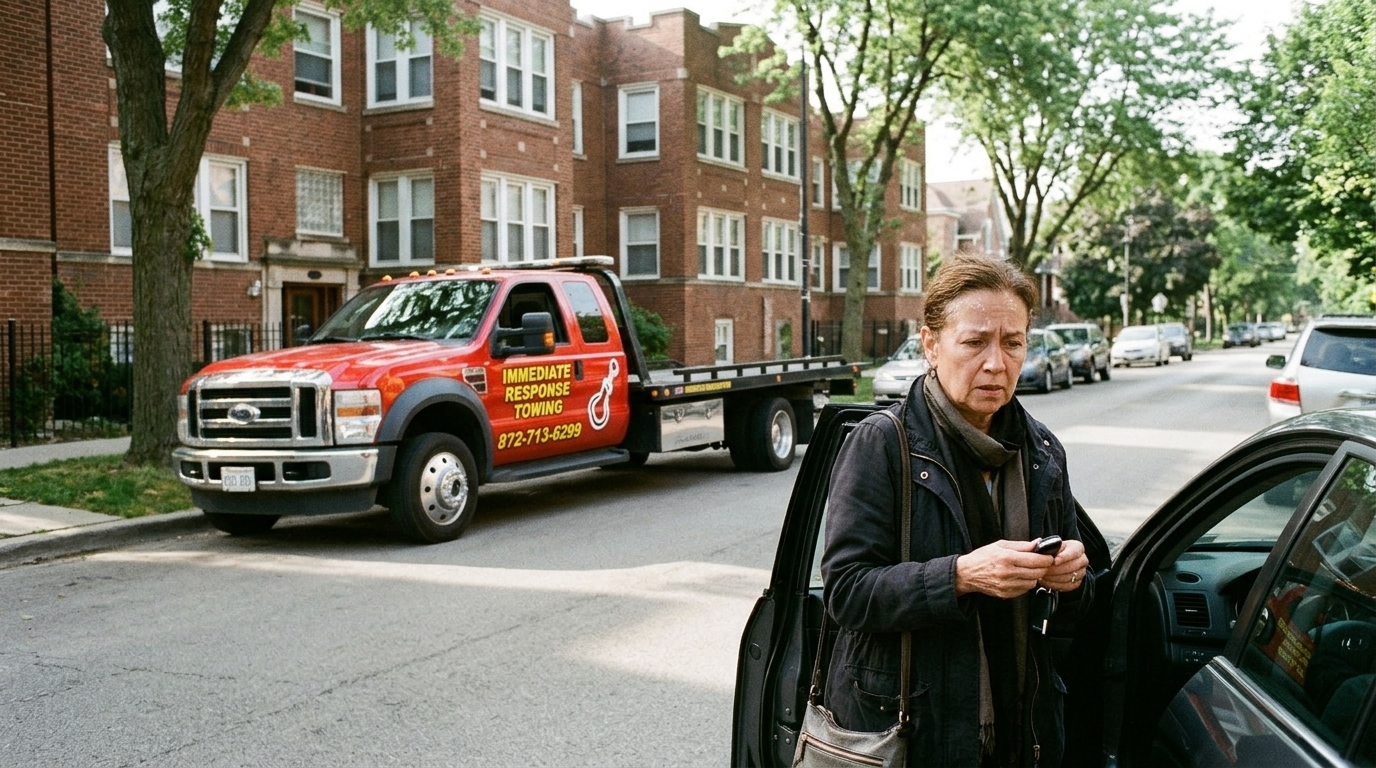
Once you are somewhere safe, take a breath and notice what happened right before the problem. Did a warning light come on? Was there a noise, a smell, or a sudden loss of power? Those clues will help you and anyone you call.
Listen to What Your Car Is Telling You
Different symptoms point to different causes, and recognizing them saves time. Use this guide as a starting point:
Complete silence and no lights: the battery may be dead, or a connection may be loose. Check that the battery cables look tight and clean if you can see them safely.
Rapid clicking: the battery is usually too weak to turn the engine. A jump start often solves it.
One loud click, then nothing: this can point to a failing starter or a poor connection. Trying again once or twice is fine, but do not keep repeating it.
A slow, heavy crank: the battery is likely low, especially in cold weather.
The engine cranks normally but will not start: the problem may be fuel, spark, or air. Check the fuel gauge first, since an empty tank is a common surprise.
The engine starts and then dies: this can mean a fuel delivery problem or a failing charging system, and it is a good time to stop and call for help.
These are common patterns, not guarantees, so use them as clues rather than conclusions.
How Do I Get My Car to Start? Safe Things Worth Trying
Before you call anyone, a few simple checks are worth a minute. Make sure the car is in park, or in neutral if that is required, and that your foot is firmly on the brake pedal, since many cars will not start otherwise. If you have a push button start, check that your key fob is nearby and its battery is not dead. Some fobs can be held close to the start button as a backup.
Try turning the steering wheel gently, since a locked steering column can make the key hard to turn. Look at the fuel gauge and check whether any warning lights are on. If your battery seems weak and you have jumper cables and a safe, experienced helper, a jump start may work. When you try to start the engine, crank in short bursts of a few seconds and rest in between, since long cranking can overheat the starter and drain the battery further.
When to Stop Trying
There comes a point where more attempts do more harm than good. Stop if you smell gasoline, since the engine may be flooded and there is a fire risk. Stop if you see smoke or notice a burning smell. Stop if you hear grinding, knocking, or squealing that was not there before. And stop if the car starts briefly and dies again, since repeated tries can strain the starter and the electrical system.
At that point, the best move is to call for help. A short wait for a professional is cheaper than a repair bill made larger by one extra try.
How to Move a Car That Won't Start
People often ask how to move a car that won't start, especially if it is blocking a driveway or a parking space. The honest answer is that it depends on where you are. In a quiet parking lot, several people can sometimes push a car with the transmission in neutral and someone steering, but this is not safe on a street. Without the engine running, power steering and power brakes may not work normally, which makes the car harder to control.
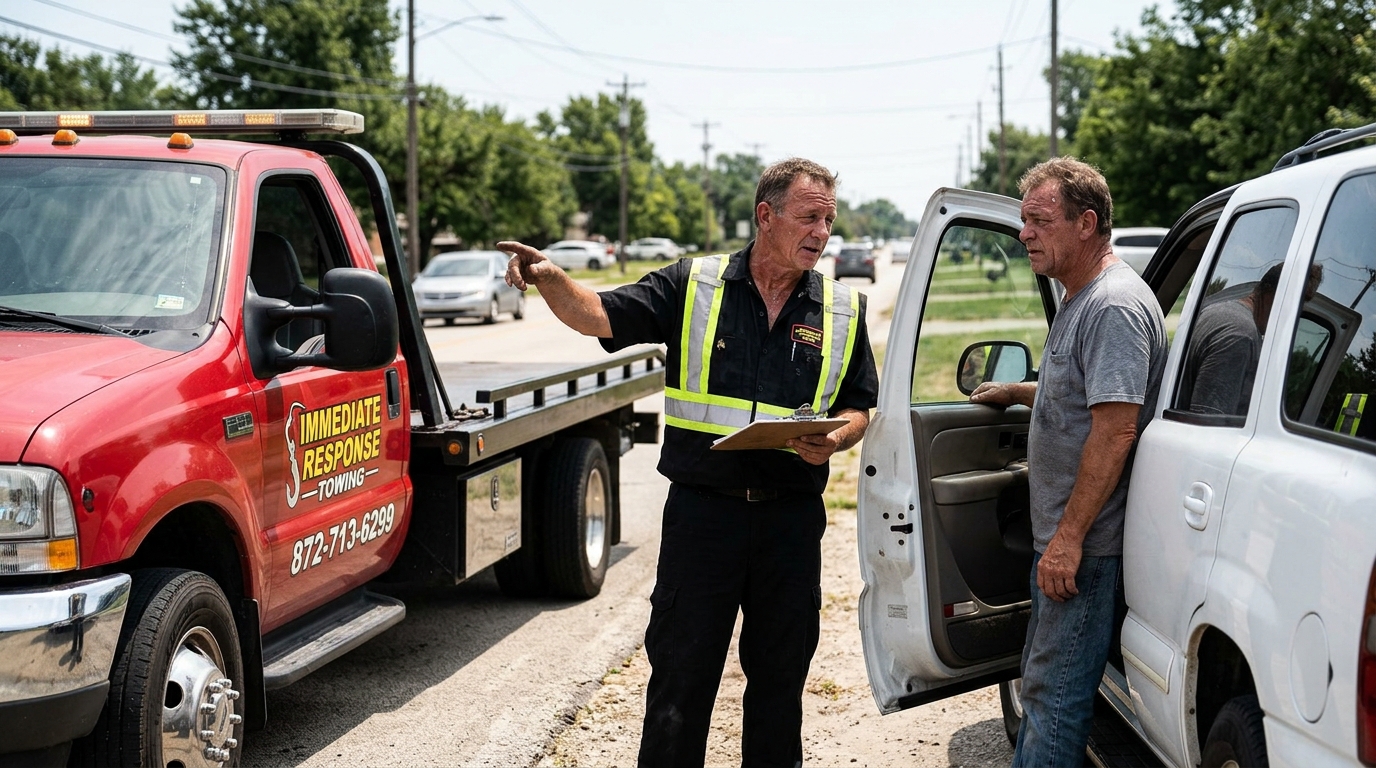
Many cars also cannot be shifted out of park when the battery is completely dead, and electric and hybrid vehicles often have special requirements. The safest way to move a stuck car is to let a professional tow it. When you call, tell the dispatcher whether the car shifts into neutral, whether the steering moves, and whether the wheels turn, so the crew can bring the right equipment.
How to Get a Car to a Mechanic If It Won't Start
If the car will not start, you generally have three options. The first is a tow, which carries the car to the shop of your choice, usually on a flatbed. The second is a mobile mechanic, who can sometimes diagnose and fix simple issues right where the car sits. The third is a shop that offers pickup, though this varies.
Whichever route you take, call the shop first to make sure it is open and can see the car. Ask for a diagnosis and a written estimate before approving any repairs, and take photos of the car before it is moved. Having a clear plan makes the whole process feel less overwhelming.
My Car Broke Down, Who Do I Call?
If you are asking this right now, the short version is simple. Call emergency services if anyone is hurt or you are in danger. Otherwise, call your insurance or roadside plan if you have one, or call a local towing company you trust. Share your location, your car details, and what happened, and ask for an arrival window and a price.
A Few Chicago Notes
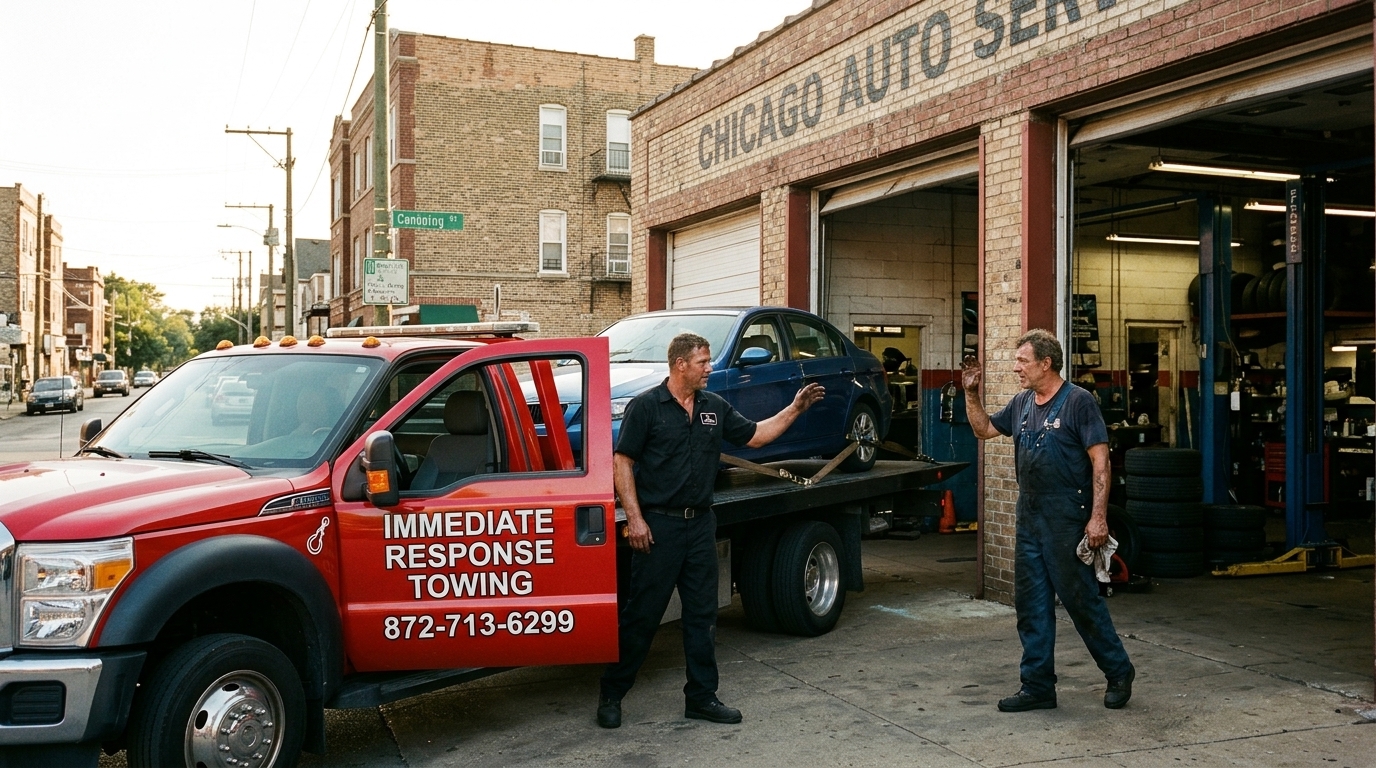
Local weather often decides what goes wrong. On the first cold mornings of the season, weak batteries fail. After a heavy snow, cars can seem dead when they are simply buried or stuck. During summer storms, flooded streets can stall engines in seconds. If your car broke down in one of these situations, tell the dispatcher so the crew can prepare.
Stay Calm and Make a Plan
A car breakdown feels stressful, but it usually follows a clear path: stay safe, read the clues, try a few simple things, and stop before you cause damage. When the car will not cooperate, a professional crew can move it safely and get it to the right place.
If you are stuck and need a hand, reach out to Immediate Response Towing and let a Chicago crew take care of the heavy lifting while you focus on what comes next.