
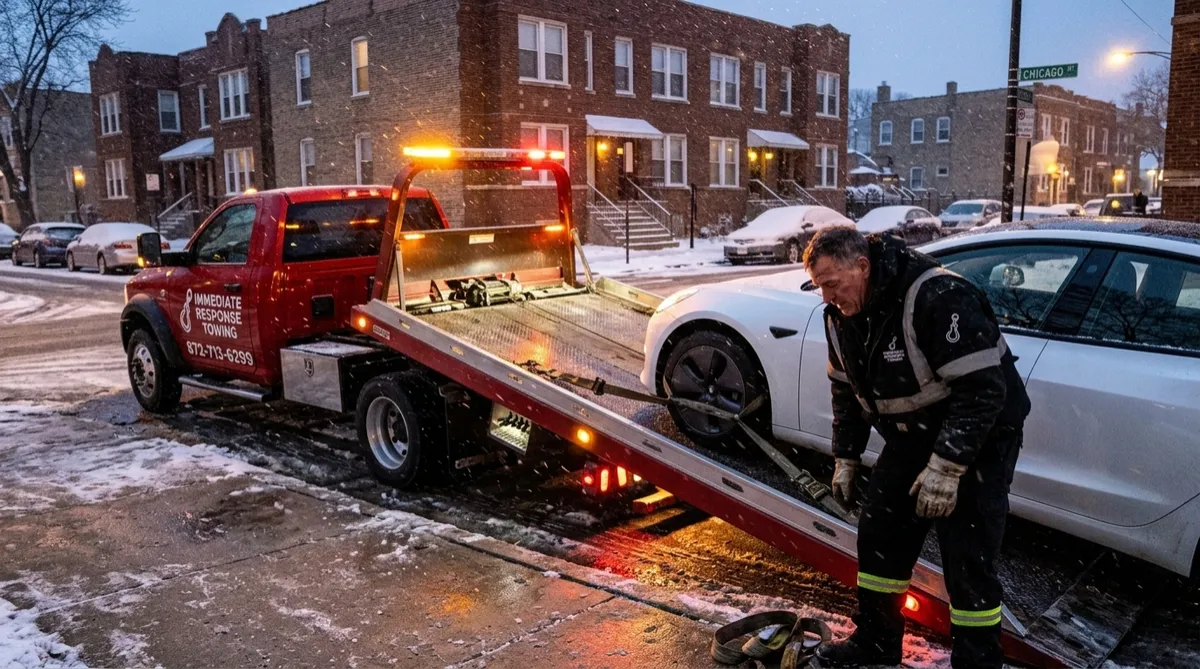
EV Roadside Assistance in Chicago: What to Do When Your Battery Hits Zero
EV Roadside Assistance in Chicago: What to Do When Your Battery Hits Zero
The dashboard shows 3 percent. The nearest charger is occupied, and the temperature outside is 12 degrees. Your electric car, so smooth and quiet a minute ago, now feels like a very expensive paperweight on the shoulder of Lake Shore Drive.
It happens to more EV owners than the brochures admit, and the stress is real. The good news is that a stalled electric car is a solvable problem when you know who to call and what to say. This guide explains how EV roadside assistance works, what makes it different from a standard tow, and how to find the right help fast.
Why Electric Cars Need a Different Kind of Rescue
A gas car and an electric car can look similar on a tow truck, but they are very different machines underneath. Many EVs use regenerative braking and electric motors that stay mechanically connected to the wheels. Dragging one with its wheels on the pavement can force the motor to spin and generate electricity it has nowhere to send. That can damage expensive components, and the repair bill can dwarf the cost of the tow.
Then there is the battery pack. It is heavy, usually sits low in the frame, and must never be punctured, crushed or strained by careless rigging. Lifting points are specific, and some models hide them behind small covers.
Add in the locked parking brake that some EVs engage when the system loses power, and you can see why this is not a job for an untrained operator with a chain. Real EV roadside assistance starts with knowing the vehicle, not just owning a truck.
Why Chicago Winters Hit EV Range So Hard
Cold weather is the quiet villain of electric driving. Low temperatures slow the chemical reactions inside the battery, and running the cabin heater pulls extra power from the same pack. Many drivers see range drop by a significant margin on frigid mornings, sometimes enough to turn a comfortable trip into a gamble.
Chicago adds more pressure. Stop and go traffic on the Kennedy, long waits at icy intersections and snow covered side streets all drain energy faster than a smooth summer commute. Charging stations also slow down in the cold, so a quick top up can become a long, shivering wait.
If your trip plan assumes the range on the sticker, build in a generous cushion from November through March.
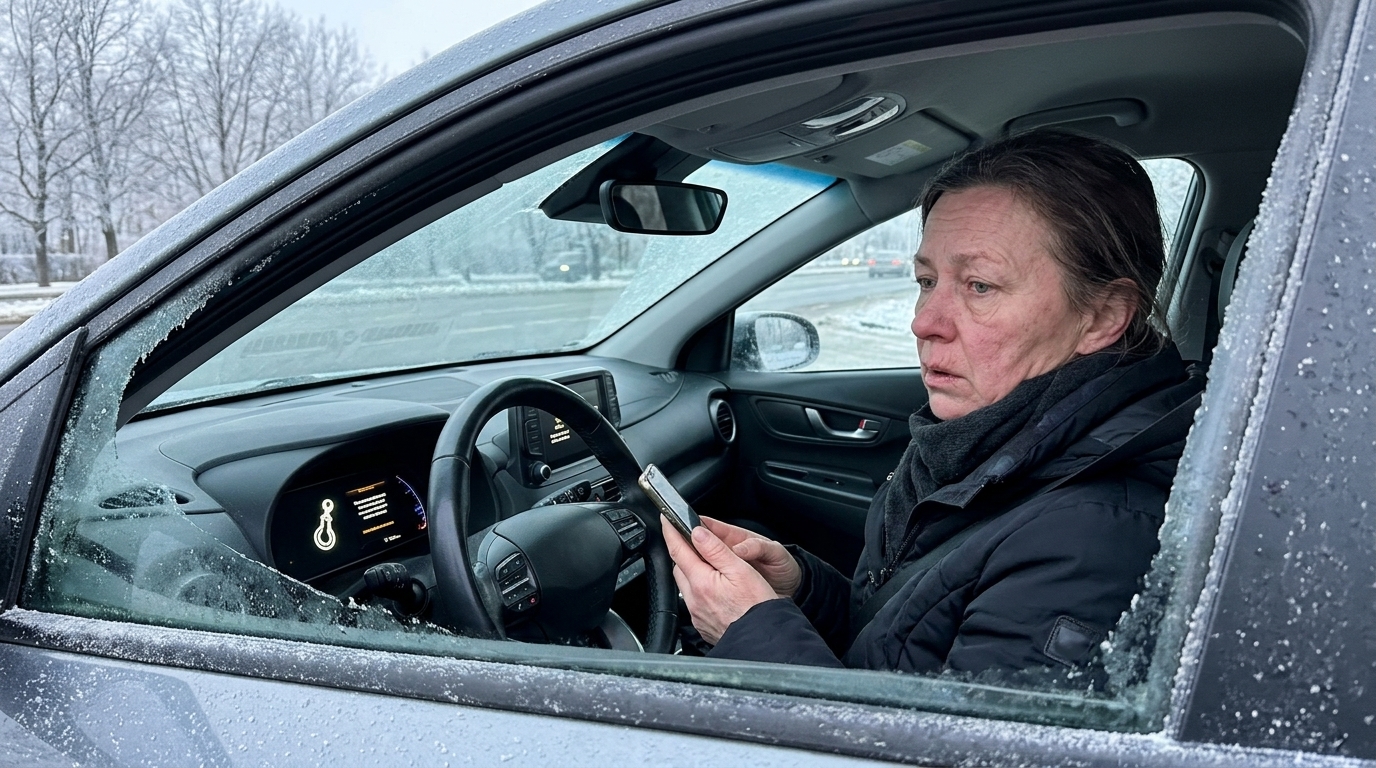
The Most Common EV Roadside Problems
Not every electric car breakdown looks the same. These are the situations tow crews see most often:
Fully depleted main battery. The car simply will not move, and no charger is close enough to reach.
Dead 12 volt battery. The big battery has power, but the small accessory battery that wakes the car up has failed, so doors, screens and the drive system will not start.
Charging port or cable faults. A frozen port, bent connector or failed charger leaves you plugged in but not charging.
Flat tires. EVs are heavier than comparable gas cars and wear tires faster, and many do not carry a spare.
Software or warning light shutdowns. The car enters a protective mode and refuses to continue until it is serviced.
Collisions and curb strikes. Even minor impacts can affect battery safety and require a careful, flat transport.
Knowing which of these you are facing helps the dispatcher send the right solution on the first trip.
What to Do Right Now When Your EV Stops
Panic wastes energy and time. Follow these steps in order:
Get to safety. Coast to the shoulder or a parking lot if you can, put on your hazard lights and stay clear of traffic.
Put the car in park and engage the parking brake if it is available. This keeps the vehicle from rolling.
Check the screen for a message. Note any warnings, the remaining charge and whether the car says it can still be driven.
Photograph the dashboard and surroundings. This helps with insurance and service records later.
Call your roadside provider. Give your exact location, make, model, year and a clear description of the problem.
Mention that it is an electric vehicle. This single detail changes the equipment and the technique.
Stay in the car with your seatbelt on if you are near fast traffic. Step out only when it is safe, and wait away from the road.
Once help is on the way, you can contact your insurer or your carmaker's support line. Safety always comes before paperwork.
Why a Flatbed Is the Safest Ride for an Electric Car
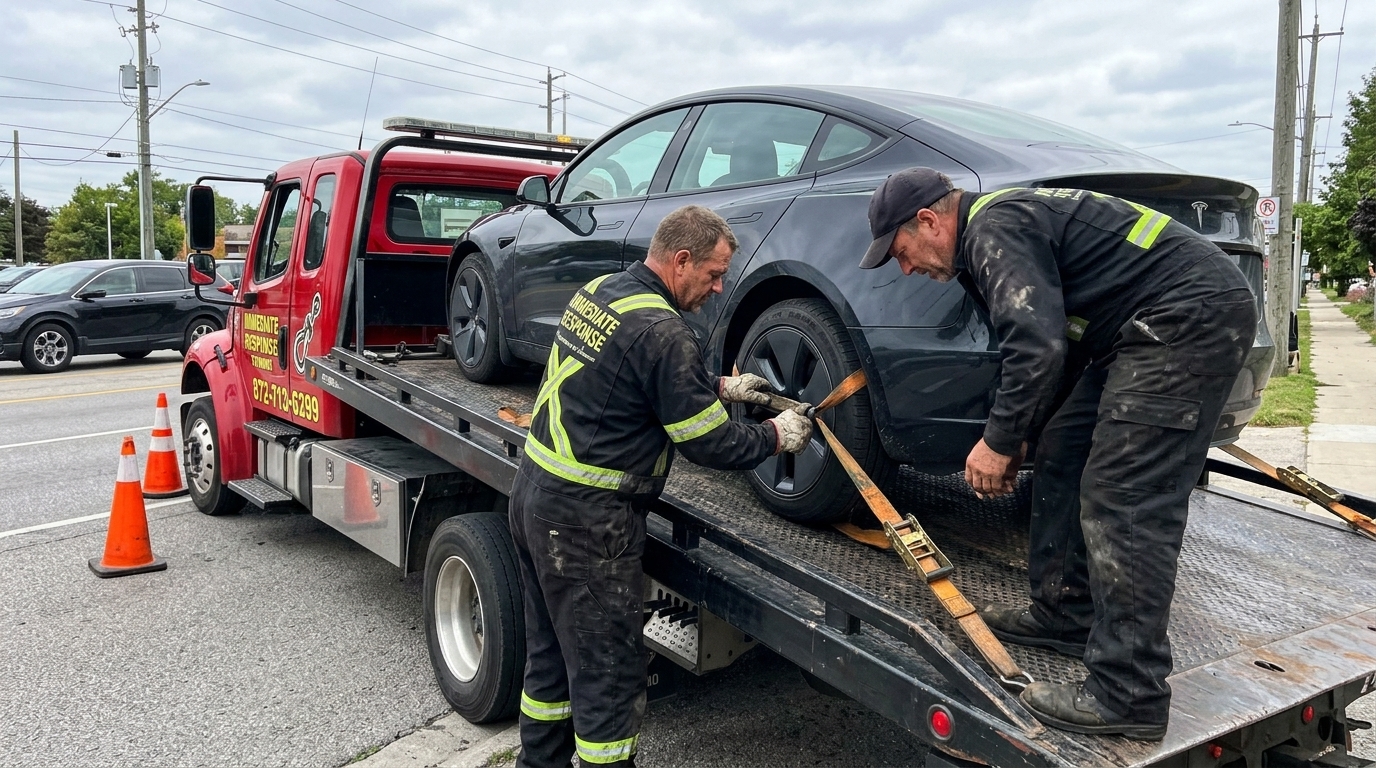
For most electric vehicles, a flatbed is the right answer. It lifts the entire car off the ground so the wheels are not turning, which protects the motors, the drivetrain and the battery system. It also reduces the chance of scraping low front bumpers and spoilers, which are common on modern EVs.
A skilled operator will check the owner's manual guidance when possible, find the correct tow points, use wheel straps rather than chains on delicate parts, and secure the car so it does not shift in transit. If the parking brake is locked, they know how to release it or use skates and dollies to load the car safely.
That is the real difference when you search for EV roadside assistance near me. You want a crew that treats your vehicle as a precision machine and not as a generic load.
Searching for EV Roadside Assistance Near Me: What to Check Before You Book
When you are stranded, speed matters, but so do a few quick questions. Ask whether the company sends flatbeds as standard for electric vehicles, because that is the baseline for safe EV transport. Confirm that operators have handled electric cars before and understand the common model quirks, from hidden tow points to locked brakes.
Ask for an honest arrival window, and expect a real answer, not a vague promise. Check that pricing is explained before the hookup, including mileage and any after hours charges. A good provider will also be clear about where your car can be delivered, whether that is a charging station, your home garage, a dealership or an independent EV repair shop.
Local knowledge counts too. A Chicago crew that knows which stations are working, which streets are impassable after a snowfall and which garages have clearance for a loaded flatbed will save you time you cannot afford to lose.
Mobile Charging or a Tow: Which One Do You Actually Need?
Some providers offer a small emergency charge that gives you just enough range to reach a nearby station. That can work when your battery is only slightly empty and the car is otherwise healthy. In the cold, though, a short charge can disappear quickly, and you may find yourself stranded again twenty minutes later.
A tow is the better choice when the charge is completely gone, when the car shows any fault or warning beyond low battery, when the 12 volt system is dead, or when you are in an unsafe location. If you are unsure, tell the dispatcher everything you see on the screen and let them recommend the safest option.
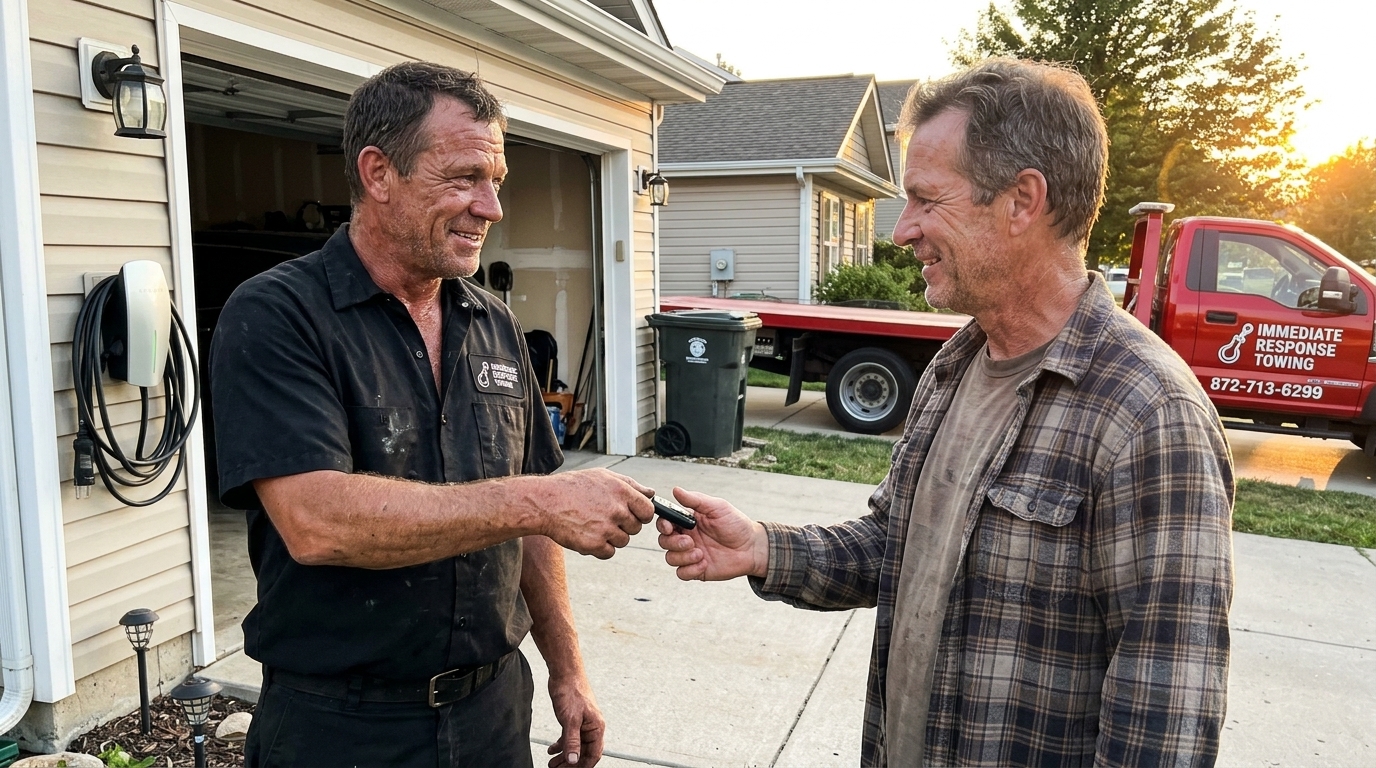
Habits That Keep You Off the Shoulder
You cannot control Chicago weather, but you can control your preparation:
Plan every longer trip around chargers and keep a buffer of at least 20 percent in winter. Precondition the cabin while the car is still plugged in so you do not spend precious range on heating. Check tire pressure monthly, since cold air lowers it quickly. Keep a phone charger, a flashlight, warm layers and your roadside provider's number in the car. Know where your tow points are and what your manual says about transport.
A little planning turns a roadside emergency into a short inconvenience.
Frequently Asked Questions About EV Roadside Assistance
Can any tow truck tow an electric car?
Technically many can attempt it, but not every truck is appropriate. Flatbeds are generally the safest choice because they keep all four wheels off the road and protect the drivetrain.
Will towing damage my electric vehicle?
Not when done correctly. Damage usually comes from dragging the car with the wheels on the ground or from using the wrong lifting points. A trained operator avoids both.
What should I tell the dispatcher?
Give your location, the make, model and year, and whether the car has power, warning lights or a locked parking brake. Say clearly that it is an electric vehicle.
Can I get a charge on the roadside instead of a tow?
Sometimes, depending on the provider and the situation. If the battery is only low, a short charge may work. If there is a fault or the charge is fully gone, a tow is usually wiser.
Stay Calm, Stay Moving
An electric car breakdown feels unfamiliar, but it does not have to feel overwhelming. Know the steps, ask the right questions and call a team that understands how EVs should be moved.
When you need dependable help in the Chicago area, reach out to Immediate Response Towing. Save the number in your phone today, and the next time your battery drops lower than expected, you will already know who to call.