
Exotic Car Towing in Chicago: Move It Without a Scratch
Exotic Car Towing in Chicago: How to Get Your Car Moved Without a Scratch
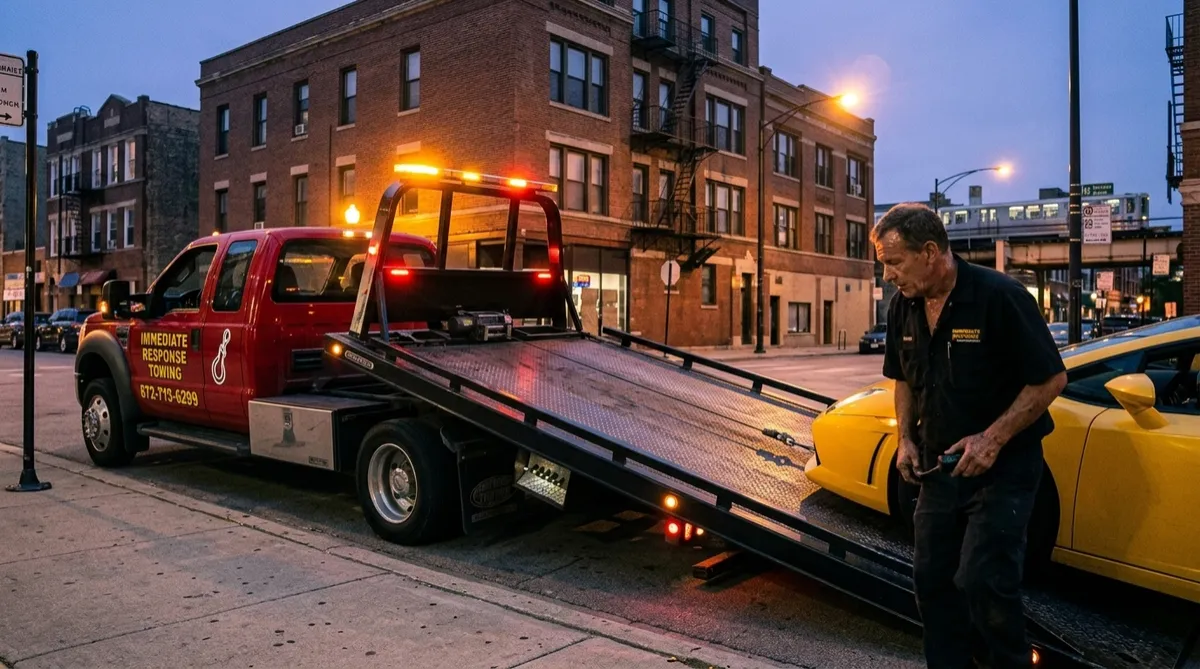
Your car sits barely four inches off the pavement, its carbon fiber front lip costs more than most people's monthly rent, and right now it will not start. The last thing you want is a driver who shows up, glances at it, and reaches for a chain.
Exotic car towing is a different job from regular towing, and the difference shows up in the details most guides skip. This article covers what a proper tow looks like, what to tell the dispatcher before the truck leaves, and the mistakes that cause expensive damage, so you stay in control from the first phone call to the final drop off.
Why Exotic Car Towing Is Not Regular Towing
A standard tow truck is built for ordinary sedans and SUVs. An exotic car breaks almost every assumption that equipment was designed around.
Ground clearance is the first problem. Many supercars and performance cars sit so low that a normal loading angle makes the front splitter or rear diffuser scrape the ramp. Width is the second. Wide body cars can leave very little margin on a standard deck. Then there is the drivetrain. Many exotics use all wheel drive, complex transmissions, or electronic parking brakes, and dragging or lifting them the wrong way can damage parts that no tow driver can fix on the roadside.
Materials matter too. Carbon fiber, thin aluminum panels, and delicate paint finishes do not forgive a slipped strap or a misplaced hook. This is why a wheel lift or hook and chain setup, common on regular tow trucks, is simply the wrong tool for this kind of vehicle.
What a Proper Exotic Car Tow Actually Looks Like
If you have never watched a careful tow of a low profile car, here is the sequence a skilled operator follows. Knowing it also helps you spot a driver who is cutting corners.
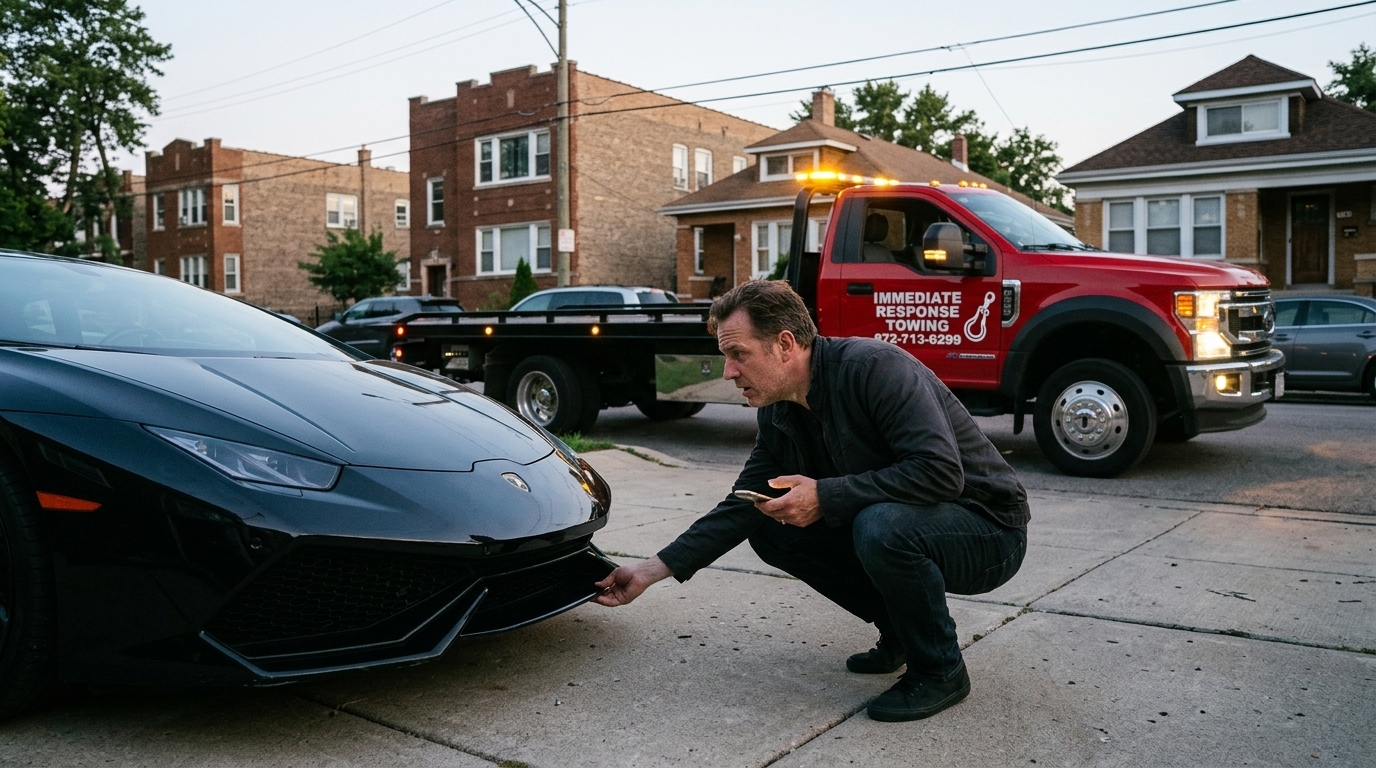
The driver inspects the car first, walking around it and confirming the ground clearance, tire condition, and any modifications such as lowered suspension or aero parts.
A flatbed is used, never a wheel lift, so all four wheels stay supported and nothing drags.
Loading ramps are set up at a gentle angle, often with extra boards or ramp extensions, so low bumpers clear the deck without touching.
The car is loaded slowly using the winch smoothly, or driven on if it runs and the owner approves.
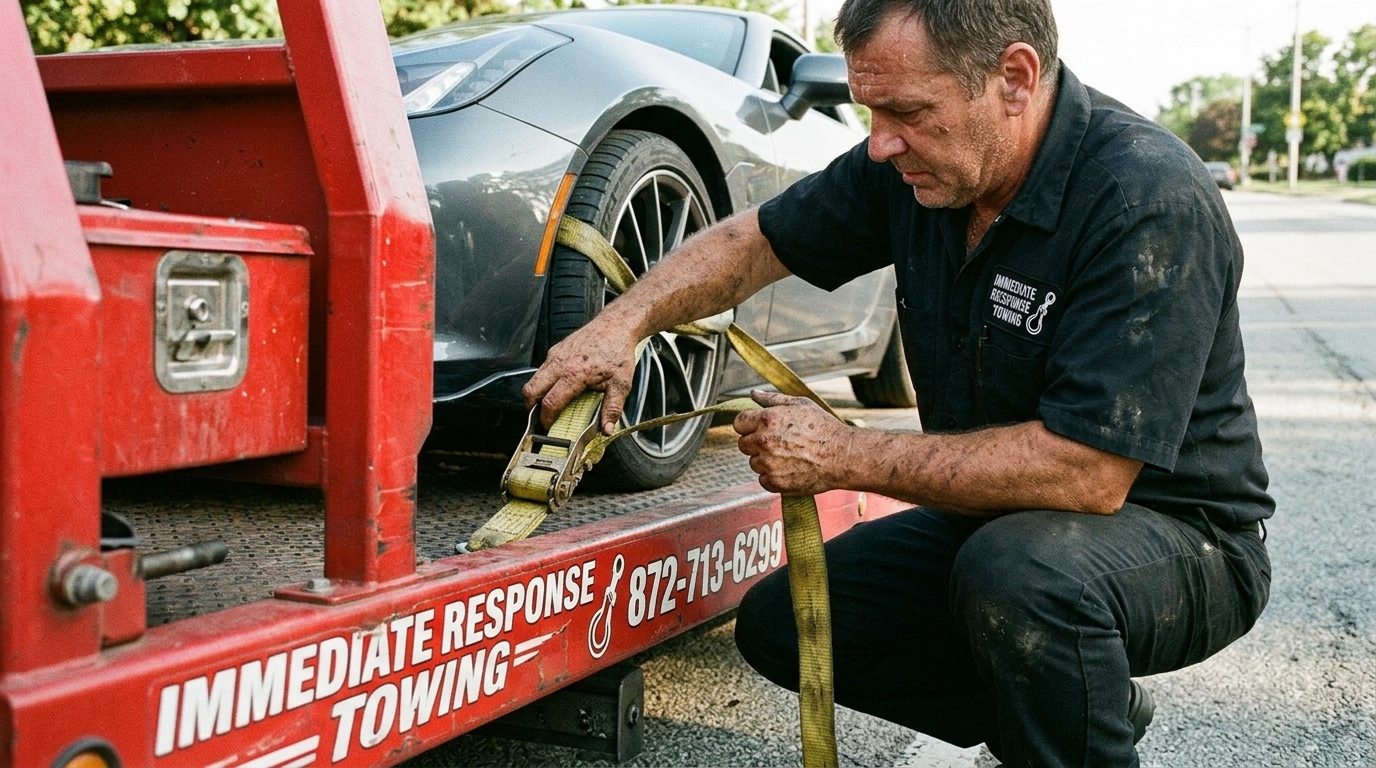
Soft tie down straps go over the tires, not chains on the frame or suspension parts, to avoid scratches and stress.
The driver double checks every strap, then drives at a controlled pace with gentle turns and braking.
Every step exists to protect something specific. If a driver skips one, ask why before the car moves an inch.
What to Tell the Dispatcher Before the Truck Leaves
Most people lead with the problem, such as the car will not start. A better call starts with the details that decide which truck and which driver you need. Have these ready:
The year, make, and model of the car, since these determine how low it sits and how it must be loaded.
Any modifications, such as a lowered suspension, front splitter, wide body kit, or aftermarket wheels.
Whether it has a front lift system or ride height setting, and whether it works with the car off.
Whether the transmission will shift into neutral, and whether the parking brake is electronic and can be released.
Whether the car is all wheel drive, rear wheel drive, hybrid, or fully electric, since each affects how it can be moved.
Where the car is sitting, such as a garage, driveway, street, or tight parking structure.
This information takes thirty seconds to give and can prevent a wasted trip if the first truck cannot handle the job
.
Questions Owners Often Forget to Ask
Once you have described the car, a few questions protect both the vehicle and your wallet. Ask whether the price is final or whether low clearance handling adds a fee. Ask whether the company carries insurance that covers the vehicle while it is on the truck. Ask who will actually be driving, since an experienced operator matters more than any piece of equipment. And decide beforehand where the car is going, whether that is a specialist shop, a dealership, or your own garage, since a destination known up front keeps the whole process smooth.
Do not feel awkward asking any of this. Operators who handle valuable cars regularly expect these questions and answer them without hesitation.
It Is Not Always an Emergency
Plenty of exotic car towing jobs have nothing to do with a breakdown. Owners move cars to and from car shows, deliver them to a detailing studio or body shop, or relocate them to winter storage before the first Chicago snowfall. Some prefer a flatbed over driving a rare car on salted roads, where road chemicals and potholes cause more damage than any single trip is worth.
Others call after a minor accident, a dead battery, or a warning light that sends the car straight to a specialist. In every case, the goal is the same: keep the car off the road surface, supported evenly, and handled by someone who respects what it is.
What Not to Do While You Wait
The wait before the truck arrives is when owners accidentally make things worse. Do not try to push a low car over a curb, since a single scrape can cost thousands. Do not let a stranger offer a quick hook tow, no matter how helpful they seem. Do not guess at jack points, because the wrong spot can crack carbon panels or bend the underbody.
Instead, turn on your hazard lights, move away from traffic, and take clear photos of the car from every angle so its condition is documented before anyone touches it. Keep the key fob nearby and note any quirks, such as how to put it into neutral or where the tow point is located, so the driver does not have to guess.
Why Chicago Owners Trust Immediate Response
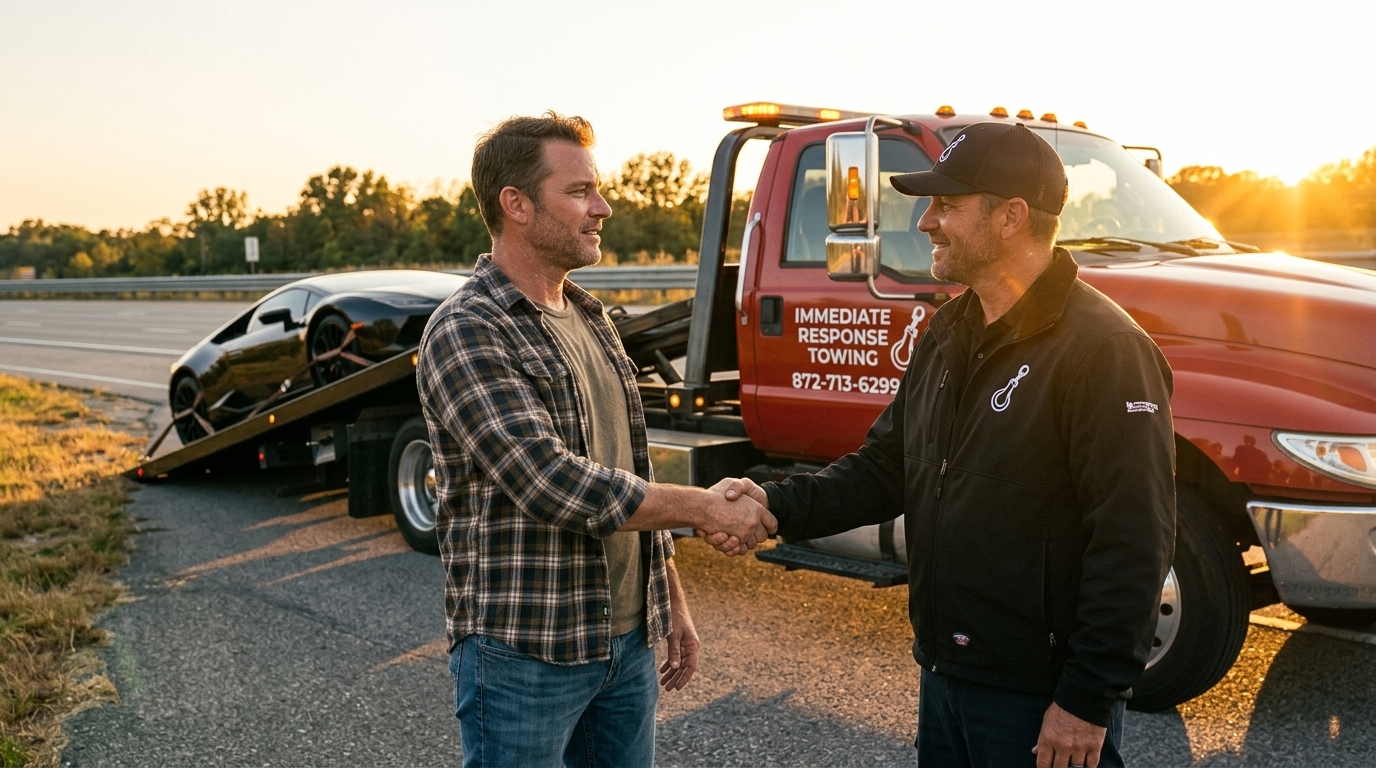
Immediate Response Towing offers flatbed towing, which is the right foundation for any low profile or high value vehicle. The team runs 24/7 across Chicago and nearby areas including Evanston, Skokie, Cicero, and Oak Lawn, with typical response times between 15 and 30 minutes and upfront pricing with no hidden fees.
Because the closest available truck is dispatched straight to you, you are not waiting on a distant yard while your car sits somewhere unsafe. For owners who want a clear plan before anything moves, the dispatch team will walk through the details of your car and recommend the safest way to load and transport it.
Protect the Car, Not Just the Tow
Exotic car towing comes down to preparation, the right equipment, and a driver who treats the car as more than cargo. Know your vehicle's quirks, give dispatch the details, and never accept a shortcut that puts its paint, aero, or drivetrain at risk. If your car needs to move today, contact Immediate Response Towing and get a flatbed headed your way.