How to Tow a Car the Right Way, Without Wrecking It or Getting a Ticket
How to Tow a Car the Right Way, Without Wrecking It or Getting a Ticket
A neighbor asks if you can help tow car trouble away from their driveway. A friend's transmission dies and someone suggests towing the car home with a rope and a pickup truck. It sounds simple until something goes wrong, a bumper snaps, a driveline burns out, or worse, someone gets hurt on a busy road. Before you attempt to tow car yourself, it helps to understand exactly how professionals do it, what methods actually exist, and when calling in a real tow truck is the smarter, safer, and often cheaper choice than improvising with whatever equipment happens to be in the garage.
Towing a Car Yourself Versus Letting a Professional Handle It
Most people picture towing car situations the way movies show them, a chain, two bumpers, and a short drive down the block. In reality, towing car safely involves knowing your vehicle's drivetrain, weight limits, hitch class, and braking capacity long before anything gets hooked up. A car with all wheel drive, for example, can suffer serious transmission damage if it is dragged with all four wheels on the ground. What looks like a five minute favor can quietly turn into a repair bill far larger than a professional tow would have cost in the first place.
The Four Methods Used to Tow a Car
Not every towing job uses the same equipment, and knowing the difference explains why professionals choose one method over another.
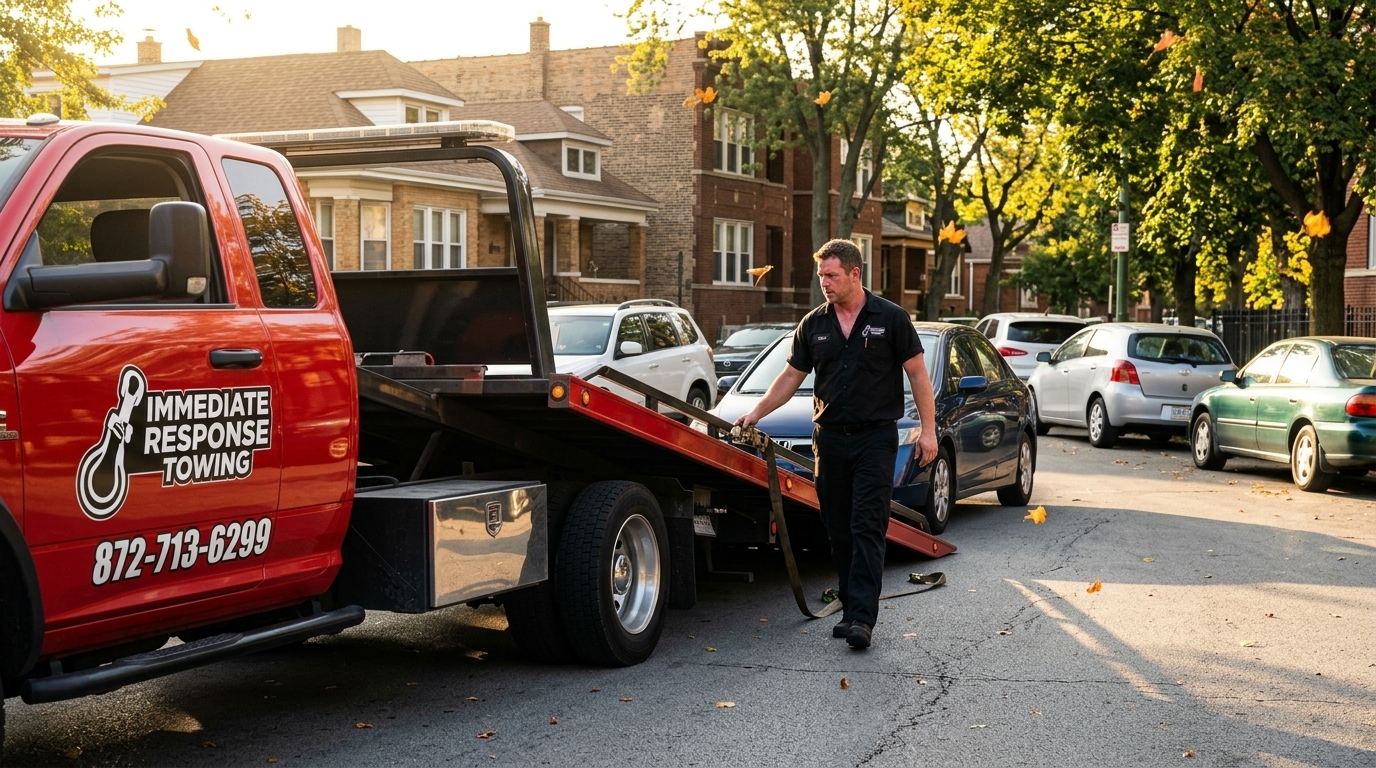
Flatbed towing lifts the entire vehicle off the ground onto a flat trailer bed, making it the safest option for luxury cars, all wheel drive vehicles, and anything with existing damage.
Wheel lift towing raises just the front or rear tires while the other end stays on the road, ideal for quick, short distance moves of standard sedans.
Tow dolly towing lifts one axle onto a small trailer while the other axle rolls freely, commonly used for front wheel drive cars during long moves.
Flat towing, sometimes called towing the car on all four wheels, is only safe for specific vehicles built for it, usually manual transmissions or vehicles with a disconnect feature.
Choosing the wrong method for your specific car is one of the fastest ways to cause expensive drivetrain damage.
Why DIY Attempts to Tow a Car Often Go Wrong
People attempt to tow car situations themselves for understandable reasons, saving money, avoiding a wait, or simply not realizing how risky it can be. The problem is that towing the car with a rope, chain, or strap requires precise following distance, a steady hand on the brakes, and a tow vehicle that is actually heavier and stronger than the one being pulled. Add in Chicago traffic, potholes, and unpredictable weather, and the margin for error shrinks fast. Straps can snap without warning, steering wheels can lock completely if the ignition is left off, and following too closely can cause a collision that turns a simple breakdown into a much bigger, far more expensive problem for everyone involved.
Is Towing a Car Yourself Even Legal in Illinois
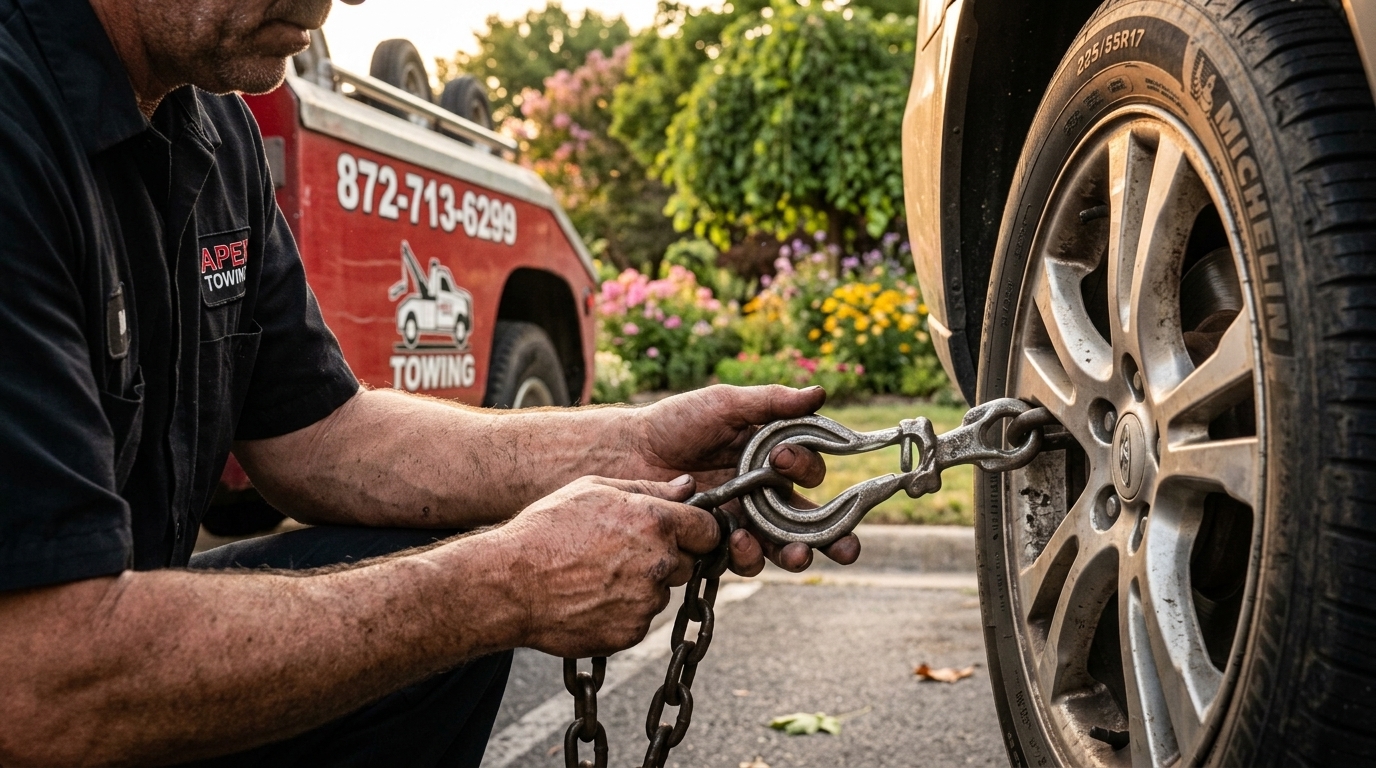
Beyond the safety risks, towing the car yourself on public roads comes with legal gray areas that many drivers overlook. Illinois law requires proper lighting, safe following distance, and secure attachment points for any vehicle being towed, and law enforcement can pull over a driver for an improperly secured tow. There is also the question of insurance, since damage caused during a DIY tow may not be covered the same way a licensed towing company's insurance would cover it. A cracked bumper, a scratched fender, or a rear ended vehicle mid tow can quickly become a dispute nobody wants to deal with. For a quick move across a parking lot, a DIY tow might be fine. For anything involving public streets, highways, or an unfamiliar vehicle, the legal exposure alone makes professional towing the more sensible route.
When Calling a Professional to Tow Your Car Actually Saves Money
It might seem like renting a dolly or asking a friend with a truck is the cheaper path, but professional towing often costs less once every factor is considered. A licensed company arrives with the correct equipment already matched to your vehicle, carries insurance that protects you if anything goes wrong, and gets the job done without risking a second breakdown halfway through the tow. There is no scrambling to borrow straps, no guessing at weight limits, and no wondering whether the hitch on a friend's truck can actually handle the load safely. Chicago drivers who want the process handled correctly the first time can request a tow from Immediate Response Towing and skip the guesswork entirely.
What a Real Professional Tow Looks Like
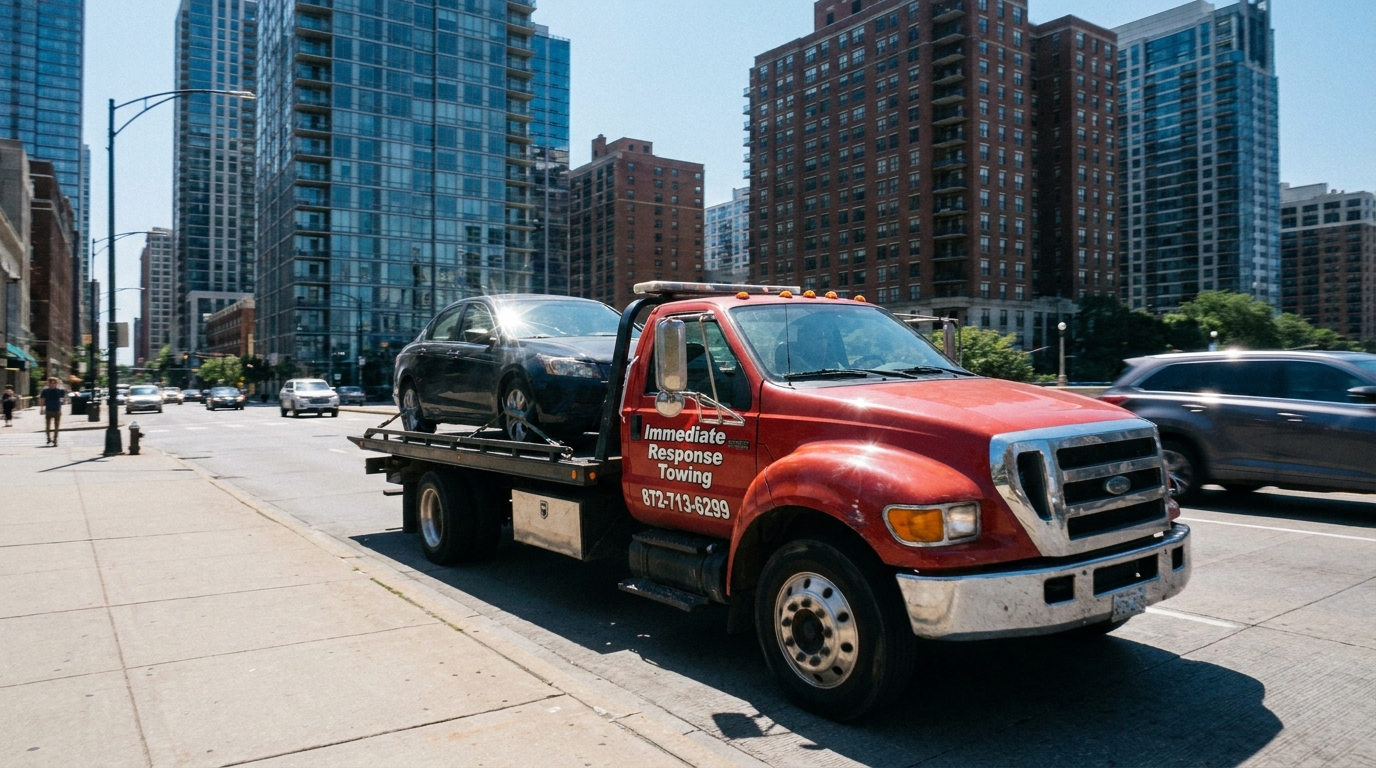
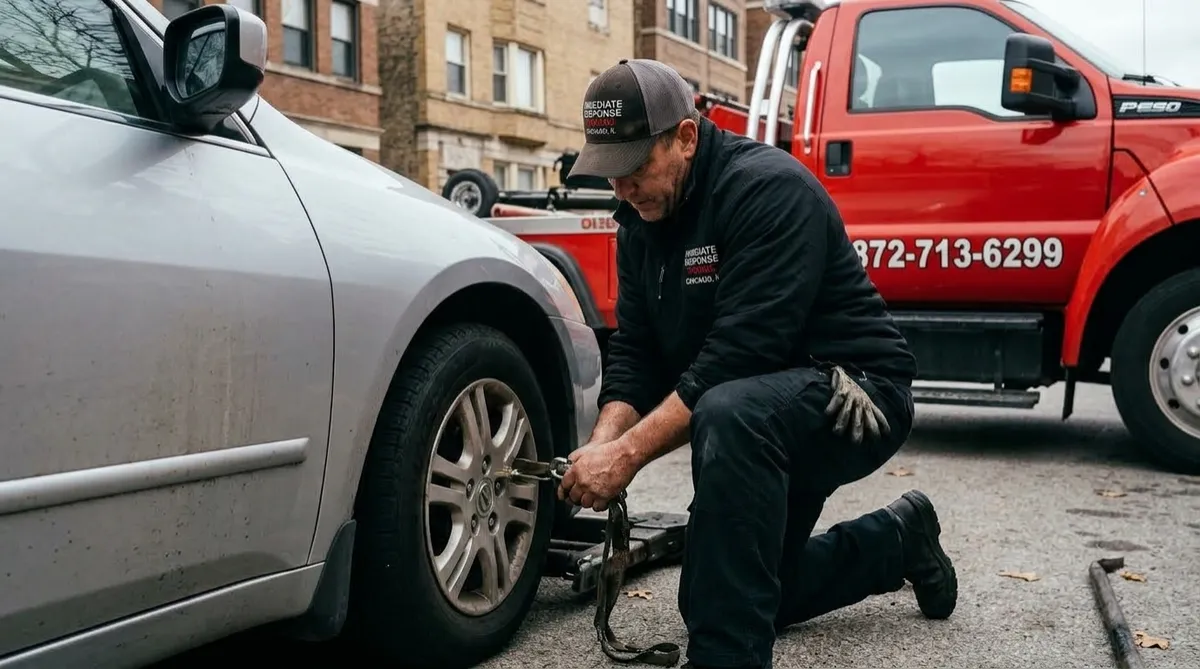
When Immediate Response Towing arrives to tow car issues anywhere in Chicago, the operator inspects the vehicle first, chooses flatbed, wheel lift, or dolly based on the make and model, and secures every attachment point before the truck ever moves. Response times average between fifteen and thirty minutes, pricing is upfront with no hidden fees, and every truck is equipped to handle sedans, SUVs, and heavier vehicles alike. There is no guessing, no borrowed straps, and no risk to a transmission that was never built for it. The whole point of a professional tow is that nothing is left to chance.
Towing a car is not something to improvise when it can be done right the first time. Understanding the methods, the risks, and the legal side of towing the car gives every driver the knowledge to make a smarter call the next time a vehicle needs to move. Sometimes the safest, cheapest option really is the phone in your pocket.