What Information to Give a Tow Truck After an Accident (Dispatcher Checklist)
What Information to Give a Tow Truck After an Accident (So Help Arrives Faster)
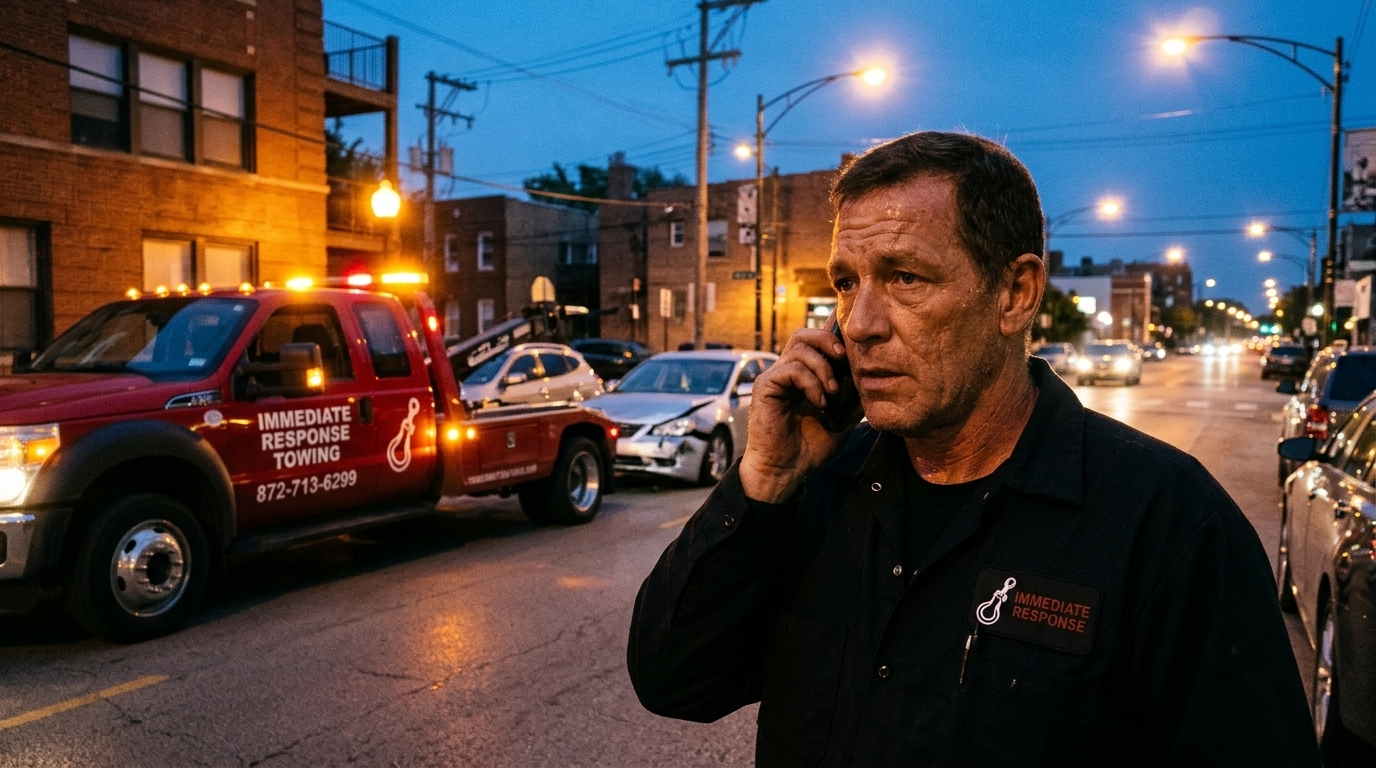
The moments after a crash are a blur. Your ears are ringing, your hands may be shaking, and now you have to explain what happened to a stranger on the phone. The good news is that a tow dispatcher is not looking for a story. They need a handful of specific facts, and once you know them, the call becomes simple.
This guide walks you through exactly what to say, why each detail matters, and the small mistakes that quietly add delay. Keep it handy, because the clearer your answers are, the faster the right truck gets sent to the right place.
Why the First Two Minutes of Your Call Matter
A dispatcher is solving a puzzle while you talk. They are deciding which truck to send, what equipment it needs, and how to reach you safely through traffic. A flatbed, a wheel lift, and a heavy duty wrecker are very different machines, and sending the wrong one means a second trip and a longer wait on the roadside.
Every detail you give removes one guess from that puzzle. Vague answers like "I'm on the highway somewhere" force the dispatcher to ask follow up questions, and each question costs time you would rather spend somewhere safe.
Before You Dial: Get Safe First
Information only helps if you are in a position to deliver it. Before you call, check on everyone in the vehicle, and if anyone is hurt, contact emergency services first. A tow call can always wait a few minutes. An injury cannot.
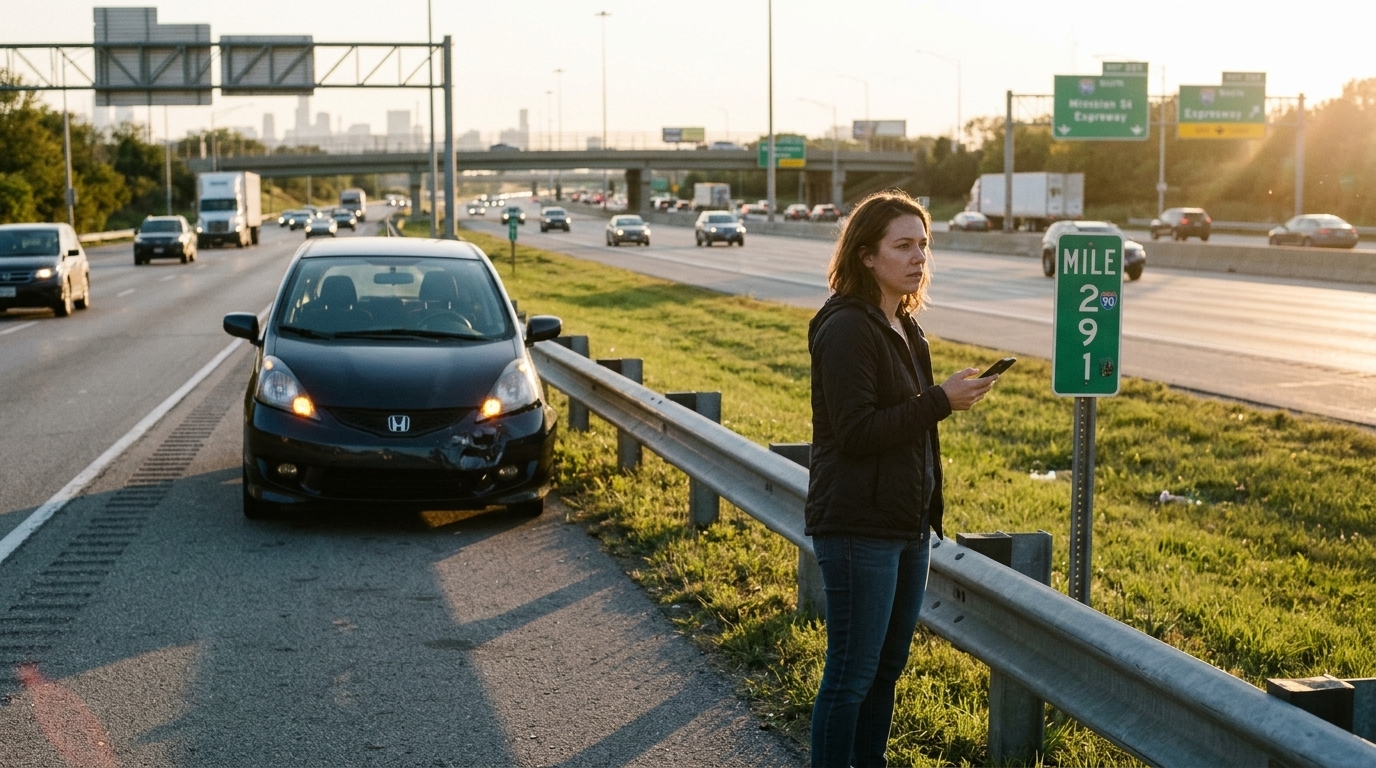
If your car can still move and the crash was minor, follow local guidance about shifting to a shoulder or a nearby side street. If it cannot move, stay put, turn on your hazard lights, and stand well away from traffic, ideally behind a barrier or guardrail. Always follow the directions of police and fire crews on scene, since they control how and where a vehicle can be recovered.
The Details a Dispatcher Needs, in Order
Here is the checklist, arranged the way most dispatchers ask for it. You do not need to memorize it. Just glance down the list while you talk.
Your exact location. Give the street name and nearest cross street, or the expressway name, direction of travel, and the closest exit or mile marker.
Where the vehicle sits. Say whether you are in a live lane, on the shoulder, in a parking lot, or off the road entirely.
Vehicle make, model, and year. This tells the dispatcher the size, weight, and drivetrain, which decides the equipment.
Visible damage. Mention what you can see, such as a crumpled front end, a hanging bumper, or fluid on the ground.
Wheel and steering condition. Tell them if a wheel is bent, a tire is flat, or the steering feels locked or loose.
Hazards. Report leaking fluids, smoke, broken glass in the roadway, or a car on its side.
People involved. State how many passengers are with you and whether police or EMS are already there.
A safe callback number and your preferred destination. Give the number you will actually answer, and say whether the car is headed to your home, a body shop, or a dealership.
That is the whole call. Eight answers, usually under two minutes.
Why Your Location Is More Than an Address
Location is the single most important piece of information, and it is also the one people get wrong most often. In a city like Chicago, "I'm on the Kennedy" is not enough. The Kennedy runs for miles, and your direction of travel changes which side of the expressway the truck must approach from.
Look for anything that narrows it down. Overhead exit signs, green mile markers, bridge names, and the cross street you just passed all help. If you are on a surface street, give the block, the nearest intersection, and a landmark like a gas station or a school. If your phone has a map app, you can read the dropped pin or share your live location while on the call. Lower level roads and service drives can be especially confusing, so mention if you are on one.
Describing Damage Without Being a Mechanic
You do not need technical language. Plain description works best, and it should focus on what affects the tow rather than what the repair will cost.
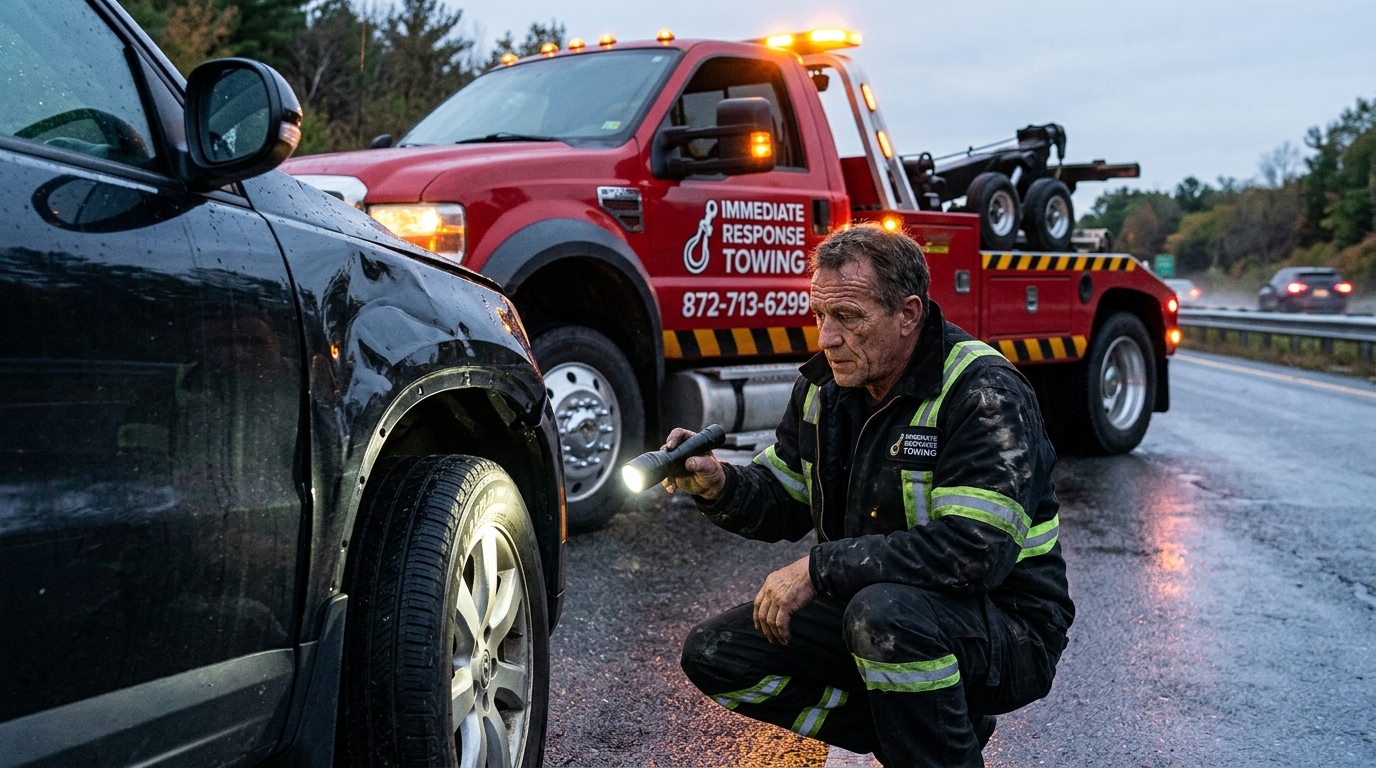
Say what you see and what you notice when you try to move. For example, "the front passenger wheel is pointing inward and the car will not roll straight" tells a dispatcher more than "the suspension is damaged." If the car will not shift out of park, or the wheels will not turn, that signals the truck may need dollies or a flatbed rather than a simple hook.
Also mention if the vehicle is all wheel drive, a lowered car, or an electric vehicle. These often require a flatbed, and flagging it up front prevents a surprise when the truck arrives.
What to Say About Passengers, Police, and Hazards
Dispatchers coordinate with the scene, not just the car. If police have arrived, tell the dispatcher. An officer on site may direct where the vehicle must go or when it can be moved, and the driver should ask for the report number if one is being filed.
Mention whether the vehicle is blocking traffic, because that raises priority. Report any leaking fuel or fluids and any smoke, since these are safety issues that responders must handle first. Finally, tell the dispatcher how many people are with you. If you are all staying on scene, the driver will plan accordingly, and if someone needs a ride, that is worth saying early.
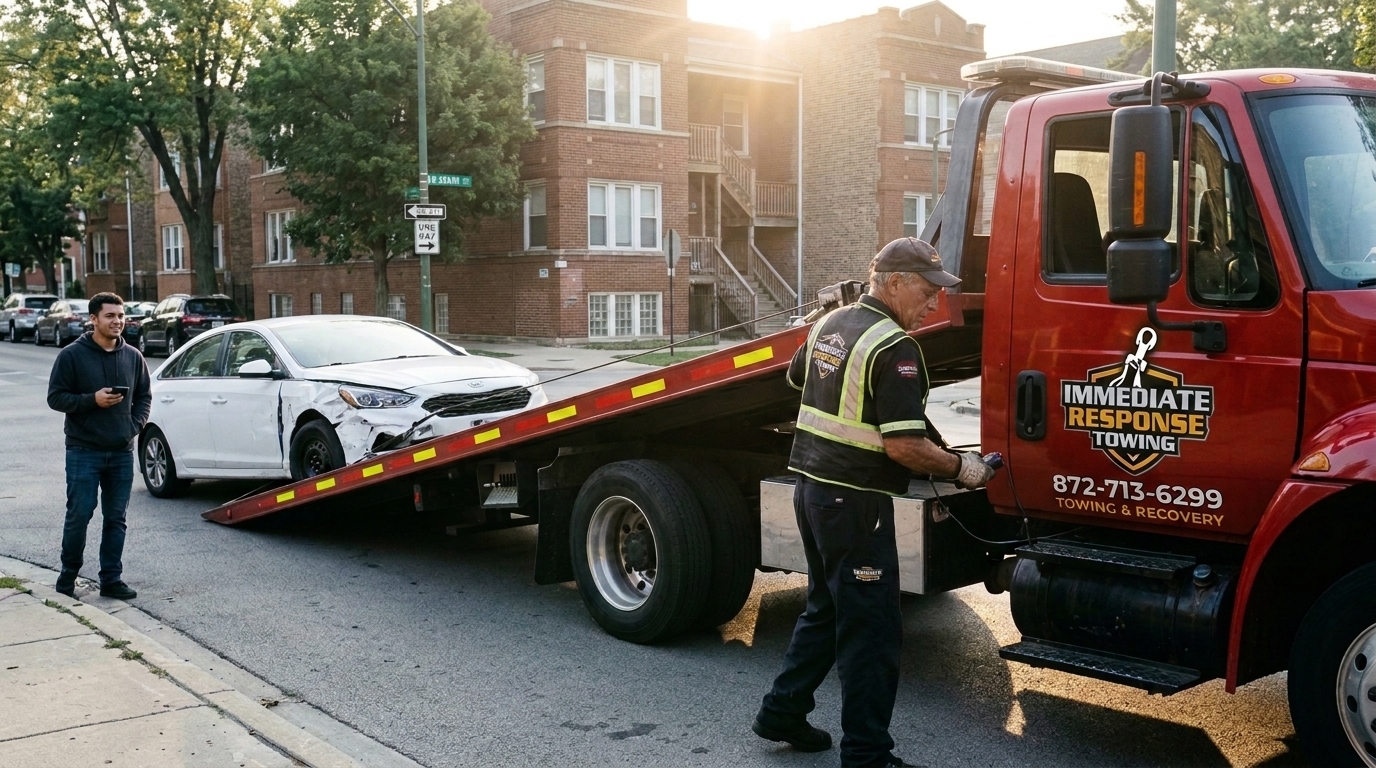
Choosing Your Destination Before the Truck Arrives
Many drivers freeze when asked "where do you want it taken?" because they have not thought about it. A little preparation helps.
Your options are generally your home, a preferred body shop, a dealership, or a secure storage lot. If your insurance company has a preferred repair network, check your policy before you decide, since it can affect coverage and paperwork. If you are unsure, tell the dispatcher so, and ask for a safe place to hold the vehicle while you decide.
Whichever you choose, confirm the address and the shop's hours. A car delivered to a closed shop at night can create problems that a thirty second question would have avoided.
Mistakes That Slow Down a Tow
Most delays come from small, avoidable things. Giving an approximate location instead of a precise one is the biggest. Another is a callback number that goes to voicemail, because if the driver cannot reach you when they are close, they may circle the area looking for you.
Others include forgetting to mention a flat tire or locked wheels, leaving out that the car is on a ramp or in a tight garage, and agreeing to a destination without checking that it is open. Also be cautious about unsolicited trucks that arrive at crash scenes without being called. Confirm the company name and the dispatch details with the person you spoke to before letting anyone hook up your vehicle.
What Happens After You Hang Up
Once you have shared these details, a good dispatcher will give you an estimated arrival time and the name of the company and driver. Keep your phone nearby, stay in a safe spot, and be ready to confirm your location if asked.
If you want a team that asks the right questions and sends the right equipment the first time, Immediate Response Towing handles accident recovery across Chicago with clear communication from the first call. You can reach the dispatch line at 872-713-6299. When the driver arrives, they will confirm the vehicle details, document its condition, and discuss your destination before anything is moved.
Final Thoughts
You do not have to be calm to make a good tow call. You only have to be clear. Know your location, describe what you see in plain words, mention any hazards, give a number you will answer, and have a destination in mind. Those few details turn a stressful situation into a manageable one, and they are the difference between waiting forty minutes and waiting far less. Save this checklist to your phone, and if the worst happens, you will already know exactly what to say.