Stuck in Mud or Snow? How Off Road Towing and Push Pull Tow Service Works
Stuck? How an Off Road Towing Service Pulls You Out of Mud, Snow, and Ditches
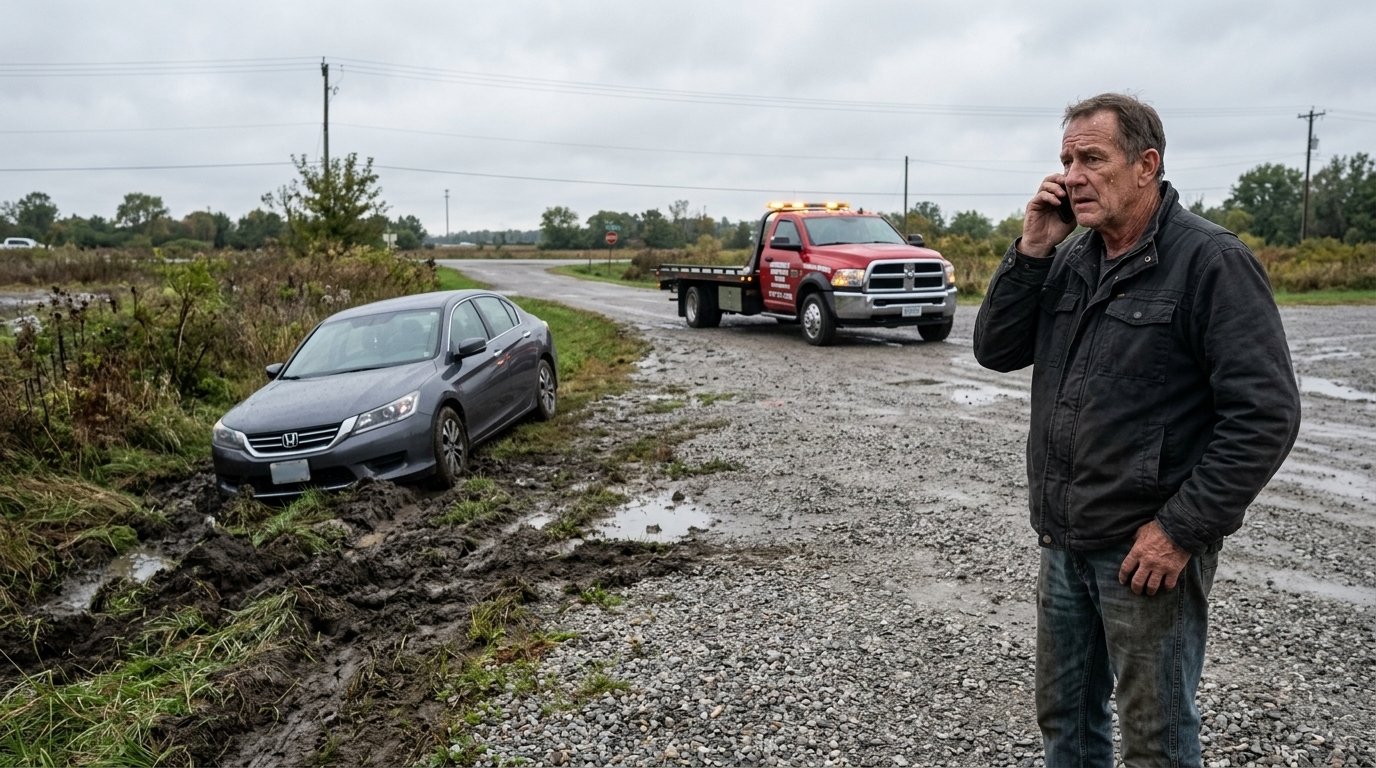
There is a special kind of dread that comes from feeling your wheels spin while the car goes nowhere. Maybe you slid into a snowbank after a Chicago storm, sank into soft ground at a gravel lot, or drifted into a ditch on a dark road at the edge of town. Your car may be perfectly fine mechanically, yet it is stuck all the same. That is where recovery work comes in, and it is very different from a standard tow. This guide explains what a tow truck to pull you out actually does, how push, pull, and tow options differ, where drivers commonly get stuck, and what to ask when you search for off road towing near me.
Why Getting Stuck Is Different From a Breakdown
A breakdown means something is wrong with the car. Getting stuck means something is wrong with the surface under it. Your engine runs, your steering works, and your brakes function, yet the tires cannot find enough grip to move you. That difference changes how help works.
A stuck vehicle needs recovery, which uses leverage, winches, and straps to move a car without relying on its own traction. Standard towing equipment is built to lift and carry a car on pavement, not to pull it out of a deep rut. Recovery crews use specialized rigging, attach to proper anchor points, and plan the angle of the pull to avoid damaging the car. That is why asking for the right service on the first call saves so much time.
Your First Moves When You Are Stuck
What you do in the first few minutes can make recovery easier or much harder. Follow these basics:
Stop spinning the wheels. Pressing the gas harder digs the tires deeper, heats the transmission, and can bury the car down to its frame. Turn on your hazard lights and, if it is safe, take a quick look at how deeply the car has sunk and which wheels are stuck.
In snow, check that the exhaust pipe is clear before running the engine for warmth, since a blocked pipe can allow dangerous fumes into the cabin. In mud or soft ground, avoid crawling under the car or standing in the path of a possible slide. Then call for help early, before conditions get worse. When you describe the situation, say where you are, what surface you are stuck on, and which direction the car is facing.
Push, Pull, or Tow: Which One Do You Need?
When people search for push pull or tow near me, they are really asking what level of help they need. The three terms describe different levels of recovery, and a good dispatcher will help you figure out which one fits.
Push
A push is the simplest form of help. A truck or vehicle uses its weight and traction to nudge your car back onto firmer ground. This works for light situations, such as a car stuck at the edge of a driveway or a shallow patch of snow.
Pull
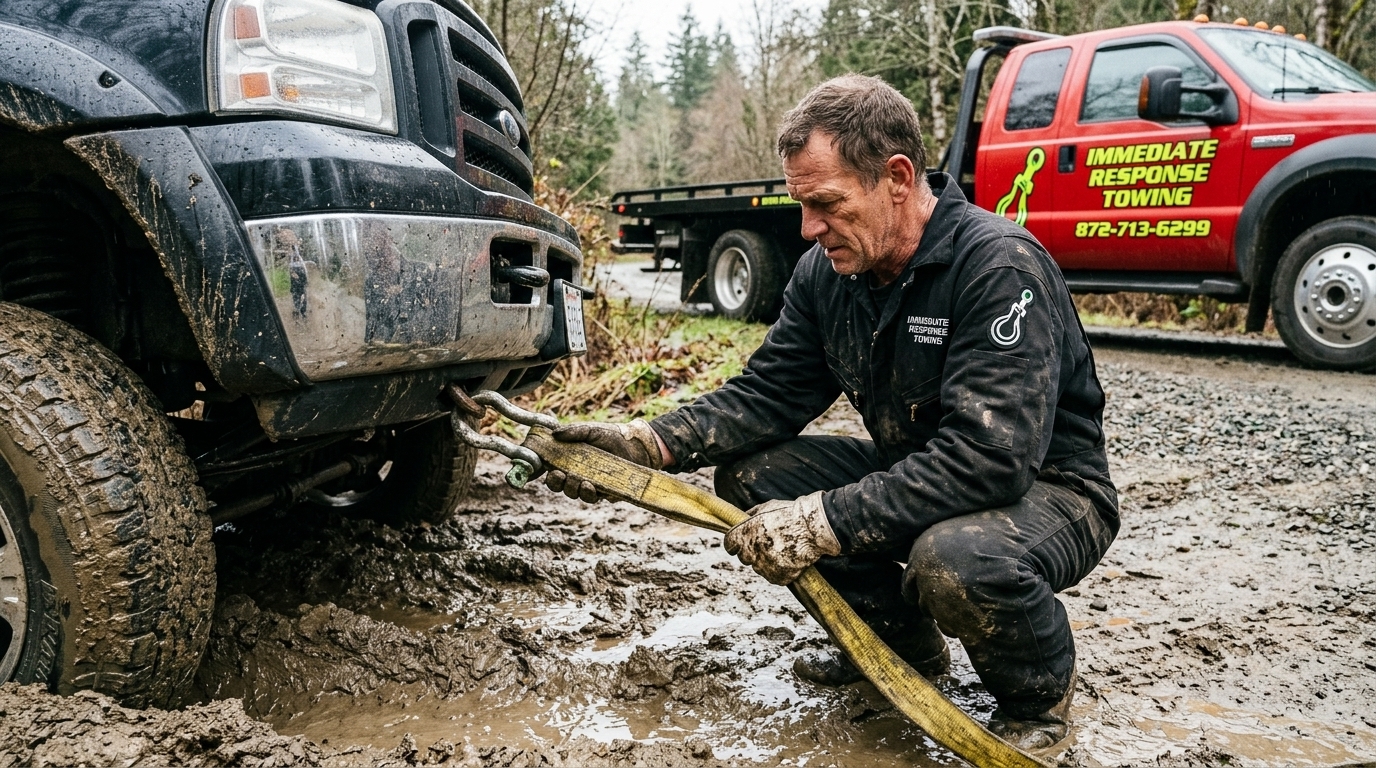
A pull uses a winch or heavy strap attached to a secure point on your car to drag it out in a straight, controlled line. This is the right choice for deeper mud, heavier snowbanks, and ditches where the car cannot move under its own power.
Tow
A tow comes after the car is back on solid ground and either cannot be driven or needs to go to a shop. A flatbed then carries it safely to its destination. Many recovery calls end with a pull followed by a quick safety check, and some need a tow afterward if damage is found.
What a Tow Truck to Pull You Out Actually Does
A professional recovery follows a careful routine, and understanding it will make the experience less stressful. Here is how a typical job unfolds:
The operator arrives, checks the scene for hazards, and talks with you about what happened.
They inspect how deeply the car is stuck and decide the safest direction to pull.
They place the truck on firm ground and set up warning lights if needed.
They attach straps or a winch line to rated recovery points on your vehicle.
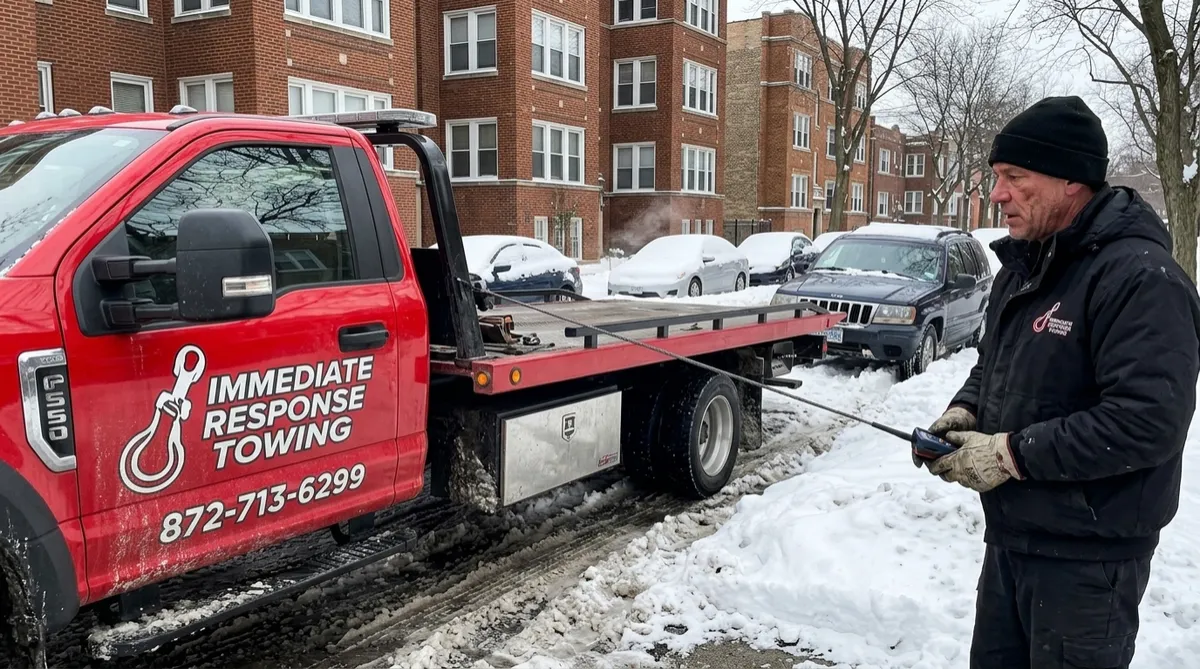
They pull slowly and steadily while watching the car and the line for stress.
Once the car is free, they check the area and confirm whether the car can drive or needs a tow.
Notice how slow and deliberate it all is. Speed is the enemy of a clean recovery, and a calm, methodical operator is a good sign.
Where Chicago Drivers Actually Get Stuck
You do not need a mountain trail to need recovery. In and around Chicago, drivers commonly get stuck in deep snowbanks left by plows, on icy side streets and alley turns, in muddy or unpaved parking areas, on construction site access roads, and in soft grass or gravel at event lots after rain. Drivers who head toward the edges of the metro area or visit forest preserves can also slip into ditches or soft shoulders.
Each surface behaves differently. Snow compacts and freezes, mud sucks at tires, and gravel shifts under a car's weight. A crew that works these conditions regularly knows how to approach each one without making the problem worse.
What Not to Do When You Are Stuck
Well meaning shortcuts can turn a minor situation into a major repair. Avoid rocking the car aggressively back and forth, since it can overheat the transmission and damage drivetrain parts. Do not ask a friend to yank you out with a tow strap tied to a bumper or any random point, because many bumpers are not designed to bear that load and straps can snap with dangerous force. Do not keep spinning the wheels once you notice you are sinking. And do not stand in line with a taut strap or cable at any time.
If you are unsure, stop and call. A short wait for a trained crew is far better than a damaged car or an injury.
What to Ask When You Search for Off Road Towing Near Me
When you are scrolling through results for an off road towing service near me, a few quick questions can tell you whether a provider is the right fit. Ask whether they do recovery work in addition to standard towing. Ask what kind of equipment they use for pulls, including winches and rated straps. Ask whether the operator has experience with your type of vehicle and surface. Ask whether the price includes recovery time, and whether a flatbed is available if you need a tow afterward.
Clear, confident answers are a good sign. Vague replies suggest the company may not have the right gear for your situation. For Chicago drivers, Immediate Response Towing is the kind of local crew worth calling when your car needs more than a simple hookup and a ride.
After the Pull: Check Before You Drive Away
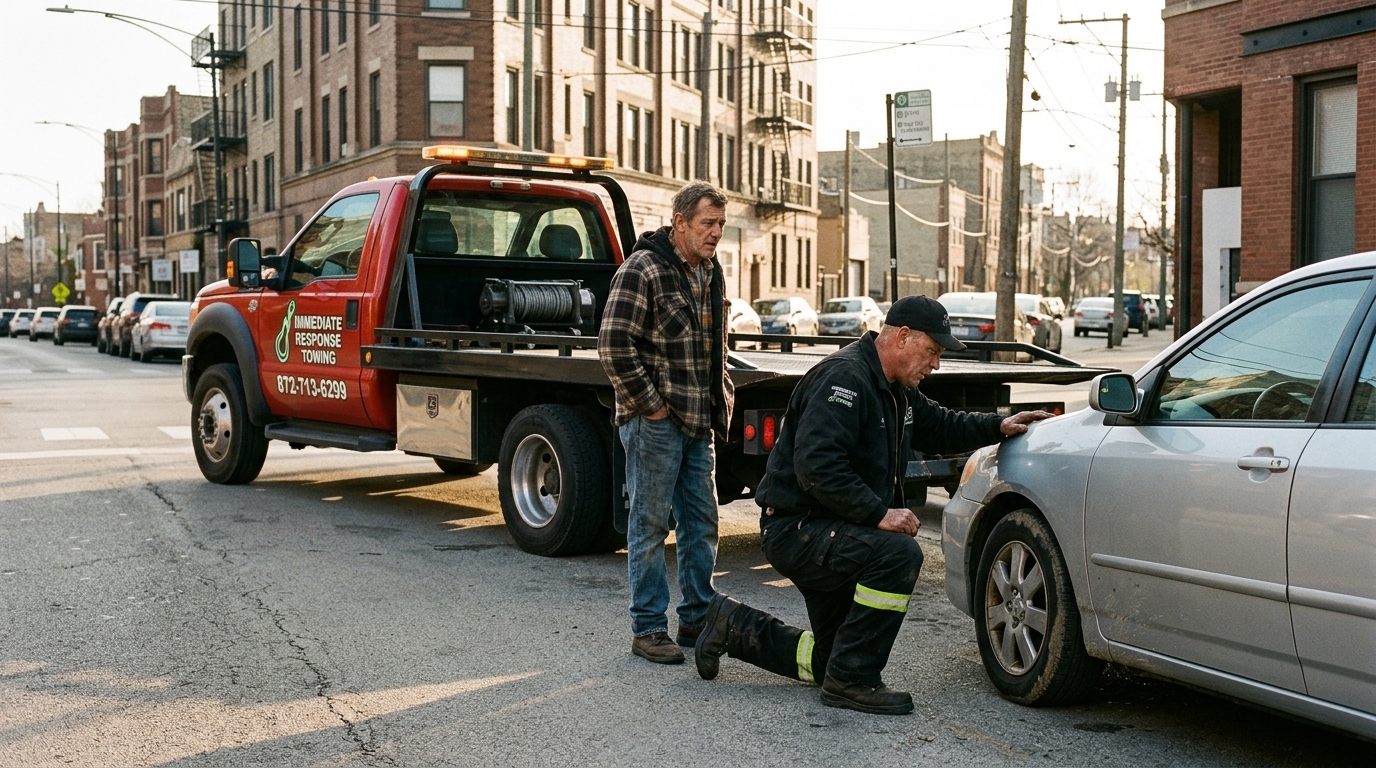
Once your car is free, resist the urge to drive off immediately. Take a minute to look underneath for hanging parts or leaking fluids. Check the tires for damage, the bumper for scrapes, and the wheels for obvious misalignment. Listen for unusual noises when you start moving, and watch the dashboard for new warning lights.
If anything feels off, ask the operator whether a tow to a shop is smart. A quick check now can prevent a bigger problem later, especially after a hard pull from deep mud or a frozen rut.
Getting Unstuck the Smart Way
Being stuck feels helpless, but it is often one of the easier problems to fix when the right people arrive with the right tools. Stop spinning, stay safe, describe your situation clearly, and choose a crew that knows the difference between a push, a pull, and a tow.
When you need a tow truck to pull you out and treat your car with care, reach out to Immediate Response Towing and keep that number saved for the day the wheels start spinning.