
Online Towing Service: How to Request a Tow From Your Phone Safely
Online Towing Service: How to Request a Tow From Your Phone and Stay Safe Doing It
Most of us handle half our lives from a phone screen, so it is no surprise that more drivers now look for an online towing service the moment their car stops working. Tapping a request feels faster than waiting on hold, and in many cases it really is. But the internet also makes it easier for slow middlemen and outright scammers to appear helpful while adding delay and risk. This guide shows you how requesting a tow online really works, what to include so help arrives quickly, how to tell a real local crew from a faceless platform, and how to keep your money and information safe along the way.
What an Online Towing Service Actually Means
The phrase covers more than one thing, and the differences matter. In the simplest case, an online towing service is a local towing company with a website or text option that lets you submit your location and vehicle details instead of calling. A request goes straight to that company's dispatcher, who sends a truck from their own fleet.
The second type is a platform or aggregator. These sites collect your request and pass it to whichever contractor accepts it, often without telling you who is coming until the last minute. Some of these work fine. Others add delays, hidden fees, or confusion about who is responsible if something goes wrong. Knowing which kind you are dealing with is the first step toward a smooth experience.
Phone Call or Online Request: Which Is Faster?
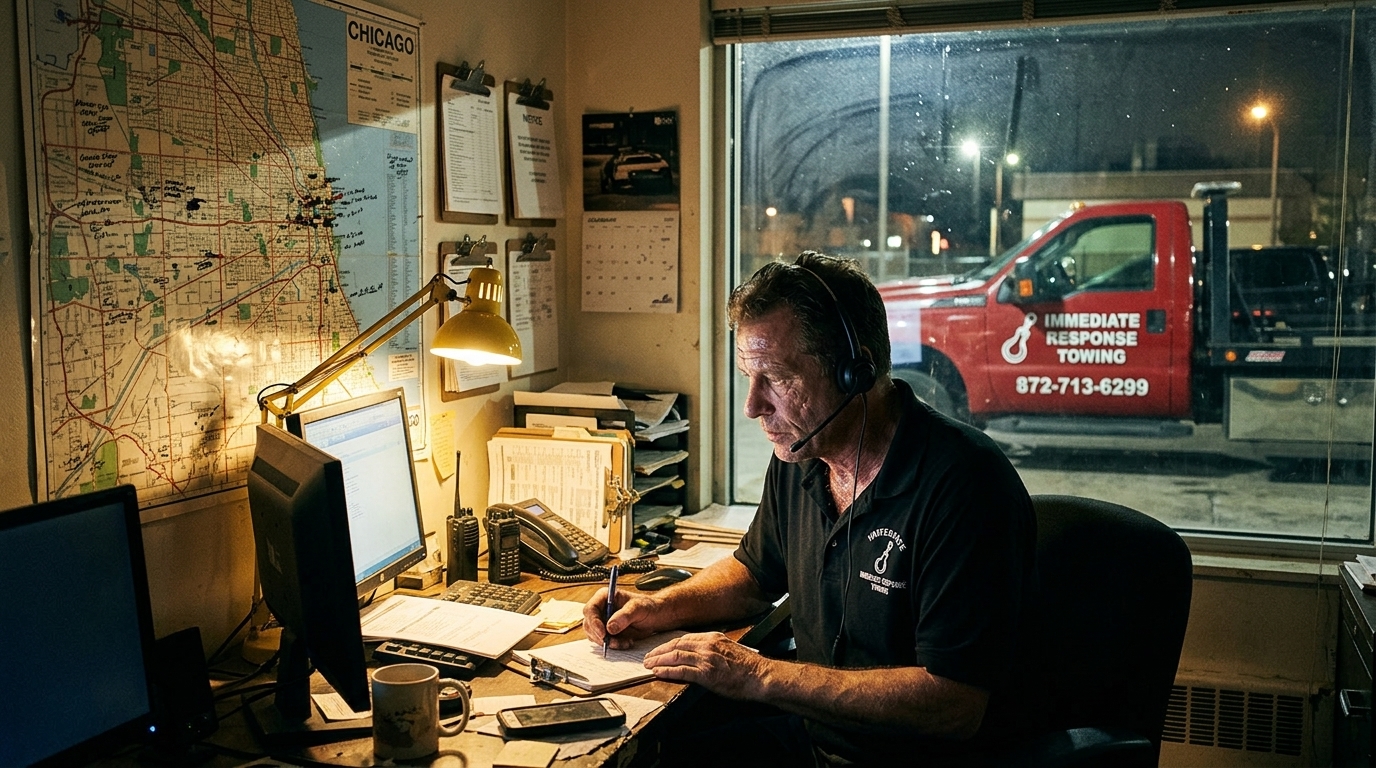
Neither wins in every situation. A phone call gives you a live person who can ask follow up questions, hear the urgency in your voice, and confirm details instantly. An online request lets you send exact information in writing, which can be helpful when you are in a noisy spot or cannot talk freely.
In a true emergency, such as a car stuck on a busy road, a call is usually better because it removes delay and confusion. For planned tows, a quick online form can be perfect, since you can write out the details at your own pace and attach notes about access or timing. The best crews offer both and respond to either with the same speed and care.
What to Include in an Online Request
A clear request saves time and prevents a second round of questions. Whether you use a form, a text, or a chat window, try to include these seven details:
Your exact location, including cross streets, mile markers, or a dropped map pin.
The year, make, model, and color of your car.
What is wrong, such as a dead battery, flat tire, accident, or stuck wheels.
Whether the car runs, rolls, and steers.
Where you want the car taken.
A phone number that you will answer, even if it is an unknown caller.
Any special conditions, such as a garage, alley, or low clearance.
A request with these details lets dispatch choose the right truck on the first try, which is the real secret to speed.
Local Company or National Platform?
When you search for a towing service in Chicago, you will see both types in the results. A local company owns its trucks, employs its drivers, and answers directly for the work. If something goes wrong, you know exactly whom to call. A national platform may promise convenience, but the truck that arrives may belong to a contractor you have never heard of, and pricing can change once the job is accepted.
Local companies also bring knowledge no platform can match. They know the narrow streets, the flood prone underpasses, the garages with low ceilings, and the stretches of expressway where a safe pickup takes extra care. If you are searching for a towing service near by, a local operator is far more likely to have a truck truly close to you rather than simply a listing that claims to be.
Spotting a Safe Online Booking
Trust is built from small signs. Look for a website that shows a real business name, a local phone number, and clear information about services. When you submit a request, you should receive a confirmation that includes the company name, an arrival window, and ideally a driver or truck number.
Be cautious if you are asked to pay in advance through a link sent from an unknown number, or if the company refuses to tell you its name. Scammers sometimes pose as tow providers and send payment requests that look official. A real crew confirms details, sends a marked truck, and collects payment after the work is complete or through a method you recognize. If anything feels off, end the conversation and call a company you trust directly. You can also check that the name on the truck matches the name you booked.
Payment and Receipts in the Digital Age
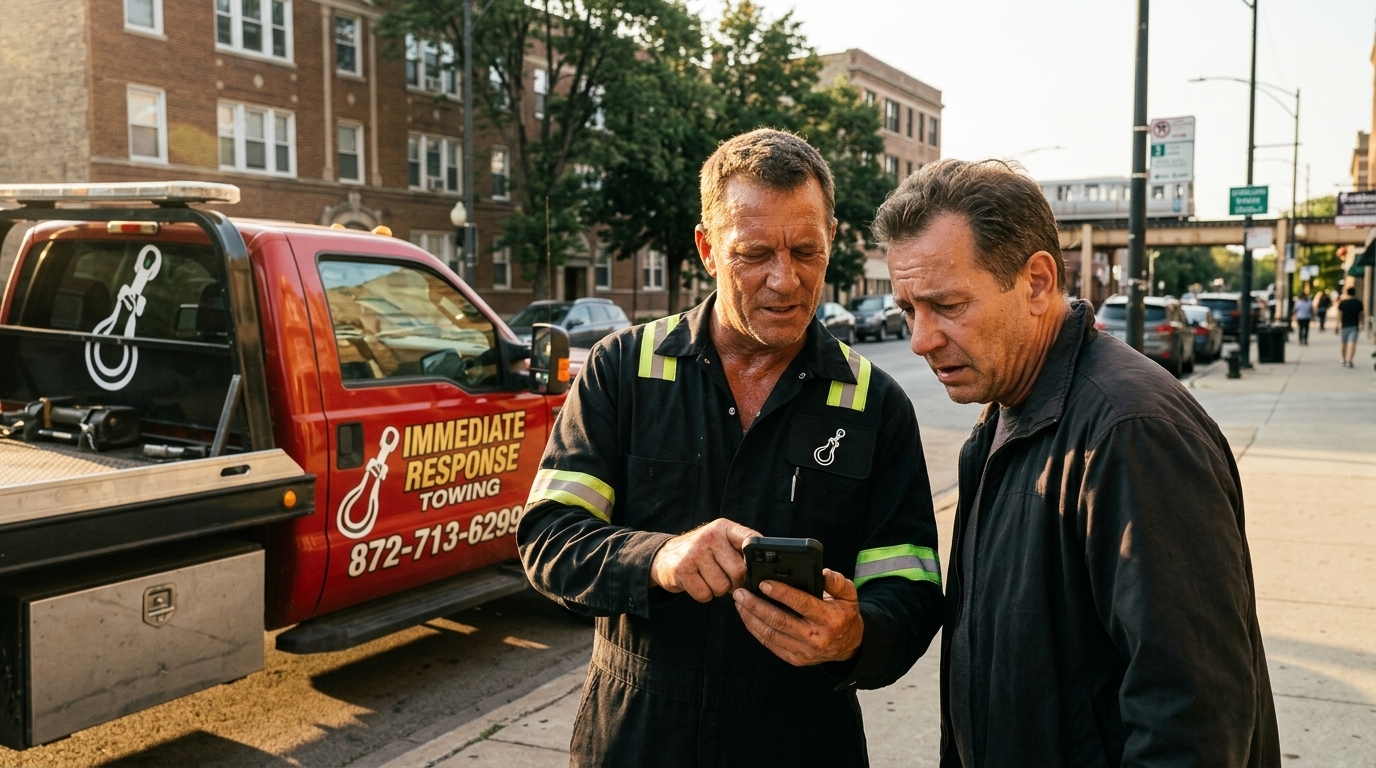
Paying for a tow today often means more than cash. Many companies accept cards, mobile payments, or invoices, and a good one explains the options before the job starts. Ask which payment methods are accepted, and make sure the total matches the quote you were given.
Never share sensitive details, such as full card numbers or personal identification, over text with someone you cannot verify. Wait until the driver arrives, confirm the company name on the truck and uniform, and then pay using a method you trust. Always request an itemized receipt, whether on paper or by message, and keep it for your records.
Tracking, Updates, and Staying Reachable
One real advantage of digital requests is communication. Many crews can send a text with an arrival window, a driver name, or a status update when the truck is on the way. That makes the wait less stressful, because you are not guessing.
To get the most from it, keep your phone charged and your volume up. Answer unfamiliar numbers, since the driver may call to confirm your location. If your situation changes, reply quickly so dispatch can adjust. Clear two way communication is what turns an online request into a smooth experience.
When a Phone Call Beats a Form
Even the best online tools have limits. If you are not sure what is wrong, if you are in a dangerous location, or if you have special circumstances such as an accident, a call is usually the safer choice. A live dispatcher can ask questions, prioritize your safety, and arrange the right equipment right away.
Many drivers find that a good mix works best: use a form for planned tows and a call for urgent ones. A company like Immediate Response Towing understands that every driver is different, and helps people in whichever way fits the moment.
Make Your Next Request a Smooth One
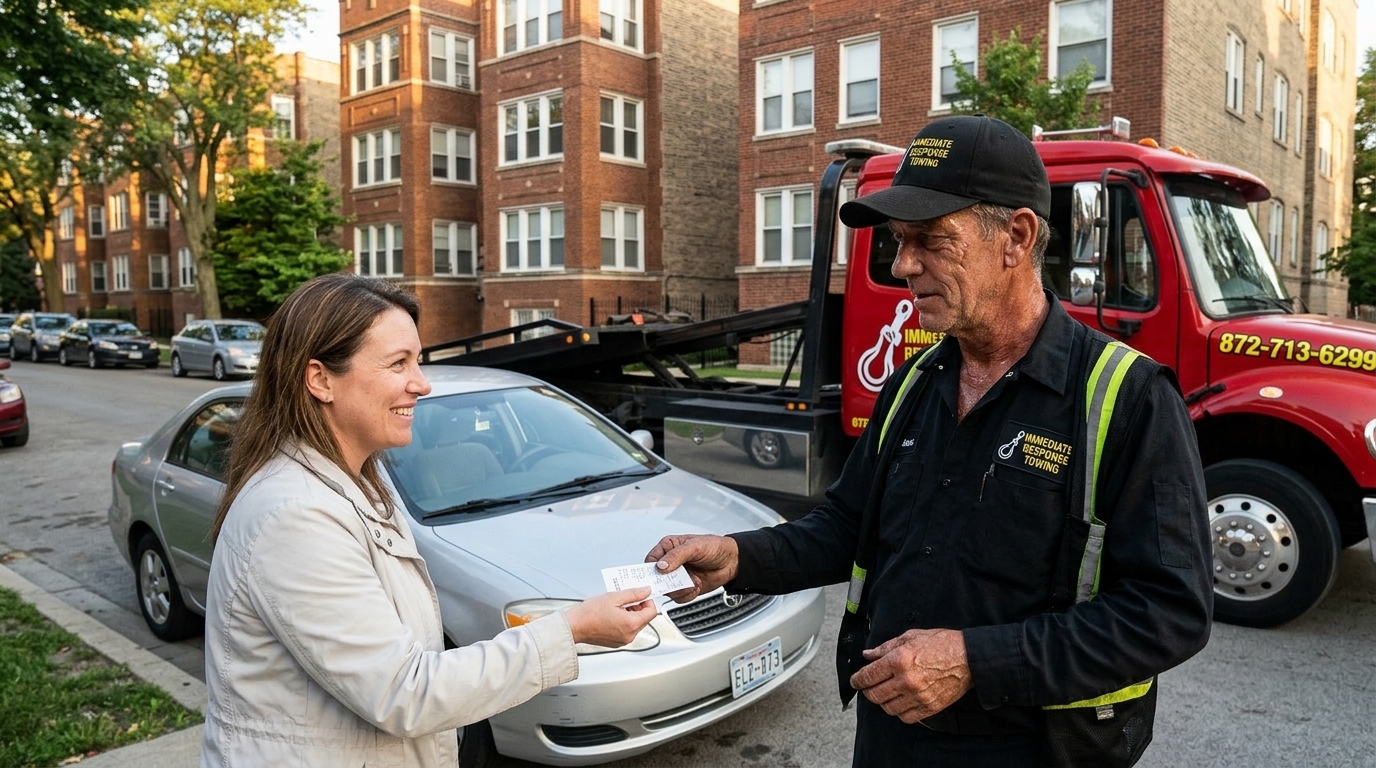
Requesting help from your phone should feel quick, clear, and safe. Choose a local company you trust, send complete details, watch for signs of a legitimate booking, and keep your payment information protected. Doing those things turns an online request into one of the simplest parts of a bad day.
When you are ready to work with a Chicago crew that communicates clearly and treats every call seriously, contact Immediate Response Towing and save the number so help is only a tap away.