Why Semi Trucks Need a Completely Different Kind of Tow
Why Semi Trucks Need a Completely Different Kind of Tow
There's a huge gap between towing a pickup and towing a fully loaded semi, and it's not just a matter of degree, it's an entirely different kind of job. A standard truck towing service built around pickups and vans doesn't have the equipment, the training, or the weight capacity to safely move an eighteen wheeler, and treating a semi like an oversized car is exactly how a bad situation turns into a genuinely dangerous one. Understanding what actually goes into recovering a big rig explains why this corner of the industry looks so different from everything else.
Why a Standard Tow Truck Simply Can't Do the Job
A fully loaded semi can weigh eighty thousand pounds or more, well beyond anything a typical wheel lift or light duty flatbed is rated to handle. Attempting to move that kind of weight with the wrong equipment doesn't just risk damaging the vehicle, it risks the truck itself failing under load, which turns a roadside breakdown into an active hazard for everyone nearby. This is exactly why trucks towed at this scale require purpose built heavy duty equipment from the very first call, not a scaled up version of what works for a car.
The Equipment Actually Behind a Big Rig Recovery
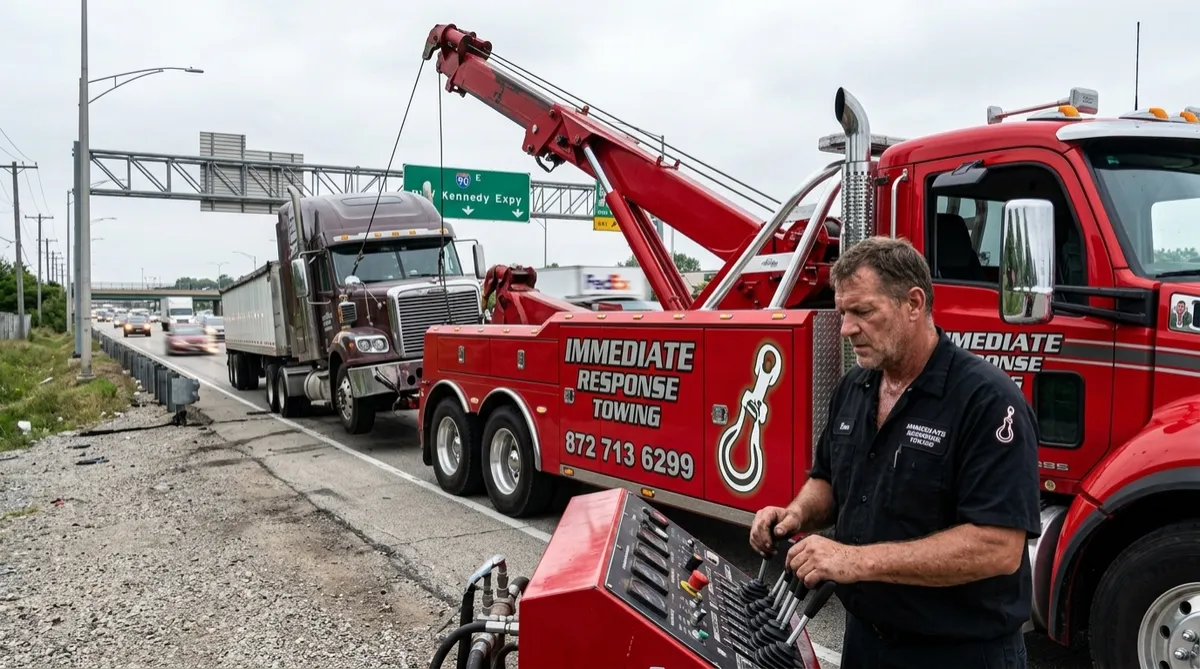
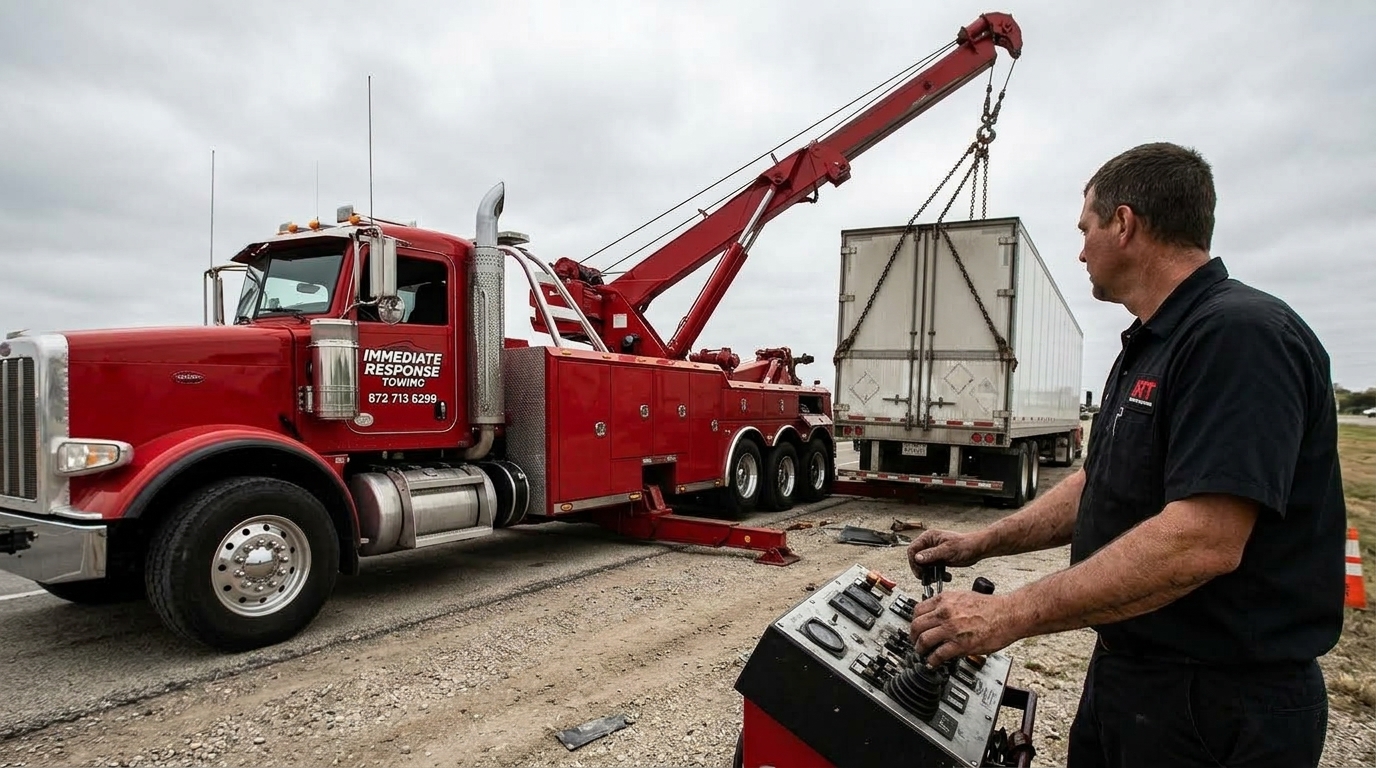
Heavy duty wreckers form the backbone of this work, built with reinforced frames, multiple axles to distribute the weight, and winches powerful enough to pull a loaded trailer out of a ditch or off an icy shoulder. For more complex situations, rotator trucks come into play, recovery vehicles built around a rotating boom that can lift and reposition a semi from angles a standard wrecker simply can't reach, which matters enormously when a trailer has overturned or jackknifed across multiple lanes. Some recoveries even call for air cushion systems, which can upright a tipped tractor trailer combination without needing to unload the cargo first, saving hours compared to older recovery methods. None of this equipment is cheap or common, which is part of why genuinely capable heavy duty operators are harder to find than standard tow providers.
What Happens When a Truck Rolls Over or Jackknifes
A rollover or jackknife on a highway is one of the more complex scenes in all of towing, since the priority isn't just moving the truck, it's managing an active traffic hazard while doing it. Recovery crews have to assess load weight and balance, ground conditions, and how the incident is affecting surrounding lanes before a single cable gets attached. Cargo adds another layer entirely, since a shifted load has to be stabilized or repositioned before the trailer can move safely, and depending on what's being hauled, that process alone can take considerable time and coordination with the driver's carrier. Getting this wrong doesn't just risk further vehicle damage, it can extend how long a highway stays partially closed, which compounds the disruption for everyone else on the road.
Why Response Time Hits Differently for Commercial Trucks
A personal vehicle sitting on the shoulder for an extra hour is frustrating. A commercial truck sitting there is actively costing money, delaying freight, and in some cases pushing a driver closer to a federally regulated hours of service limit that affects when they're legally allowed to keep driving at all. This is why fleet managers and independent drivers alike put so much weight on how fast a truck towing companies near me search actually gets someone qualified to the scene, since every extra minute has a real cost attached that a personal vehicle breakdown simply doesn't carry in the same way.
What to Have Ready When You Call
A commercial breakdown call goes faster when a few specific details are ready ahead of time.
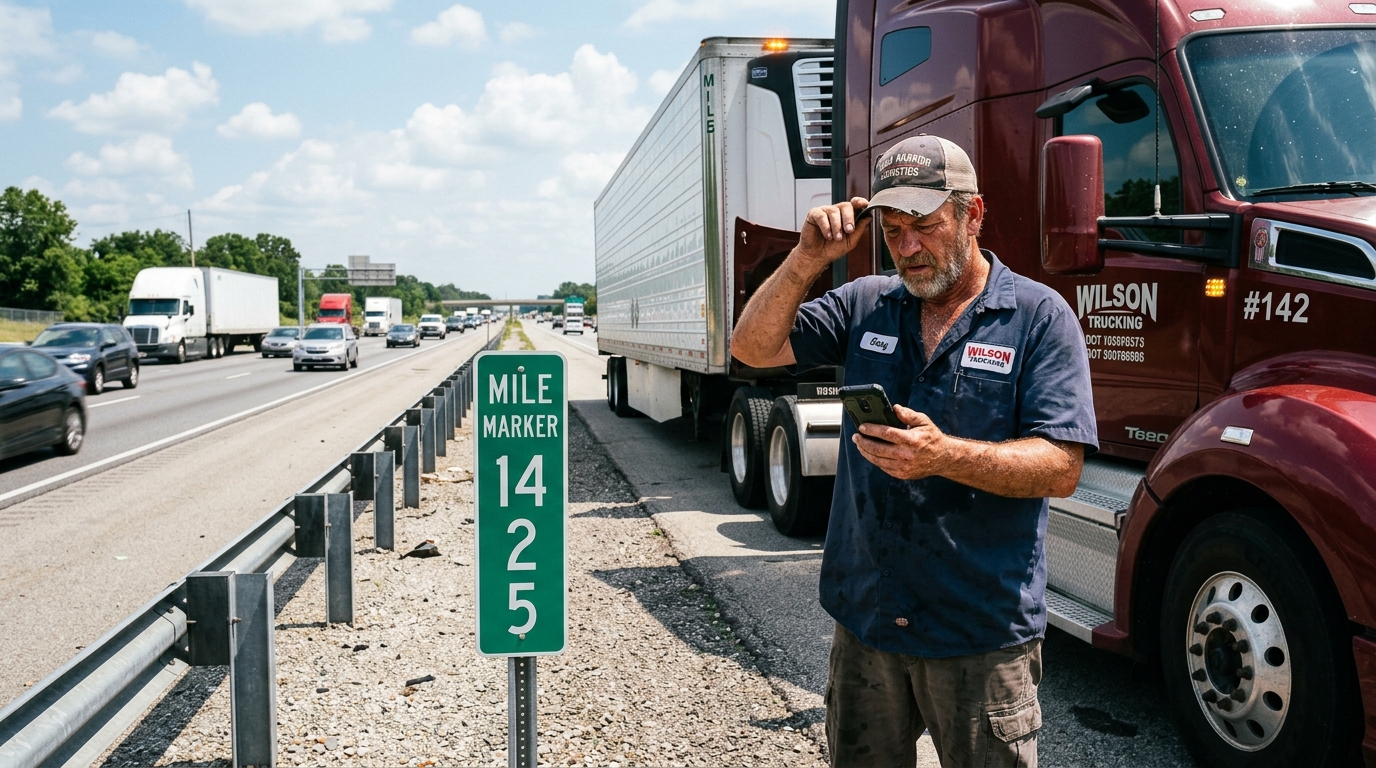
Your exact location, ideally a mile marker or nearby exit if you're on a highway
Whether the trailer is loaded, and roughly what kind of cargo it's carrying
Your DOT number and carrier information, if applicable
Whether the truck needs a straightforward tow truck tow or a full recovery, such as an upright or winch out
A contact at your dispatch or fleet office, if this isn't your personal decision to make alone
Having these ready doesn't just speed up the call, it helps the company send the right equipment on the first trip instead of discovering a mismatch once a driver already arrives.
Getting the Right Equipment the First Time
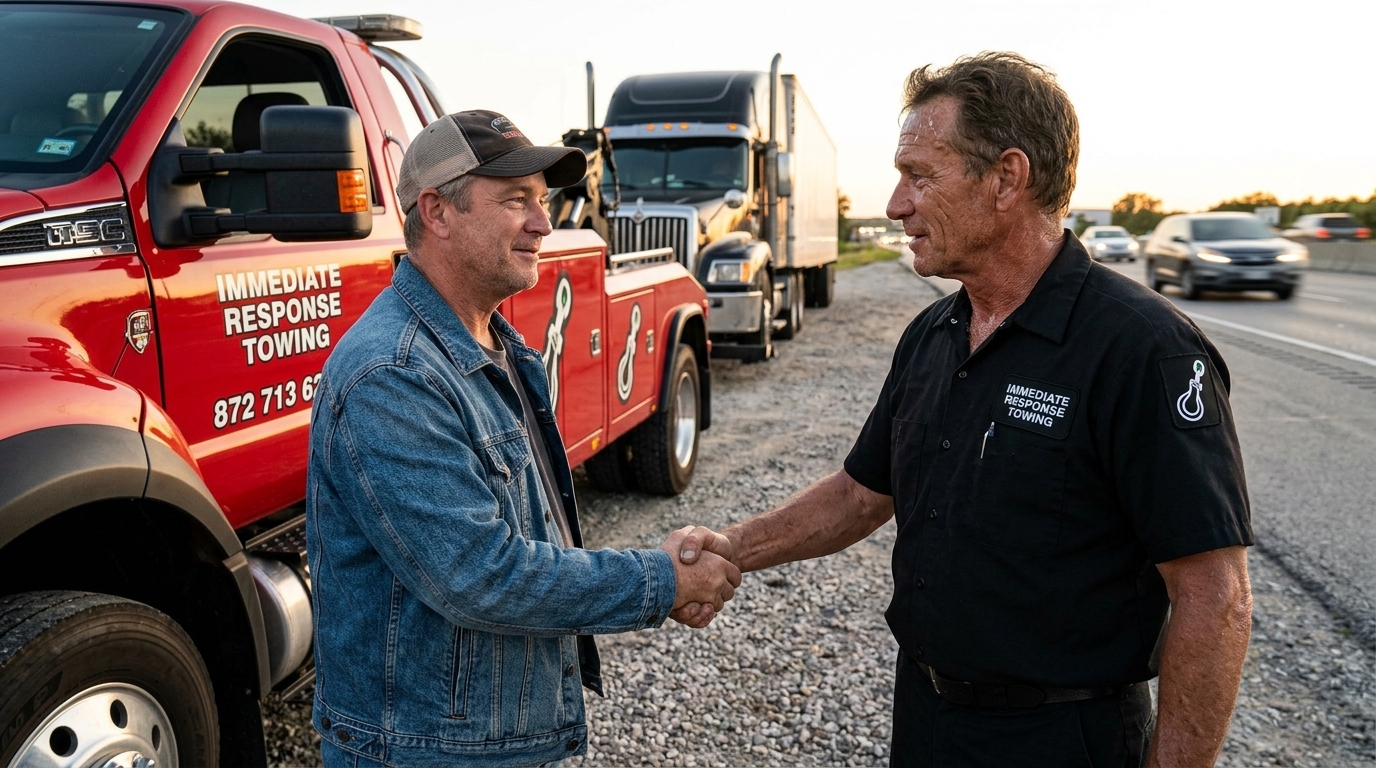
Commercial drivers, fleet managers, and carriers moving freight through Chicago and along nearby corridors count on knowing that when a truck goes down, the equipment showing up actually matches the job. That's the standard Immediate Response Towing holds itself to, treating heavy duty recovery as its own specialty rather than an afterthought tacked onto a standard towing lineup.
If your semi or commercial vehicle needs a real heavy duty response, reach out here and get equipment built for the actual size of the job.