Semi Truck Towing in Chicago: What to Do When Your Rig Goes Down
Semi Truck Towing in Chicago: What to Do the Moment Your Rig Goes Down
It is 4:45 a.m. on the Dan Ryan. Your trailer is loaded, your delivery window is shrinking, and your dash just lit up like a pinball machine. Whether it is a blown turbo, a flat steer tire or a jackknife on black ice, every minute you sit on the shoulder costs money and adds risk.
The good news is that a breakdown does not have to become a disaster. Knowing how semi truck towing works, what to say on the phone and what separates a real heavy duty operator from a guy with a pickup and a chain gives you control when everything feels out of control.
Why Semi Towing Is Nothing Like Towing a Car
A loaded tractor trailer can weigh up to 80,000 pounds. A standard tow truck simply cannot handle that, and trying to make it work is how drivelines get destroyed and accidents happen.
This is the core difference between light duty and heavy duty work. Light duty trucks handle cars and small pickups. Semi towing calls for rotator wreckers, heavy duty sliders and tandem axle recovery units built to lift, pull and stabilize enormous loads without twisting the frame.
Several things make semis harder to move:
Air brakes lock down automatically when pressure drops, so the brakes often must be released or the driveshaft disconnected before towing.
The tractor and trailer are two separate machines that may need different tow plans.
Cargo shifts the center of gravity, which changes how the rig must be lifted.
Wheelbase and length demand wide turning room that Chicago streets do not always provide.
Skipping these details is how a simple tow turns into a ruined transmission or a second crash.
How to Tow a Semi Truck the Right Way

If you have ever wondered how to tow a semi truck, the honest answer is that it takes trained operators and proper equipment. Still, understanding the process helps you spot a professional and keep your rig safe. Here is how a proper heavy duty tow typically unfolds:
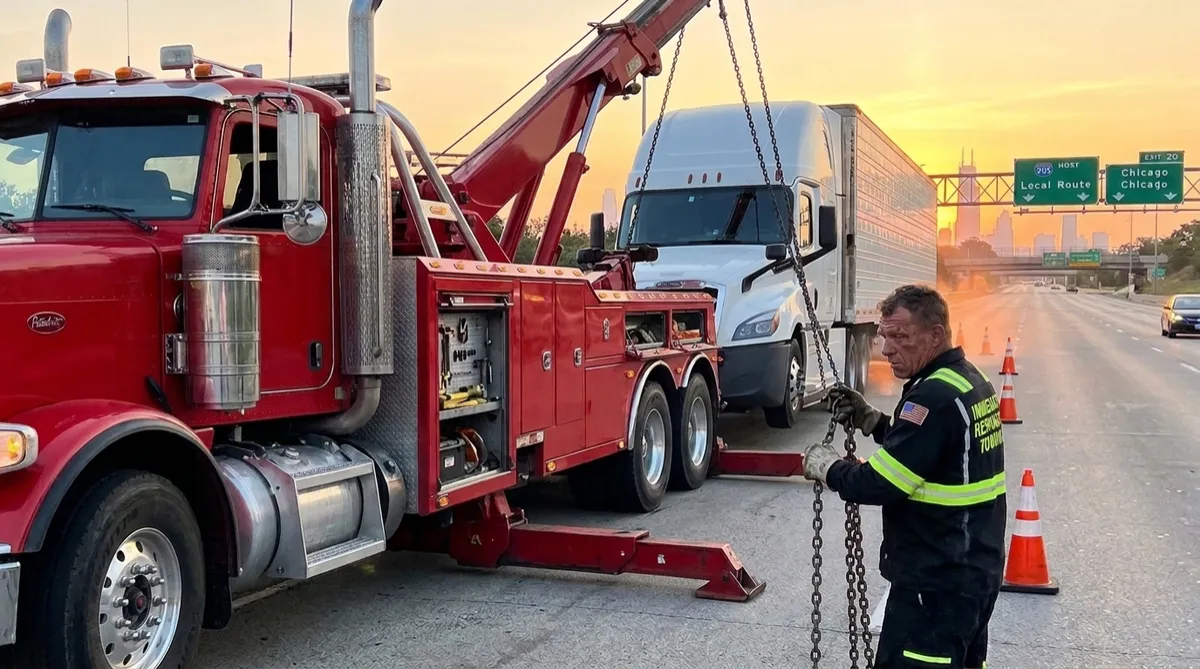
Scene safety first. The operator parks the wrecker to shield your truck, sets out cones and triangles, and turns on warning lights before touching anything.
Damage and load assessment. The crew checks tires, axles, the fifth wheel, brake lines and the cargo to decide how to lift safely.
Trailer separation. If the tractor needs to be towed alone, the trailer is carefully dropped or moved by a second unit.
Brake and driveline prep. Spring brakes are released or the driveshaft is pulled so the drivetrain is not damaged in transit.
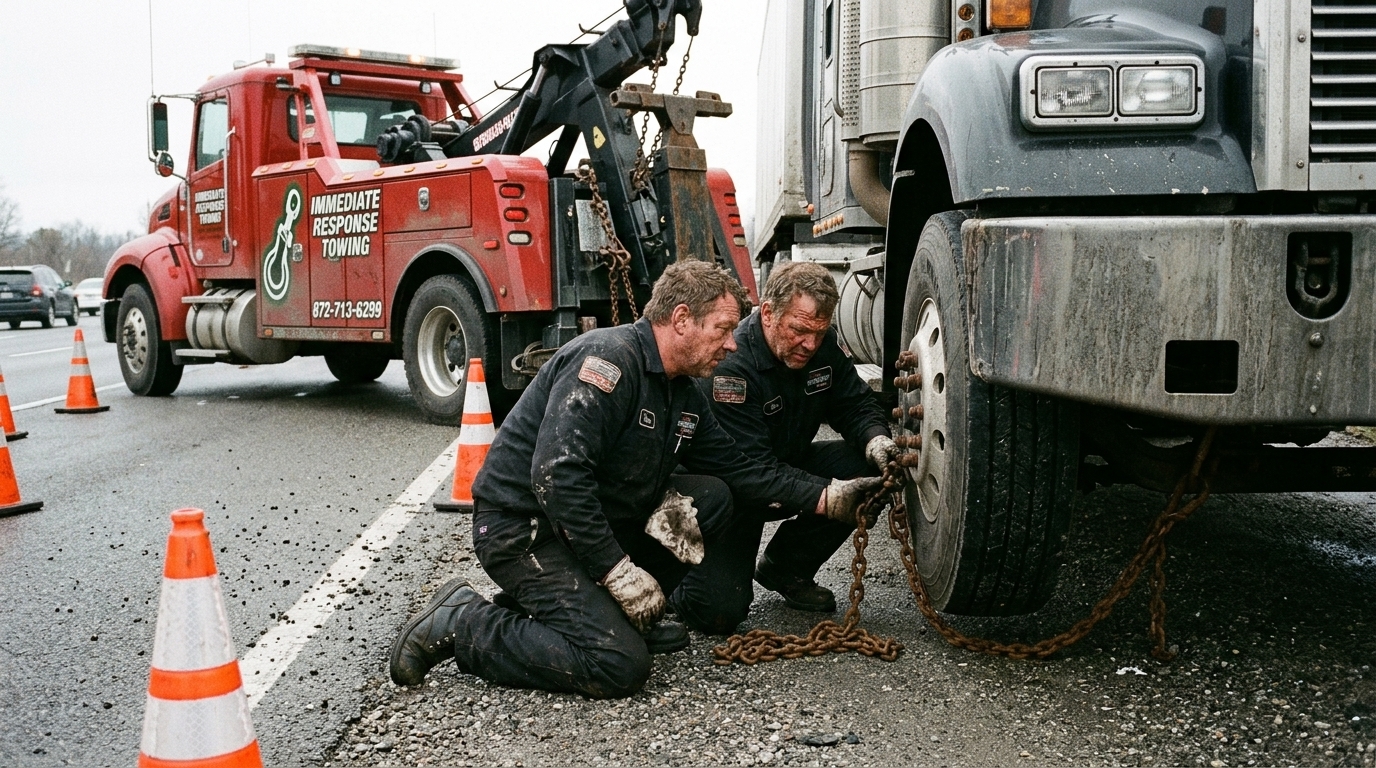
Secure rigging. Chains, straps and under reach equipment are attached to approved points on the frame, never to bumpers or fragile parts.
The tow itself. The operator moves at a controlled speed, plans turns early and avoids routes with low clearance.
Delivery and handoff. Your rig goes to your shop, yard or preferred repair facility with a clean report of what was done.
Every step protects your equipment, your cargo and everyone else on the road.
What Heavy Duty Towing Chicago IL Drivers Should Expect
Searching for heavy duty towing Chicago IL usually means one thing: you need a response that is fast, calm and competent. A reliable provider should offer more than a hook and a bill.
Look for crews that can handle roadside recovery, accident cleanup, winching out of ditches, uprighting rolled trailers, and long distance hauls to your terminal. Equipment size matters too. A company running only one small wrecker will struggle the moment a full size tractor trailer needs lifting.
Chicago adds its own challenges. Tight loading docks on the south and west sides, congested expressways, low viaducts, construction zones and brutal winters all change how a recovery should be planned. Operators who work these roads every day know which exits give them room, which bridges are too low and when to reroute before trouble starts.
That local knowledge is what drivers overlook when they shop by price alone. A cheaper tow that scrapes a viaduct is not cheaper at all.
Choosing a Wrecker Service Chicago IL Drivers Can Trust
When you are stuck on the shoulder with traffic roaring past, you will not have time to compare ten companies. Make the call before you need it by knowing what to check.
Response time. Ask for an honest arrival estimate. A professional dispatcher will give you a realistic window and update you if it changes.
Equipment match. Confirm they are sending a unit rated for your rig and load, not just any available truck.
Insurance and licensing. A legitimate wrecker service chicago il fleet carries proper insurance for both vehicle and cargo. Do not be shy about asking.
Clear pricing. Good companies explain hookup fees, mileage, recovery time and after hours charges before work begins. Surprise invoices are a red flag.
Round the clock availability. Breakdowns do not follow business hours. Your towing partner should not either.
Companies like Immediate Response Towing build their reputation on exactly this: dispatching fast, sending the right equipment and treating every disabled truck like it belongs to someone who has a delivery to make.
Mistakes That Make a Breakdown Worse
Most drivers are not careless. They are stressed, and stress leads to avoidable errors. Here are the ones tow operators see again and again.
Trying to limp the truck to the next exit is the biggest. Driving on a failing axle, a leaking air line or a damaged steer tire can turn a few hundred dollars of repair into thousands. If something feels wrong, stop where it is safe and call.
Another common mistake is accepting the first tow truck that shows up. After a crash, unsolicited operators sometimes arrive at the scene hoping for business. Always confirm that the company on your dispatch call is the one pulling up, and do not hand over keys to a stranger.
Finally, many drivers forget to document the scene. Take photos of the damage, the cargo, the road and your equipment before anything is moved. This protects you with insurers, carriers and brokers later.
Prepare Before the Next Breakdown
The best semi towing experience is the one you planned for. Keep your towing partner's number saved in your phone and posted in the cab. Know your trailer's weight, your cargo type and your preferred repair shop. Carry reflective triangles, a flashlight and a fully charged phone, and make sure fleet managers have your live location when something goes wrong.
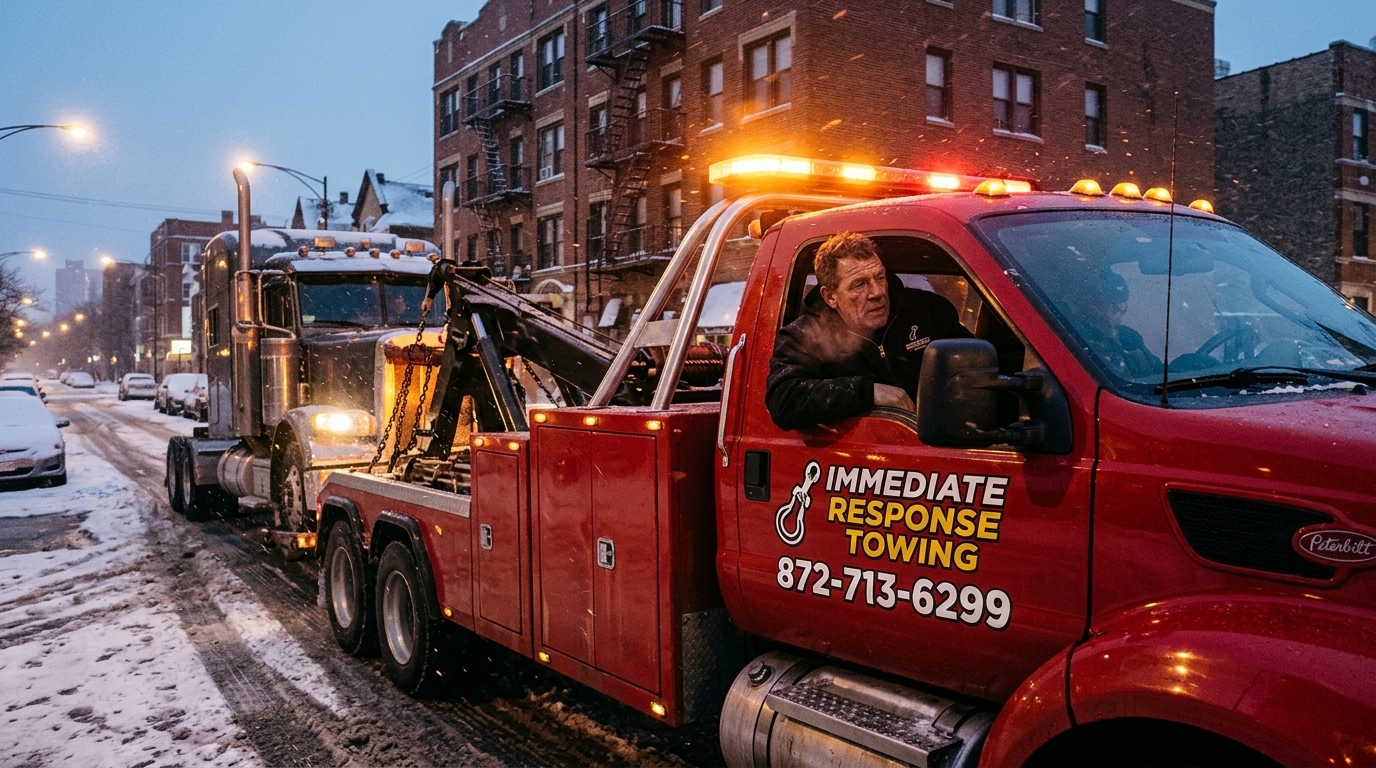
Winter deserves special attention in Chicago. Ice, drifting snow and short daylight make recoveries slower and more dangerous. Check tire tread, battery strength and air system moisture before cold snaps hit. A twenty minute inspection can prevent a six hour wait on I-90.
Frequently Asked Questions About Semi Truck Towing
How much does it cost to tow a semi in Chicago?
Pricing depends on distance, equipment required, time of day, load condition and whether recovery work is involved. A simple tow costs far less than pulling a rolled trailer from a ditch. Ask any provider for a clear estimate before they hook up.
Can a semi be towed with cargo still on board?
Often yes, but it depends on weight, balance and damage. Some loads must be transferred to another trailer first. A trained operator will make that call on site.
How fast can a heavy duty wrecker get to me?
Arrival times vary with traffic, weather and location, but a dedicated Chicago fleet can usually reach major highways and industrial corridors quickly. Always ask for a real estimate when you call.
Should I call my insurance or the tow company first?
Call the tow company first if you are in a dangerous spot, then notify your insurer and carrier. Safety comes before paperwork.
Keep Your Wheels Rolling
A semi breakdown is stressful, but it is manageable with the right partner. Understanding how semi truck towing works, what proper equipment looks like and which questions to ask a heavy duty provider puts you ahead of most drivers on the road.
When your rig goes down in Chicago, you need more than a tow. You need a crew that arrives quickly, protects your equipment and gets you moving again. Contact the team at Immediate Response Towing for dependable heavy duty recovery whenever and wherever you need it.