Tow Vehicle vs Towing Vehicle: What Chicago Drivers Should Know
Tow Vehicle vs Towing Vehicle: What Chicago Drivers Need to Know Before the Hook Goes On
Your car is dead on the shoulder, or you are about to haul a trailer for the first time, and suddenly the words "tow vehicle" and "towing vehicle" matter a lot. Most guides treat them as a vocabulary lesson and stop there. This one is built for the moment you actually need an answer. You will learn what each term means, which numbers decide whether a vehicle can safely pull a load, and when the smartest move is to hand the job to a professional crew offering automobile towing instead of risking your own bumper, transmission, or safety.
What Counts as a Tow Vehicle, and Why the Wording Matters
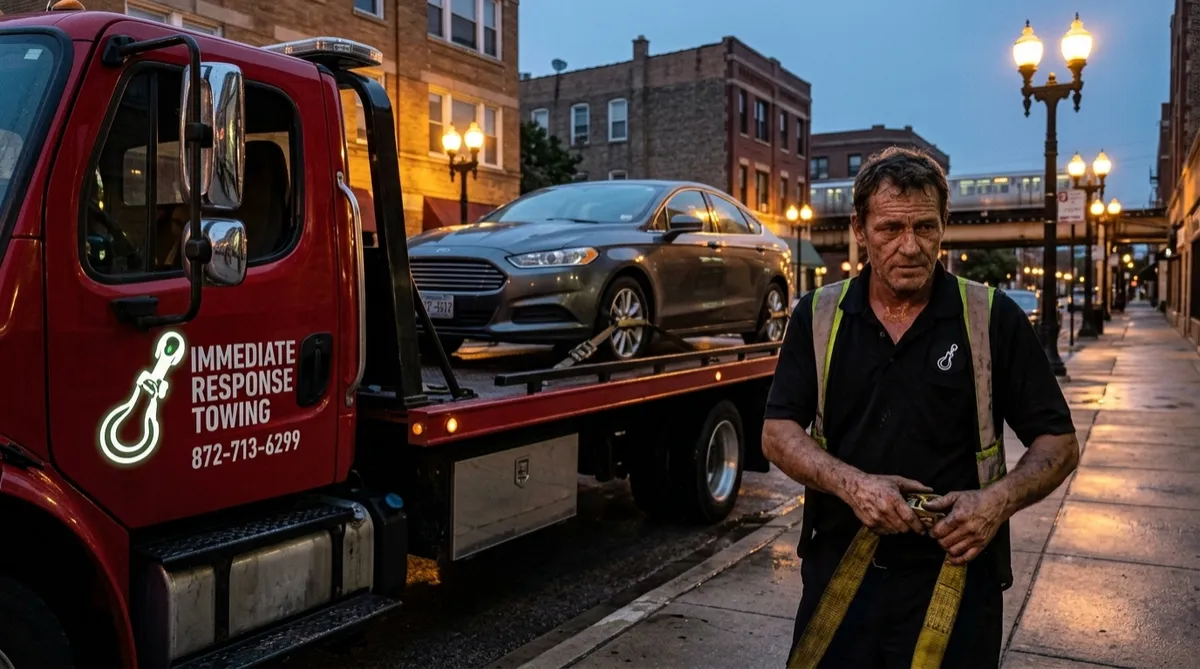
A tow vehicle is the vehicle doing the pulling. It might be your pickup hauling a camper, an SUV moving a small boat, or a heavy duty wrecker lifting a stranded sedan off a Chicago expressway. The phrase "towing vehicle" means the same thing in everyday speech, and you will see both in manuals, insurance paperwork, and dealer listings. Where the difference shows up is context. Manufacturers usually say "tow vehicle" when describing recreational towing, such as trailers and campers. Roadside industry language leans toward "towing vehicle" when describing commercial rigs built for recovery work.
Knowing which situation you are in saves money. A family SUV is a fine tow vehicle for a lightweight utility trailer, but it is the wrong tool for moving a disabled car. A purpose built recovery truck is the right tool for that job, and it carries equipment, insurance, and training that no private driver can match.
Towing Vehicle Basics: The Numbers Behind Safe Pulling
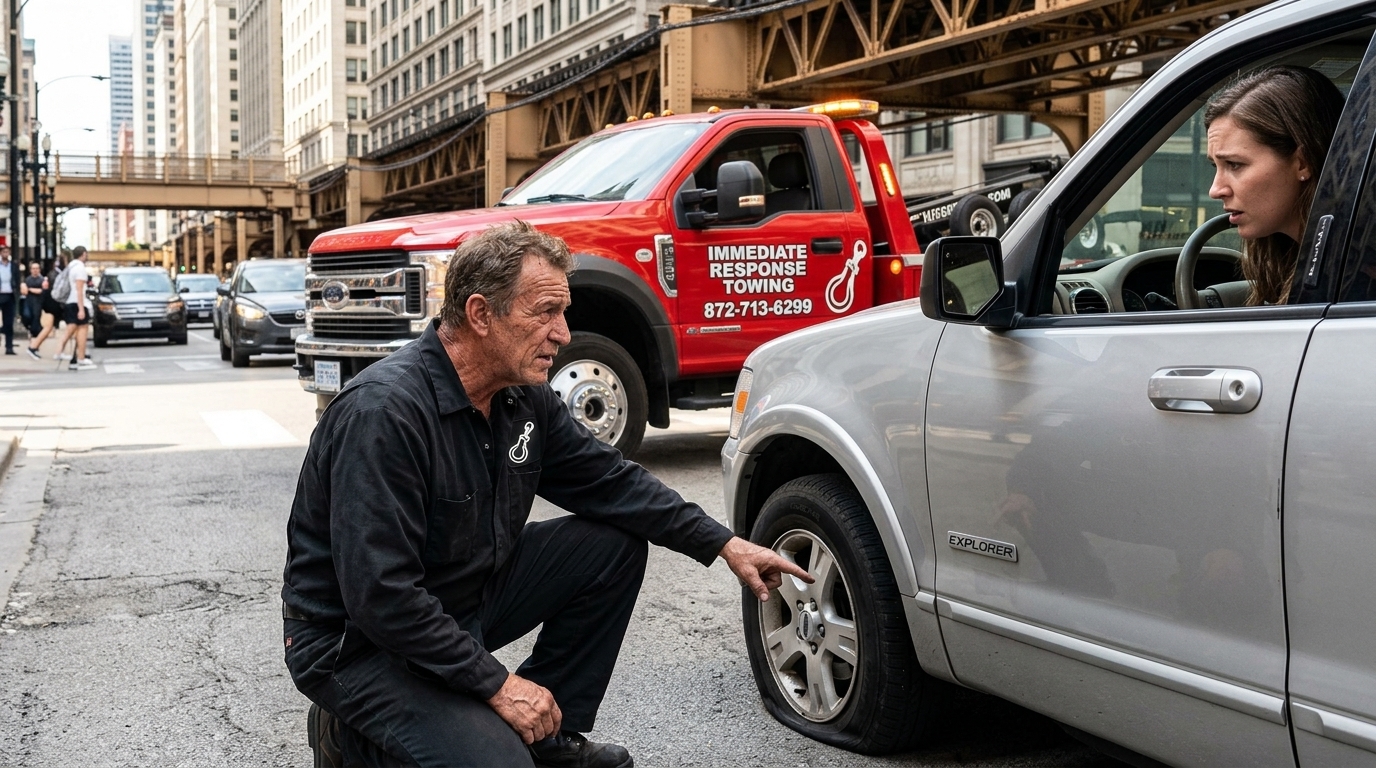
Every towing vehicle has limits set by its maker, and they are printed in your owner's manual and on the driver door jamb sticker. Ignore them and you risk overheated transmissions, snapped hitches, and brakes that cannot stop the combined weight. Here is what each number means in plain language.
Towing Capacity
This is the maximum weight your vehicle can pull. It depends on the engine, transmission, axle ratio, cooling system, and frame. A midsize sedan may be rated for under 2,000 pounds, while a full size truck can exceed 10,000 pounds. Always treat the rating as a ceiling, not a target. Pulling at 80 percent of capacity leaves a margin for hills, wind, and sudden stops.
Tongue Weight
Tongue weight is the downward pressure the trailer places on the hitch. For most setups it should land between 10 and 15 percent of the trailer's total weight. Too little and the trailer sways. Too much and the rear of your towing vehicle sags, lifting weight off the front wheels and making steering feel loose.
Gross Combined Weight Rating
This figure covers the tow vehicle, the trailer, passengers, fuel, and everything in the cargo area added together. People often check capacity and forget that four adults and a full tank of gas eat into the margin before the trailer is even hooked up.
Automobile Towing in Chicago: When a Professional Is the Only Smart Option
Plenty of people ask whether a friend with a truck can just pull a broken car to the shop. Sometimes it works. More often, it ends in a damaged drivetrain, a ticket, or a crash. Automobile towing is a skilled service, and Chicago's traffic, tight side streets, and tricky parking rules make it even less forgiving than most places.
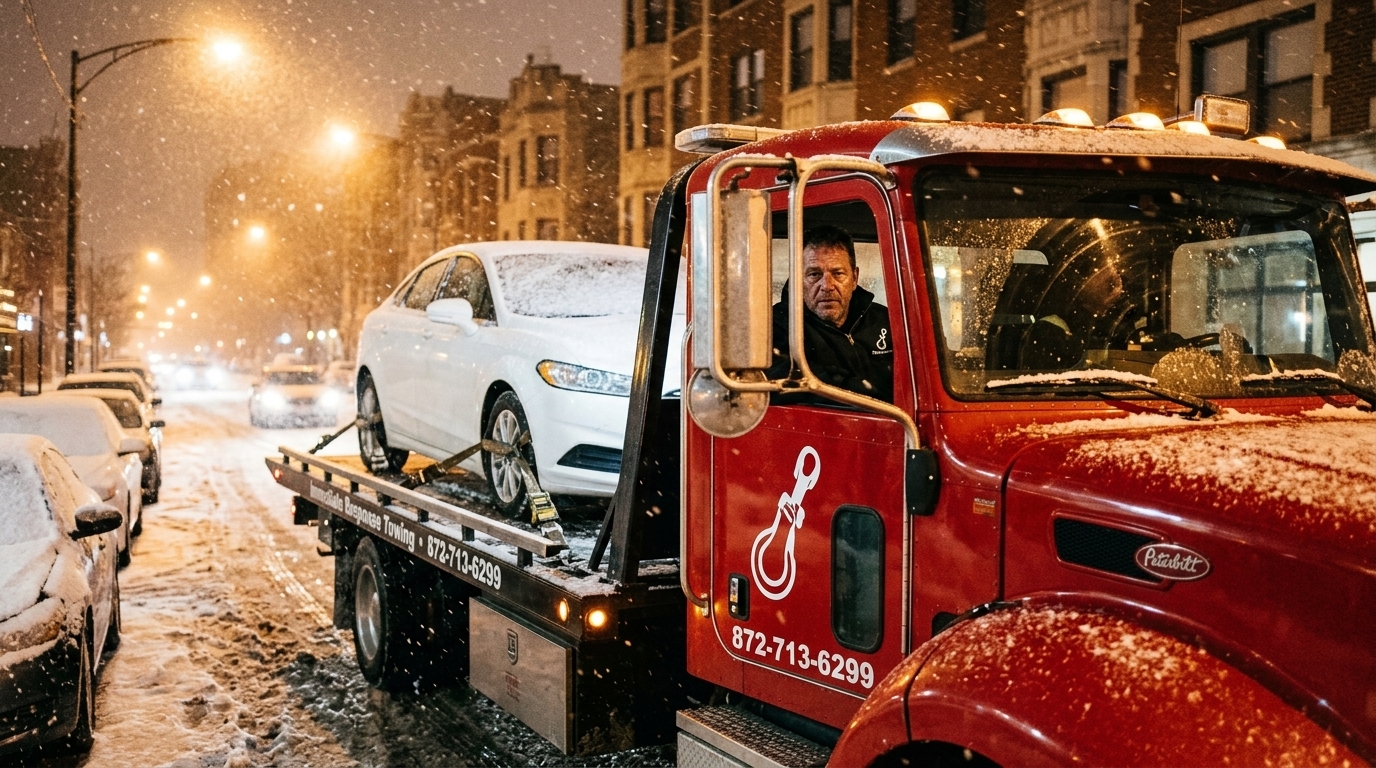
Call a professional when your car will not start and sits in a live lane, when it has been in an accident and the steering or suspension may be compromised, when it is an all wheel drive or electric model that cannot be dragged without damage, or when it is stuck in a snowbank, ditch, or underground garage. A crew like the one at Immediate Response Towing arrives with flatbeds, wheel lifts, winches, and recovery straps matched to your exact vehicle, which means your car leaves the scene in the same condition it entered it, only on a truck.
What Happens During Professional Automobile Towing
Understanding the process removes the stress when you are standing on the curb waiting for help. A typical dispatch from call to drop off looks like this:
You call and share your location, vehicle make and model, and the problem you are facing.
Dispatch confirms the right truck type, whether that is a flatbed, wheel lift, or heavy recovery unit, and gives you an arrival window.
The driver arrives, checks the scene for hazards, and photographs your vehicle's condition before touching it.
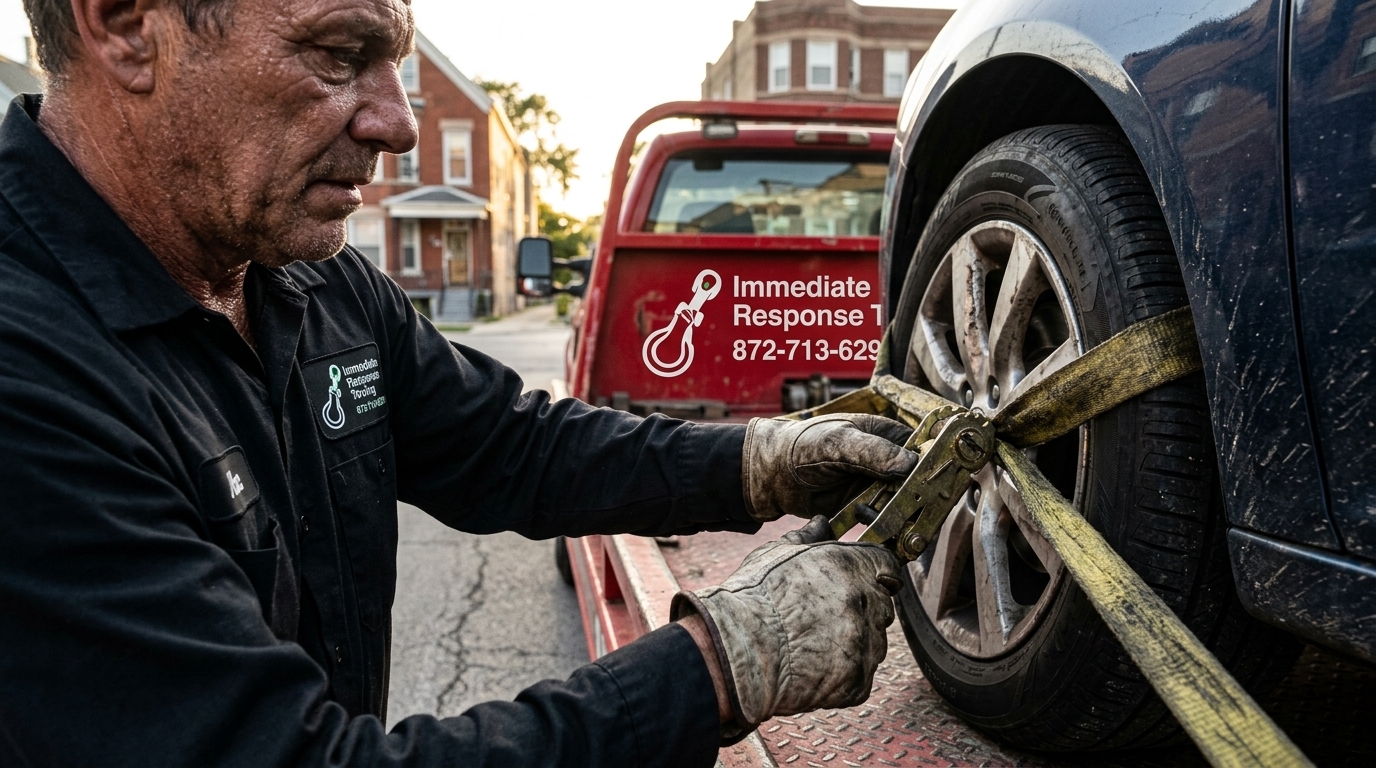
The vehicle is loaded using the correct method, then secured at multiple anchor points so it cannot shift on the road.
The driver confirms your destination, whether that is your home, a body shop, or a mechanic you trust.
Your car is unloaded carefully, and you receive paperwork showing exactly what was done.
That documentation step is worth noticing. A careful crew protects you as much as it protects your car.
Common Mistakes That Damage Cars During a Tow
Most towing damage is preventable, and nearly all of it comes from shortcuts. Dragging a front wheel drive car by its rear wheels, or a rear wheel drive car by its front wheels, can strain transmissions and steering components. Using a basic chain on a bumper can crack plastic covers and bend mounting points. Towing an electric vehicle with the drive wheels on the ground can generate current that harms the motor and battery system, and many manufacturers explicitly forbid it.
Another common error is skipping neutral or parking brake checks, which can send a car rolling during loading. Even a rope or strap tied to the wrong anchor point can tear a bumper away. If you are ever unsure, the cost of a professional call is almost always lower than the repair bill that follows a bad improvised tow.
Chicago Winters and Your Towing Vehicle
Winter changes everything. Packed snow, ice, and salt reduce traction, and a towing vehicle that handles a trailer perfectly in July can struggle badly in January. Brakes need more distance, hitches can seize with road salt, and batteries lose strength fast when temperatures drop. If you do plan to haul something in cold months, allow extra stopping space, drive slower than posted limits, and avoid sudden steering corrections.
For stranded drivers, winter also means speed matters. A car left idling on a shoulder in subzero weather puts you at risk, so call for help early rather than waiting to see whether the engine will catch. Keep a blanket, a charged phone, a flashlight, and a small shovel in your trunk. These items cost very little and can make a long wait far safer.
How to Choose the Right Towing Company
Not every operator is equal, so look for a few clear signs before you commit. Ask whether the company runs flatbeds as well as wheel lifts, since flatbeds are the safest option for most modern cars. Confirm they carry insurance that covers your vehicle while it is in their care. Check that dispatch gives honest arrival times and upfront pricing rather than vague promises. Finally, pay attention to how the person on the phone talks to you. Calm, clear, and patient communication usually reflects how the crew treats your car on the road.
Local knowledge matters too. A crew that works Chicago every day knows which streets flood, which lots have low clearance, and how to reach you quickly when traffic is heavy.
The Bottom Line
The difference between a tow vehicle and a towing vehicle is mostly a matter of phrasing, but the real lesson is about matching the right machine to the right job. Check your ratings before hauling a trailer, respect the limits printed on your door jamb, and never improvise a tow with a car that cannot handle one. When your own vehicle is the one that needs a ride, skip the guesswork. Reach out to Immediate Response Towing and let a trained crew get you moving again safely, quickly, and without a surprise repair bill.