Where to Call to Get a Car Towed From Any Location
Where to Call to Get a Car Towed, No Matter Where It Broke Down
Most towing advice assumes your car died somewhere simple, like a flat street with plenty of room. In reality, breakdowns happen in parking garages with low ceilings, on highway shoulders with traffic roaring past, and in gated lots a tow truck cannot even enter without a code. Where to call to get a car towed matters less than most people think. Where the car actually is matters more, since that location decides what kind of truck shows up and how fast it can reach you.
This guide walks through the pickup side of towing, the part almost nobody covers in detail, so you know exactly what to say and expect no matter where your car is stuck.
Why Your Exact Location Changes Everything
When people ask where to tow a car from, they are usually thinking about the address. A good dispatcher is thinking about a lot more than that. The type of location affects which truck gets sent, how long hookup takes, and sometimes whether the job is even safe to do immediately.
A car on a flat residential street is the simplest case. A car wedged into a tight parking garage spot, stuck on a shoulder during rush hour, or sitting in a gated community with restricted access each require different handling, different equipment, and sometimes a different approach entirely. This is why giving a vague address and hanging up is the slowest way to get help, even if the company itself is excellent.
Common Pickup Spots and What They Actually Require
Here is what tends to come up most often when people search where to get towed car help, broken down by location type.
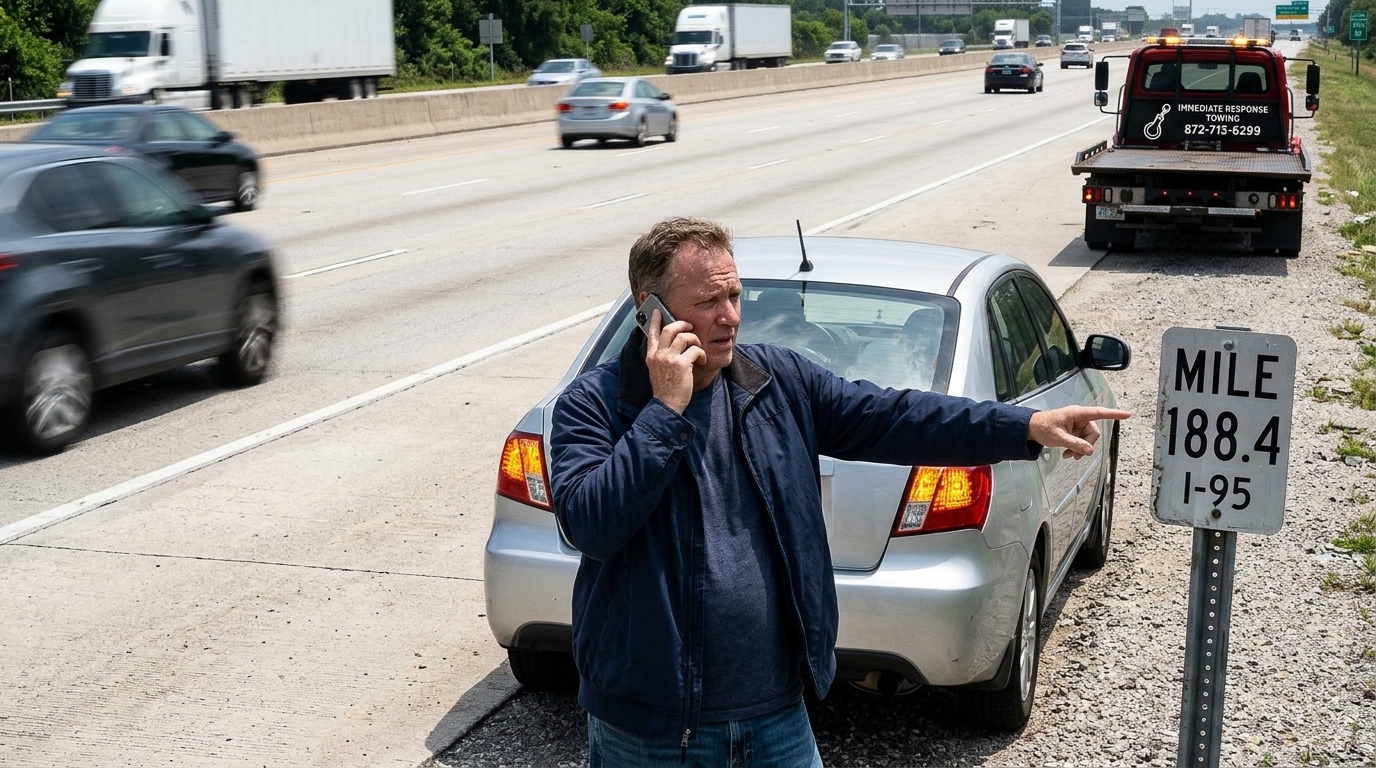
Highway shoulders are the highest priority for most towing companies because of safety risk. Mention immediately if you are on a highway, which lane or shoulder, and the nearest mile marker or exit number if you can see one. Trucks dispatched to highways often move faster through traffic coordination than a standard neighborhood call.
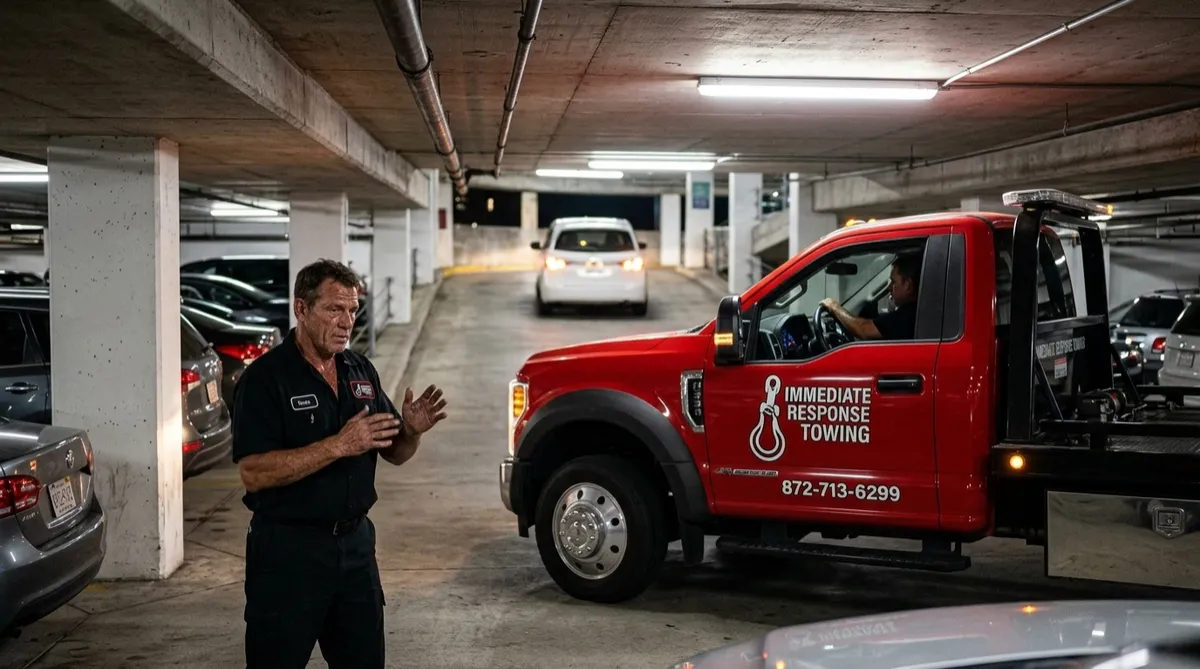
Parking garages and structures create clearance problems. Not every tow truck can physically enter a garage with a low ceiling or tight turning radius. Tell the dispatcher the level, the ceiling height if posted, and whether the car can be pushed or rolled to an open area, since this alone can determine which truck in the fleet gets sent.
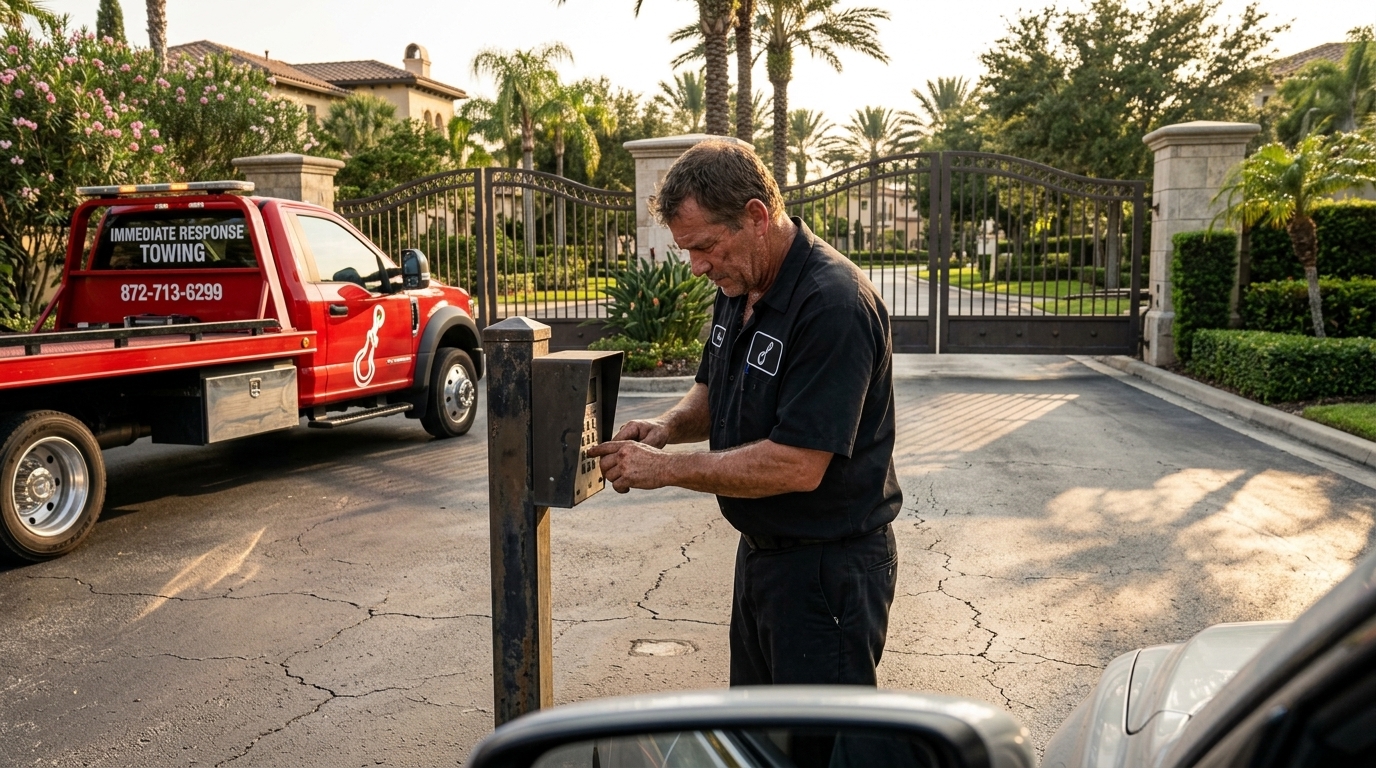
Private driveways and gated communities need access information upfront. A gate code, a call box number, or a note that security needs to buzz the truck in saves real time, since drivers cannot guess their way past a locked entrance.
Remote or unfamiliar areas benefit from landmarks. If you do not know the exact address, describe the nearest intersection, a visible business sign, or drop a location pin through your phone, since GPS coordinates are often more reliable than a guessed street name.
Flooded roads, ditches, or any spot off the drivable surface usually mean the job is recovery rather than a simple tow, which calls for different equipment entirely and is worth flagging the moment you call.
Where to Tow Your Car When It Breaks Down Mid Drive
A breakdown that happens while you are actually moving is its own category, and it deserves its own quick plan rather than panic.
Get off the active lane of traffic if the car still has any momentum, aiming for a shoulder, side street, or parking lot rather than stopping where you are.
Turn on hazard lights the moment you realize something is wrong, even before you have fully stopped.
Note your surroundings immediately, including the last street sign, exit, or business you passed, since this becomes your pickup location description.
Stay in the vehicle with your seatbelt on if you are on a busy road, and only exit if it is safer outside than inside.
Call once you are stopped and settled, giving the clearest possible description of where you ended up, not where you started having trouble.
This sequence matters because the biggest delay in roadside towing is rarely the drive time. It is confusion about where the truck actually needs to go.
Making the Call Count
Once you know where to call to tow a car, the call itself should move fast if you lead with location details instead of starting with the story of what went wrong. Dispatchers need the where before the why. Give the address or cross streets first, then the access details relevant to that spot, then a short description of the vehicle issue.
Companies that handle a high volume of calls across varied locations, like Immediate Response Towing, are used to working through garages, gated lots, and highway pickups regularly, which means the right questions get asked upfront instead of after a truck already arrives and cannot get close enough to help.
What About Where the Car Ends Up
Pickup location and drop off destination are two separate decisions, and it is worth keeping them that way in your head. Once a truck reaches your car, the dispatcher or driver will usually ask where you want it taken, whether that is a repair shop, your home, or a dealership. That part of the conversation only matters once the truck has actually arrived, so do not let it slow down the first call. Focus on where to towing pickup first, and worry about the destination once help is already on the way.
Help That Reaches You Wherever You Are
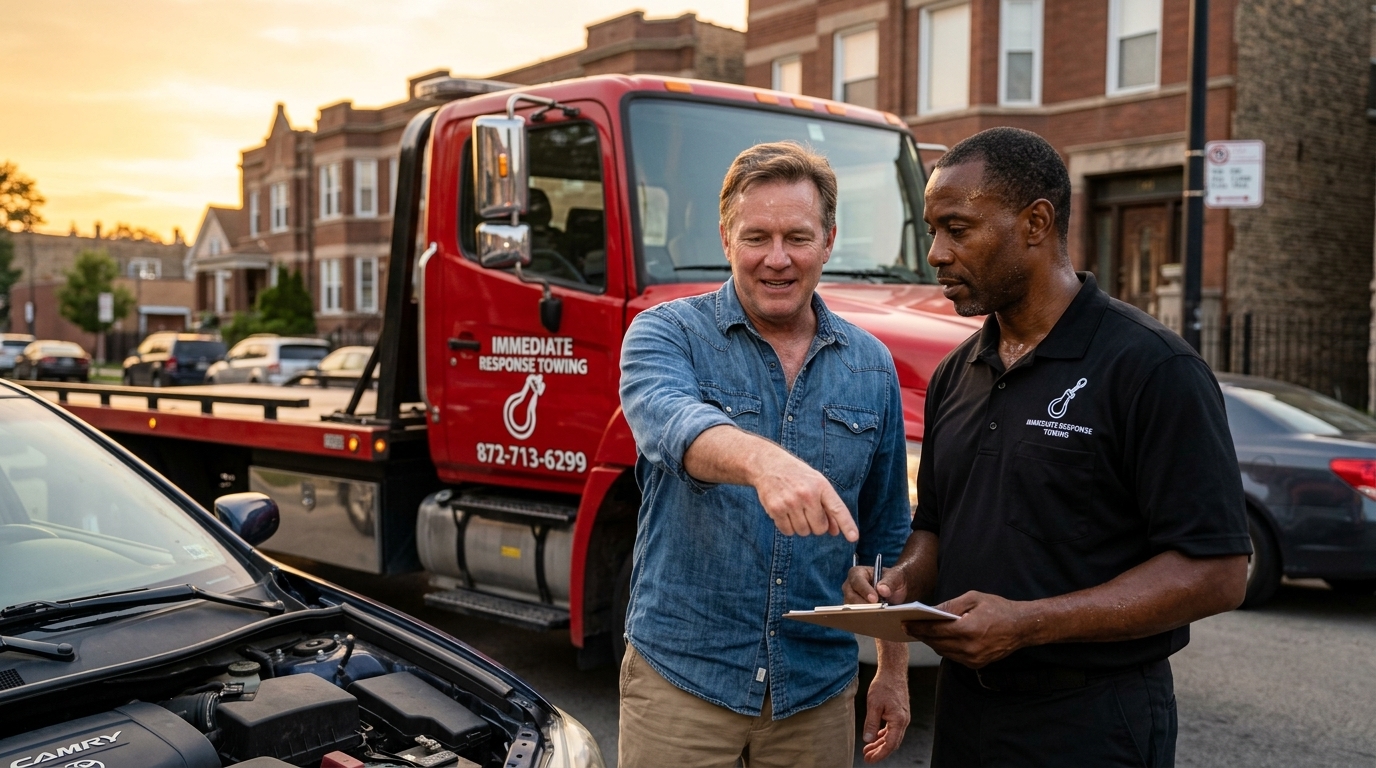
Immediate Response Towing runs 24/7 across Chicago and nearby communities including Evanston, Skokie, Cicero, and Oak Lawn, with a fleet built to handle tricky pickups, not just easy ones. Flatbed towing for low clearance vehicles, heavy duty equipment for larger trucks, and drivers familiar with gated communities and parking structures mean a tricky location does not have to mean a longer wait. Typical response times run 15 to 30 minutes, with upfront pricing and no hidden fees regardless of how unusual the pickup spot is.
Know Your Spot Before You Dial
Where to tow my car is really two questions in disguise, where the truck needs to go first, and where the car goes after. Nail down the first one with clear, specific location details, and the second one takes care of itself once help arrives. If your car is stuck somewhere right now, call Immediate Response Towing and give them your exact spot, however tricky it might be.