Wrecker Service Explained: Light Duty, Heavy Duty, and Semi Towing in Chicago
Wrecker Service Explained: Light Duty, Heavy Duty, and Semi Towing in Chicago
Not every tow truck is built for every job. A truck that lifts a compact sedan in seconds would be helpless in front of a stalled semi, and a massive recovery rig would be overkill for a flat tire on a hatchback. That is why towing is divided into classes, and why the words you use when you call matter. Whether you are searching for a wrecker service in Chicago, comparing a light duty towing service with something larger, or trying to understand how one semi can tow another, this guide breaks it down in plain language. You will learn what the classes mean, what the equipment looks like, and what to ask so the right truck shows up the first time.
Tow Truck vs Wrecker: Is There a Difference?
In everyday conversation, the two terms mean the same thing. A wrecker is simply the older, industry style name for a tow truck, and you will still see it on signs, in listings, and in search results such as wrecker service Chicago IL. Some people use "wrecker" when they mean a heavier recovery truck, especially one with a boom, while "tow truck" feels more general. The important thing is not the label but the capability. When you call, describe your vehicle and the situation, and let the dispatcher match the truck.
Light Duty Towing Service: The Everyday Class
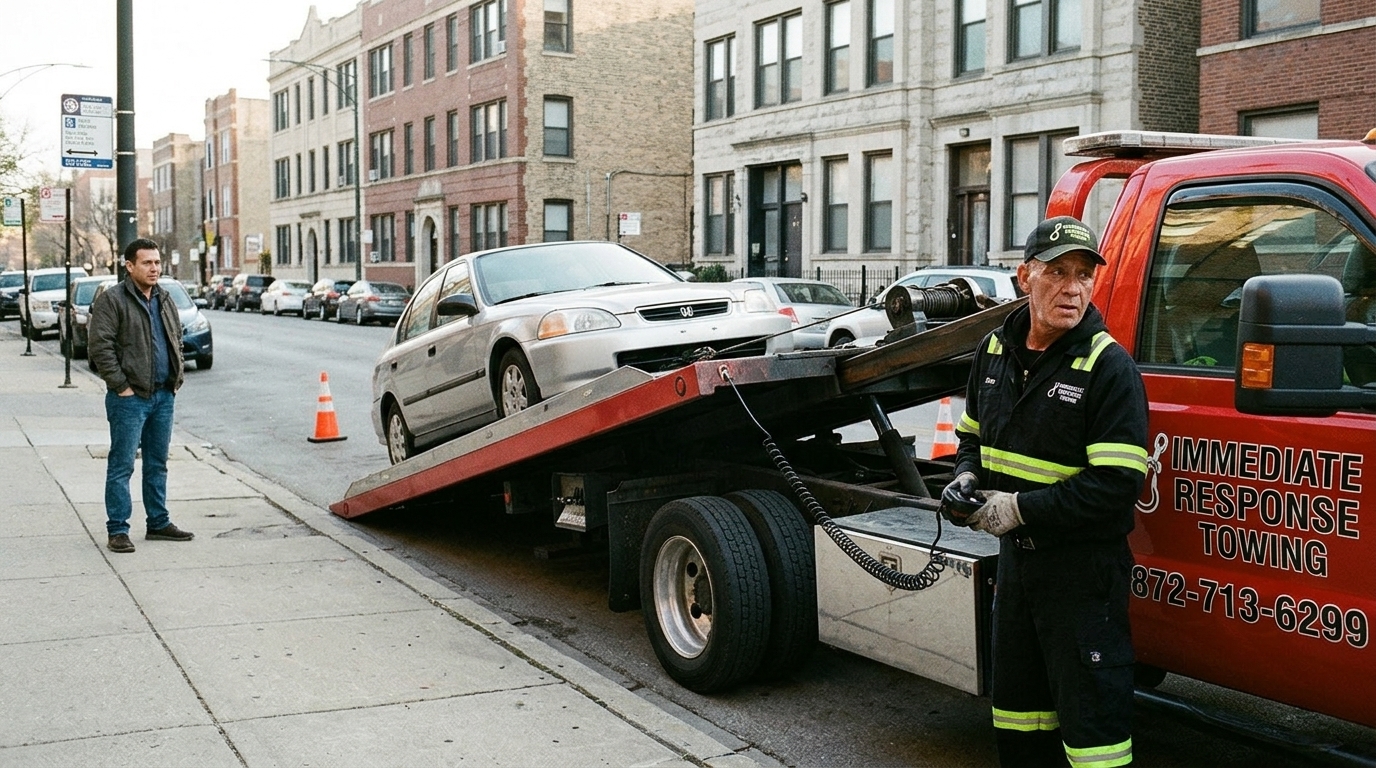
Light duty is the class most drivers meet. These trucks handle passenger cars, small SUVs, minivans, and many pickups, generally vehicles up to roughly ten thousand pounds in total weight. They include flatbeds and wheel lift trucks, and they handle everything from breakdowns to jump starts and lockouts to accident pickups.
A light duty towing service is usually the fastest to arrive because these trucks are smaller and more numerous. They are also the right choice for most everyday calls. The key is to be honest about your vehicle: a heavily loaded truck, a lifted pickup, or a large van may exceed what a light duty unit can safely carry, even if it looks small next to a bus or a semi.
Heavy Duty Towing in Chicago, IL: When Size Changes Everything
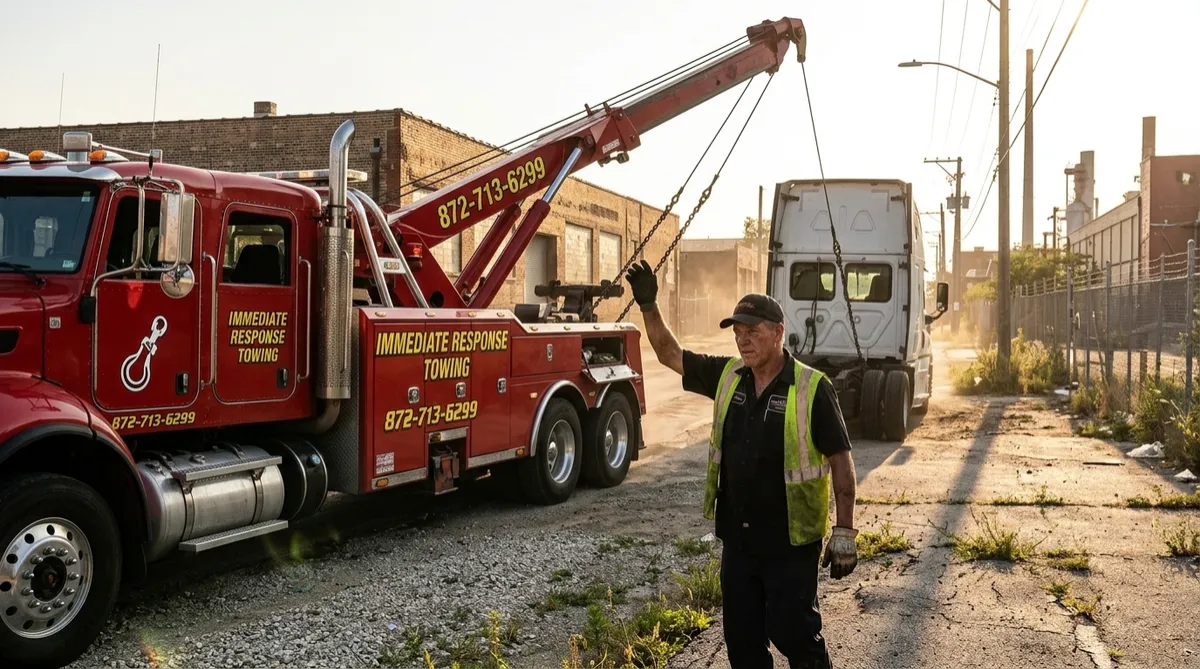
Once a vehicle gets large, the job changes completely. Heavy duty towing covers vehicles such as semi trucks, buses, large box trucks, garbage trucks, and construction equipment. These are generally vehicles above about twenty six thousand pounds, with medium duty sitting in between for mid sized work trucks and larger delivery vehicles.
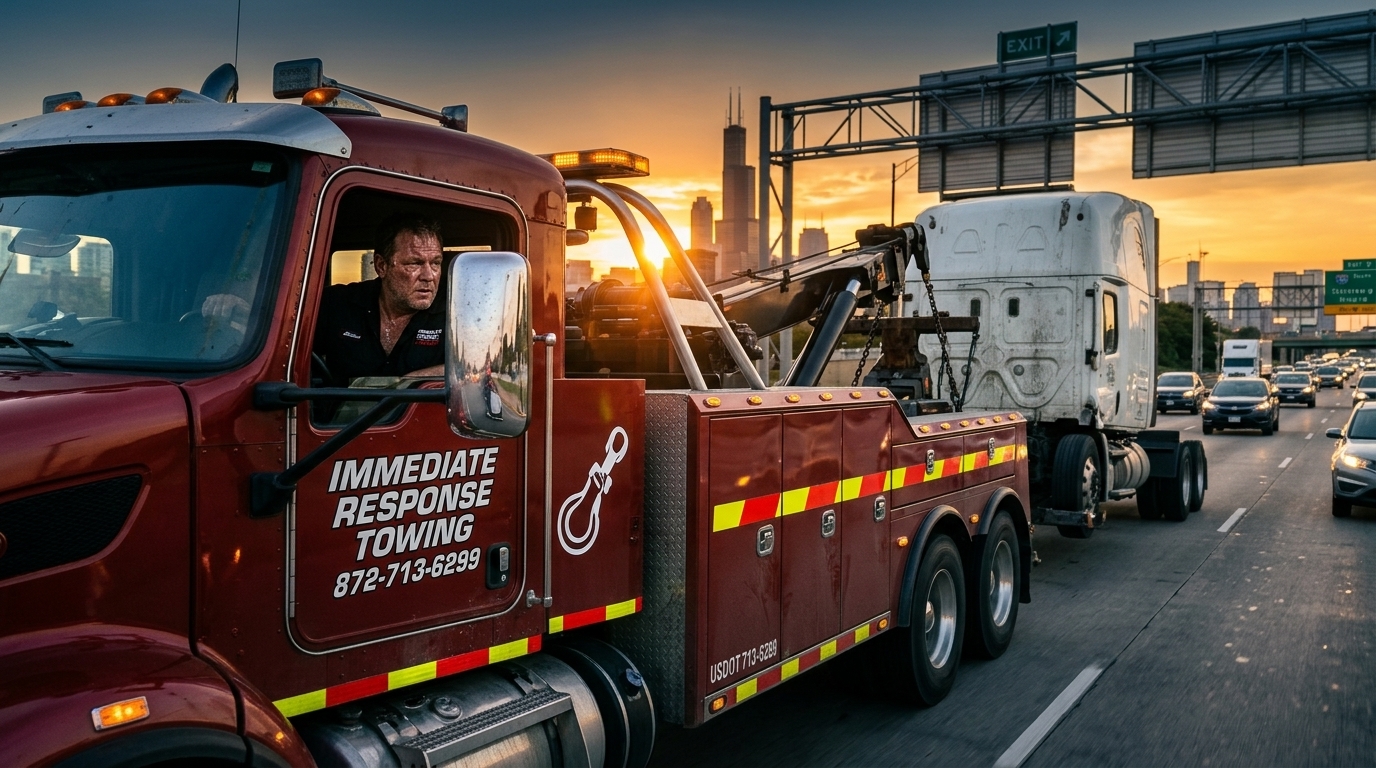
Heavy duty towing in Chicago demands more than a bigger engine. It requires trained operators, stronger booms and winches, heavier chains and straps, extra warning lights, and a plan for traffic control. A stalled semi on an expressway ramp or a bus on a tight city street calls for careful coordination, because every move involves massive weight and limited space. That is why it is important to confirm that a company has the equipment and experience for your class of vehicle before you commit.
Five Types of Wreckers You Will Hear About
When you search for a wrecker service Chicago businesses and drivers use, you may run into different terms. Here are five common types:
Conventional wrecker, which uses a boom and a hook or sling to lift and pull a vehicle.
Integrated wrecker, a heavier version with a built in lifting system, often used for larger vehicles.
Flatbed or rollback, which carries the vehicle on a tilting bed and is ideal for cars and many light trucks.
Wheel lift wrecker, which raises one end of the vehicle while the other end rolls.
Rotator, a powerful heavy recovery truck with a rotating boom, used for rollovers and difficult scenes.
Each has a purpose. The goal is not to memorize them, but to know that the right tool depends on the weight, position, and condition of the vehicle.
Semi Towing Semi: How One Big Truck Recovers Another
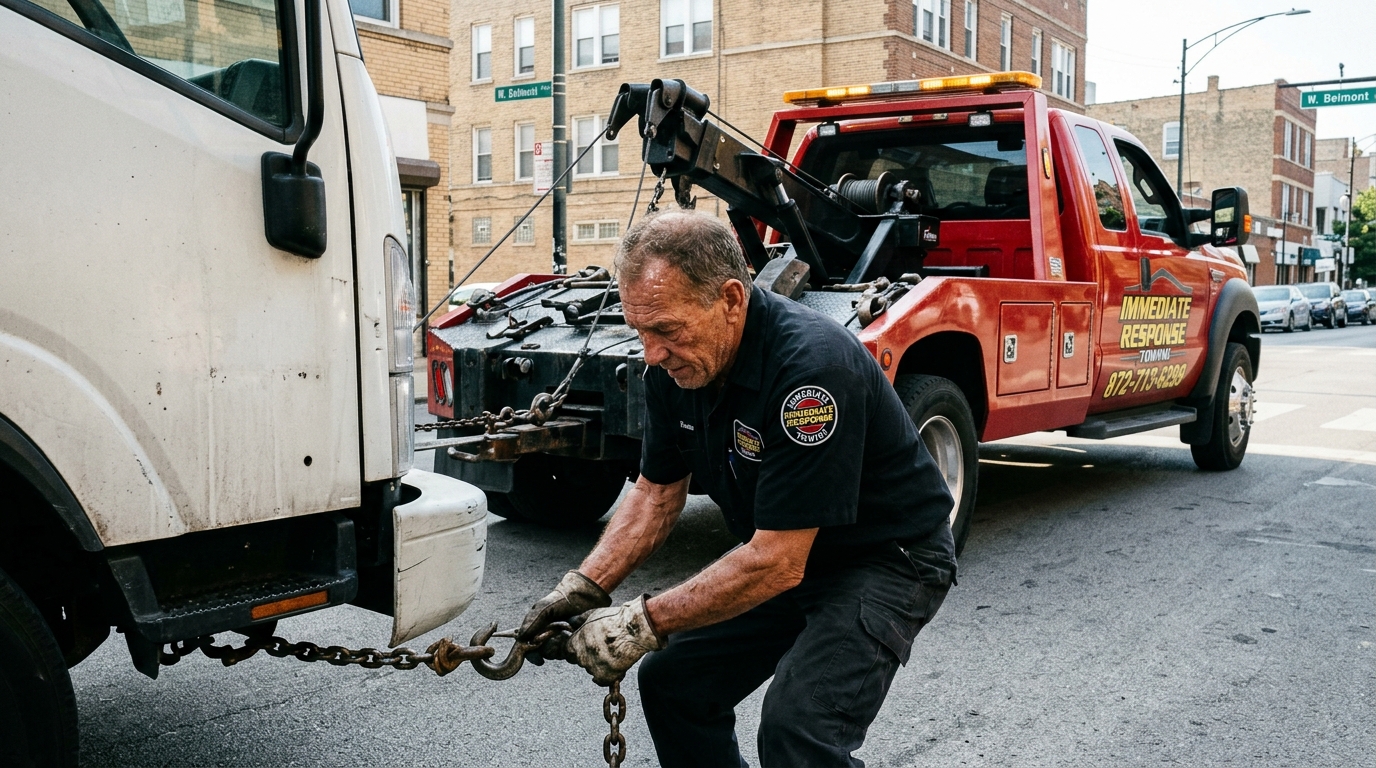
When people search for semi truck tow trucks or semi towing semi, they are often asking how a vehicle that big can be moved at all. The answer is a combination of heavy equipment and careful steps.
First, the crew assesses the scene, sets up warning lights and traffic control, and checks whether the semi is the tractor alone or a tractor with a trailer. Often the two are separated, and each is moved on its own. A heavy wrecker lifts the front of the tractor using an underlift, and the rear wheels roll behind it. To protect the transmission, operators may disconnect the driveshaft or take other precautions so the drivetrain does not spin while being towed. Air brakes may need to be released or connected properly, since the brake system works differently from a car's.
If the trailer holds cargo, the crew may need to transfer or secure the load, or use a second truck to move the trailer. In difficult situations, a rotator may be called in for a lift. Each step requires skill, patience, and communication, because mistakes at this size can be costly and dangerous.
Why Using the Wrong Class of Truck Is Expensive
Sending a truck that is too small is not just inefficient. It can damage the vehicle, the truck, and the road around you. A light duty truck asked to move a heavy load can overheat, strain its frame, or fail altogether. Meanwhile, a heavy duty truck sent to a simple car call wastes time and money.
Accurate information at the start prevents those mistakes. It also keeps the scene safer, since the right equipment is easier to manage and faster to deploy.
How to Pick a Wrecker Service in Chicago
Choosing a wrecker service is about matching capability to need. Ask what weight classes the company handles and whether it has experience with your type of vehicle. Ask about insurance, since larger vehicles and cargo can carry bigger risks. Ask how the company handles traffic control and what the arrival window looks like.
Look for clearly marked trucks, uniformed operators, and a dispatcher who asks smart questions. A local team such as Immediate Response Towing understands Chicago streets and can tell you honestly what it can and cannot handle, which is exactly the kind of transparency you want before a truck is sent.
What to Tell Dispatch for a Large Vehicle
A clear description helps the crew prepare. Share the type of vehicle, such as a tractor, box truck, or bus, along with its approximate weight and length. Say whether it has a trailer or cargo, and whether the brakes, steering, and wheels work. Give your exact location, including any height limits, tight turns, or traffic issues, and mention if the vehicle is blocking a lane. If you are not sure about the weight, check the registration or the label on the driver's door.
Choose the Right Class, Not Just the Closest Truck
The best wrecker service is the one that sends the right truck for your vehicle, with the right people behind it. Light duty handles everyday cars, heavy duty handles the big jobs, and semi towing takes skill, planning, and strong equipment. Knowing the difference helps you ask better questions and get faster, safer help.
When you need a Chicago crew that treats each call seriously and matches the truck to the job, contact Immediate Response Towing and describe your vehicle and your situation.