

What Is Included in an Illinois Traffic Crash Report? A Plain English Guide
What Is Actually Inside an Illinois Traffic Crash Report?
You finally have your crash report in hand, and it looks like a tax form crossed with a puzzle. Boxes, numbers, tiny abbreviations, and a diagram that may or may not look like your intersection. Most drivers skim for one thing and miss everything else. That is a mistake, because every section carries details your insurer, repair shop, and attorney will notice. This guide breaks down what is included in an Illinois accident report, what the codes and terms generally mean, and how to review your copy so errors get caught early. We explain what the document records, not who is legally at fault, because that is a separate question.
Meet the SR 1050: The Form Behind the Report
Most Illinois crash reports start from a standardized form called the SR 1050. The Illinois Department of Transportation describes it as the only crash report form approved for law enforcement use in the state, which is why reports from different agencies share the same core fields.

Formats still vary. A paper booklet, an electronic version from an approved vendor, and the printout you download from a city portal may be laid out differently. Chicago's online version, for example, can include a crash diagram page. The data underneath, however, follows the same state structure. Think of the SR 1050 as the skeleton and each agency's printout as the clothing.
Section by Section: What You Will Find
Crash Basics
The top of the report covers the essentials: date, time, and location of the crash, the investigating agency, and the report number. In Chicago that number is called the RD number. You will often see road details as well, such as the street name, the nearest cross street, and whether the crash happened at an intersection. Check these first. A wrong date or address can create confusion when an adjuster matches the report to your claim.
Driver and Passenger Details
Each driver gets an entry that typically includes name, address, date of birth, and driver's license information. Insurance details are usually recorded too, along with the vehicle owner if that is someone else. Passengers and witnesses may be listed separately. Read every name for spelling and every number for accuracy, since small typos in driver details can slow down a claim.
Vehicle Information
Every vehicle involved is described with its make, model, year, plate, and registration details. The report also notes the direction of travel, the vehicle's maneuver before impact, and the areas where it was damaged. Damage is usually summarized rather than priced, so do not expect a repair estimate. If your car was removed from the scene, the report may note that it was towed, which is a useful link between the report and your towing paperwork.
The Narrative and Diagram
The narrative is the officer's written summary of what they observed and what each party and witness reported. The diagram is a simple sketch showing the position of the vehicles, travel directions, and the point of impact. Both are based on the officer's view of the scene, which means they can contain mistakes or missing details. If something looks off, flag it right away.
Conditions and Codes
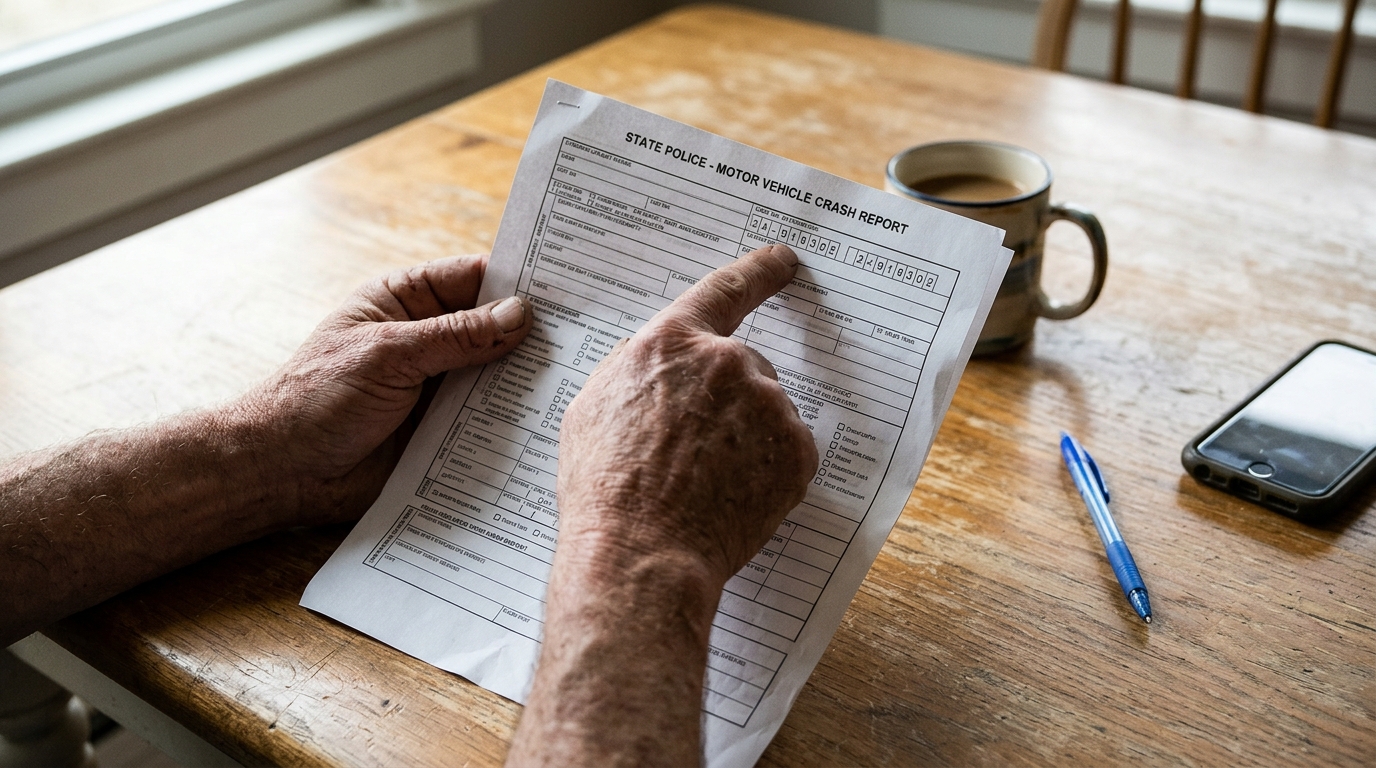
Here is where most readers get lost. Many fields are filled in with numeric or letter codes that describe:
Weather, such as clear, rain, or snow
Light conditions, such as daylight, dusk, or dark
Road surface, such as dry, wet, or icy
Traffic control, such as a signal, stop sign, or none
The type of first crash, such as a rear end or angle collision
The state publishes an instruction manual that explains each code, and your agency or an attorney can help you decode any entry that is unclear.
Contributing Factors
The report includes primary and secondary contributory causes. These reflect the officer's judgment about the factors that played a role, and examples can range from following too closely to distraction or weather. This is the part people worry about most, so keep one point in mind: a contributing factor on the form is an officer's observation, not a court ruling and not a final decision on fault. Insurers weigh it, but they also weigh photos, statements, and other evidence.
Injuries, Damage, and Tow Information
Injury information is recorded using severity codes, usually describing whether someone was injured and how seriously. The report may also mention whether anyone was transported for medical care, whether a vehicle was disabled, and whether it was towed. Because towed vehicles trigger additional reporting requirements, this field often matters for matching your recovery receipts to the record.
How to Read Your Report Without Getting Lost
A clear routine beats a frantic skim. Try this order:
Confirm the basics. Date, time, location, and report number should match your memory and your paperwork.
Verify every person. Check names, addresses, license details, and insurance information for yourself and the other party.
Match the vehicles. Make, model, year, plate, and damage areas should reflect what actually happened.
Read the narrative twice. The first pass is for the story, and the second is for facts you can verify or dispute.
Decode the codes. Look up any unfamiliar entries in the official instruction manual before assuming the worst.
Write down questions as you go. A short list makes your call to the records office or your insurer much more productive.
Why Codes, Abbreviations, and Layouts Look Different
If you compare your report with a friend's, you might think one of them is wrong. Usually it is just a different format. Some agencies print every code as a number, others print short labels, and some add pages such as a diagram or a supplemental narrative. A hit and run, for example, may start with limited information and be updated later through an amended report once the other driver is identified. Amended versions are common, so if your report looks incomplete, ask whether an updated copy exists.
What a Crash Report Is Not
It helps to be clear about what this document cannot do. A crash report is not a court judgment, it does not settle who pays for what, and it does not replace your own evidence. It also does not account for everything you remember. Photos from the scene, witness contact information, medical records, and repair estimates all strengthen your position. If the report contains something you believe is inaccurate, contact the agency that wrote it and ask how to request a correction or supplement. For questions about fault, liability, or injury claims, speak with a licensed attorney or your insurance representative. This article is general information and not legal advice.
Keep Your Report With Your Tow and Repair Paperwork
Your crash report works best as part of a complete paper trail. Store it with your photos, repair estimates, insurance claim number, and any towing and storage receipts. If your vehicle was hauled from the scene, the tow invoice often shares a date and location with the report, which makes it easier for an adjuster to connect the pieces.
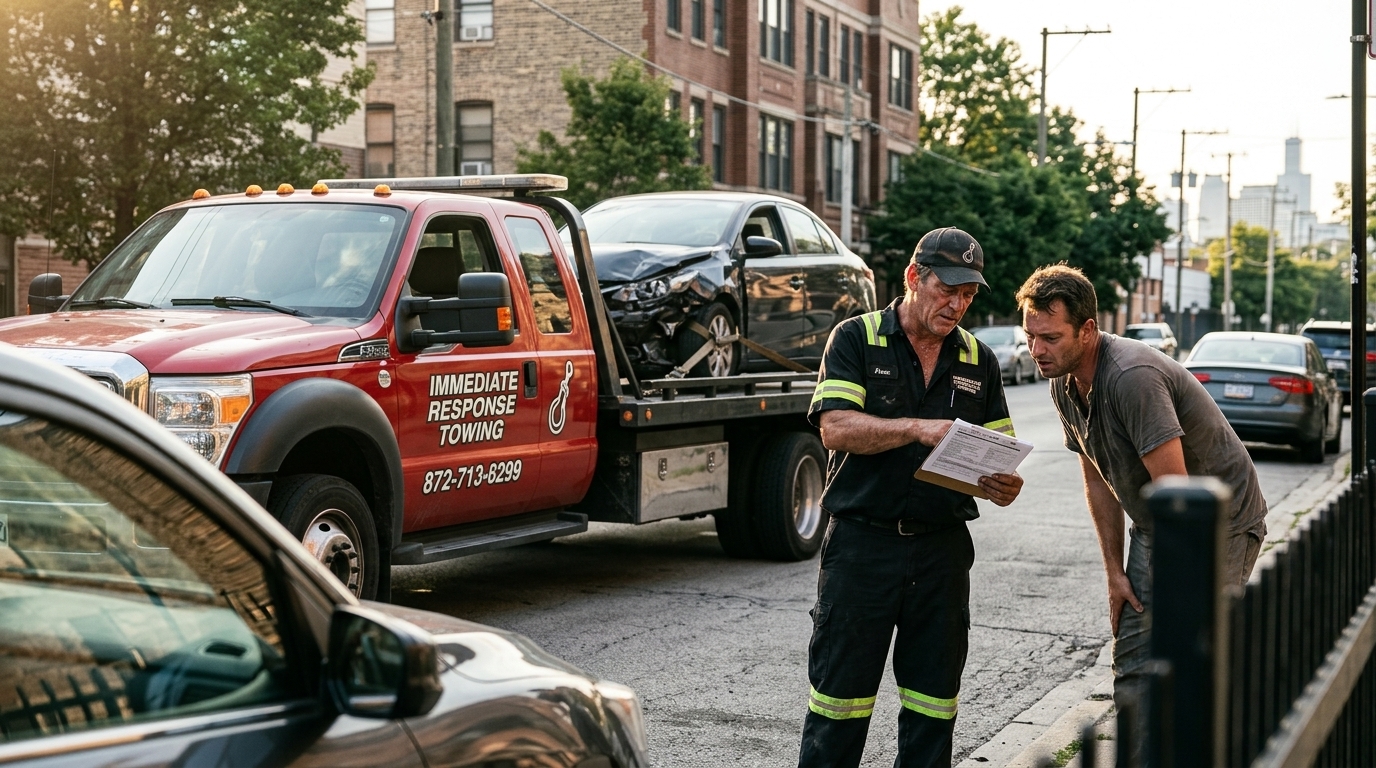
If you are still dealing with a damaged vehicle, Immediate Response Towing can help with roadside recovery across Chicago, and the accident recovery towing page explains how post collision recovery works. Keep every receipt, because a tidy file helps claims move faster.
The Bottom Line
An Illinois traffic crash report records the who, what, where, and when of a collision: crash basics, driver and passenger details, vehicle information, conditions, contributing factors, and injury and tow notes. The codes look intimidating, but they follow a consistent state structure. Review your copy slowly, verify every detail, and ask the issuing agency about corrections quickly. Doing so protects your claim and gives you confidence that the record matches reality.