Fast & Reliable Emergency Towing Services in Chicago, IL
Emergency Towing Chicago | 24/7 Roadside & Flatbed Services
Immediate Response Towing Chicago provides 24/7 emergency towing Chicago service for breakdowns, accidents, unsafe roadside situations, flatbed transport, and roadside response throughout Chicago neighborhoods and nearby suburbs. Call +1-872-713-6299 for dispatch. We confirm your location, vehicle, and destination before assigning a driver.

24/7 EMERGENCY SERVICE
15-30 Min
Avg Response
LICENSED & ENSURED
NO HIDDEN FEES

LOCAL EXPERT OPERATORS
FAST & RELIABLE EMERGENCY TOWING SERVICES IN CHICAGO
Emergency Towing Chicago 24/7 Roadside & Flatbed Services
24/7 Emergency Service
15-30 Mins
Avg Response
Fully Equipped & Professional
Trusted By Industry Experts
Immediate Response Towing Chicago provides 24/7 emergency towing Chicago service for breakdowns, accidents, unsafe roadside situations, flatbed transport and roadside response throughout Chicago neighborhoods and nearby suburbs. Call +1-872-713-6299 for dispatch. We confirm your location, vehicle and destination before assigning a driver.
WE DO
MORE THAN
JUST TOWING

TOWING
ROAD SIDE ASSISTANCE
JUMP START SERVICE
FUEL DELIVERY
LOCK OUT SERVICE
FLAT TIRE SERVICE

AND MORE!
WE DO MORE THAN JUST TOWING
TOWING
ROAD SIDE ASSISTANCE
JUMP
START
FUEL DELIVERY
LOCK OUT SERVICE
FLAT TIRE SERVICE
AND MORE!
Who we are and Where we serve...
Immediate Response Towing Chicago is a Chicago-based towing and roadside-response provider serving vehicle owners, drivers, families and local businesses. Our service area includes Chicago neighborhoods and nearby suburbs, with dispatch support for city streets and major corridors including I-90/I-94, I-290 and surrounding expressways.
What Counts as an Emergency Tow?
An emergency tow is needed when a vehicle cannot be safely driven, is involved in a collision, is blocking traffic or is stopped in a location that creates a safety risk. Immediate Response Towing Chicago dispatches emergency tow trucks for owner-requested, consent-based towing and roadside recovery.
OUR CHICAGO ROADSIDE ASSISTANCE SERVICES
Common reasons Chicago drivers call for emergency towing include
Battery Jump Start Service
What it is:
On-site battery boost to restart your vehicle when the battery is dead or weak.
When you need it:
Engine would not crank or makes clicking sounds.
Headlights dim or electronics fail.
After cold Chicago nights (first hard freeze spikes battery failures)
Battery is 3+ years old
How we do it:
Our dispatchers send a technician with professional-grade jump packs. Most vehicles start within minutes; no tow needed.
What to prepare:
Vehicle make, model, year and color
Exact location or nearest landmark
Direction of travel (if on expressway)
Callback number
How long does a jump start take?
Most jobs are completed in 10- 20 minutes on site.
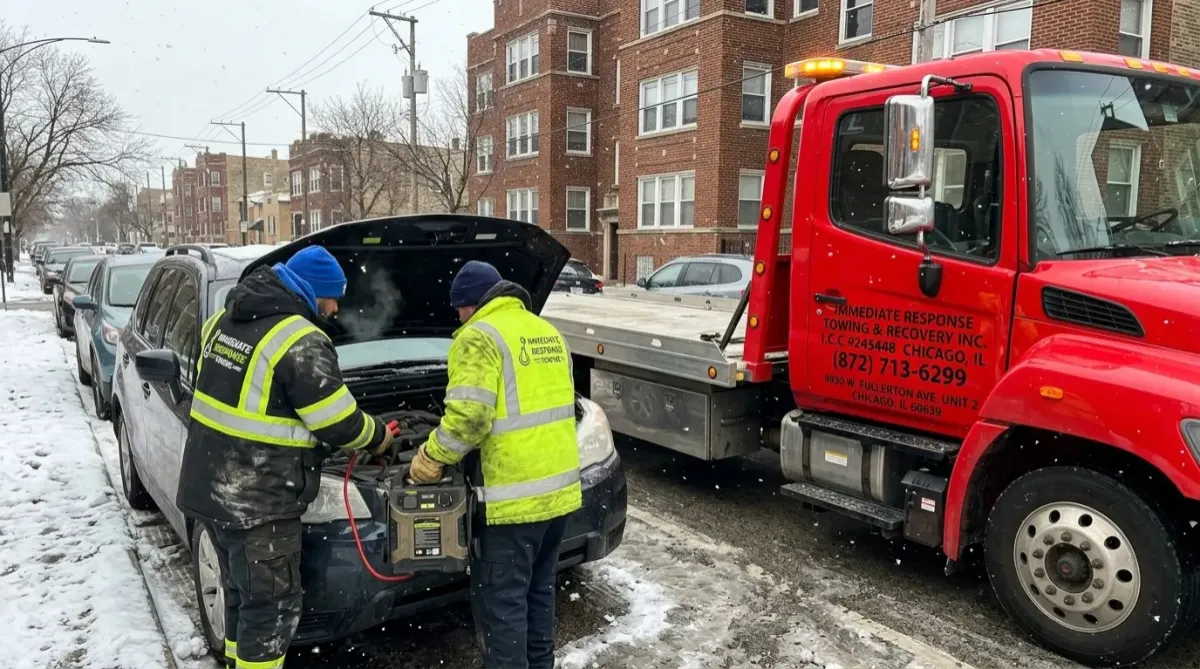
Battery Jump Start
A jump start does not work, or the vehicle needs to be transported to a repair shop.
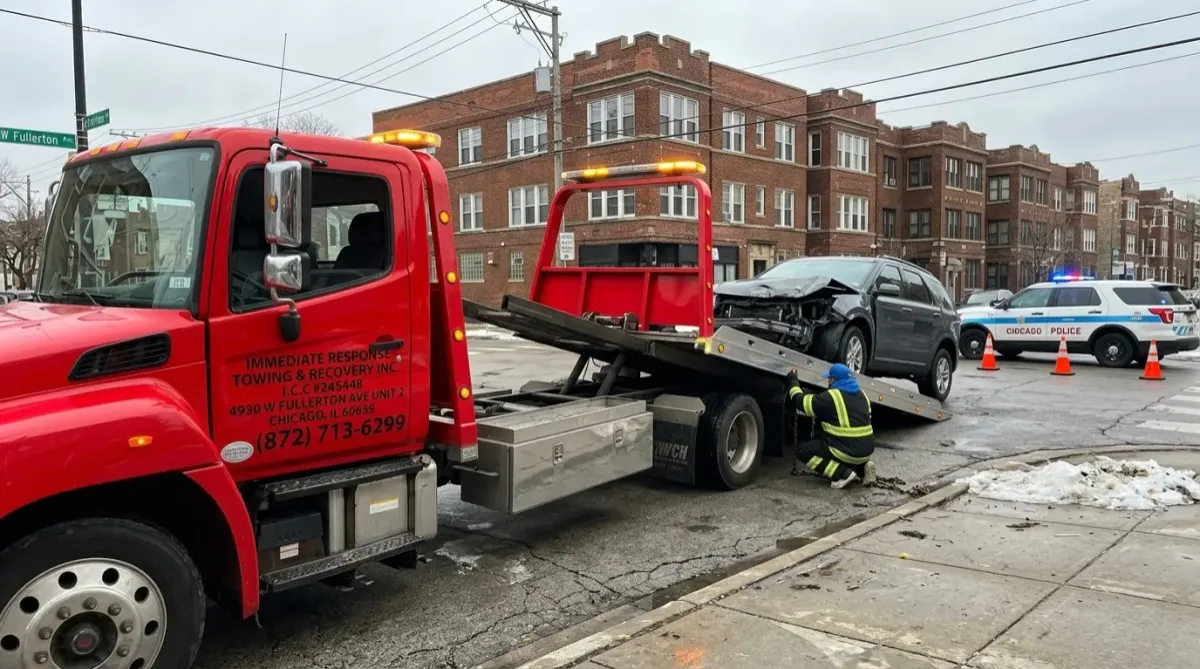
Traffic accidents
A vehicle has collision damage, leaking fluids, deployed airbags or cannot be driven safely after a crash.
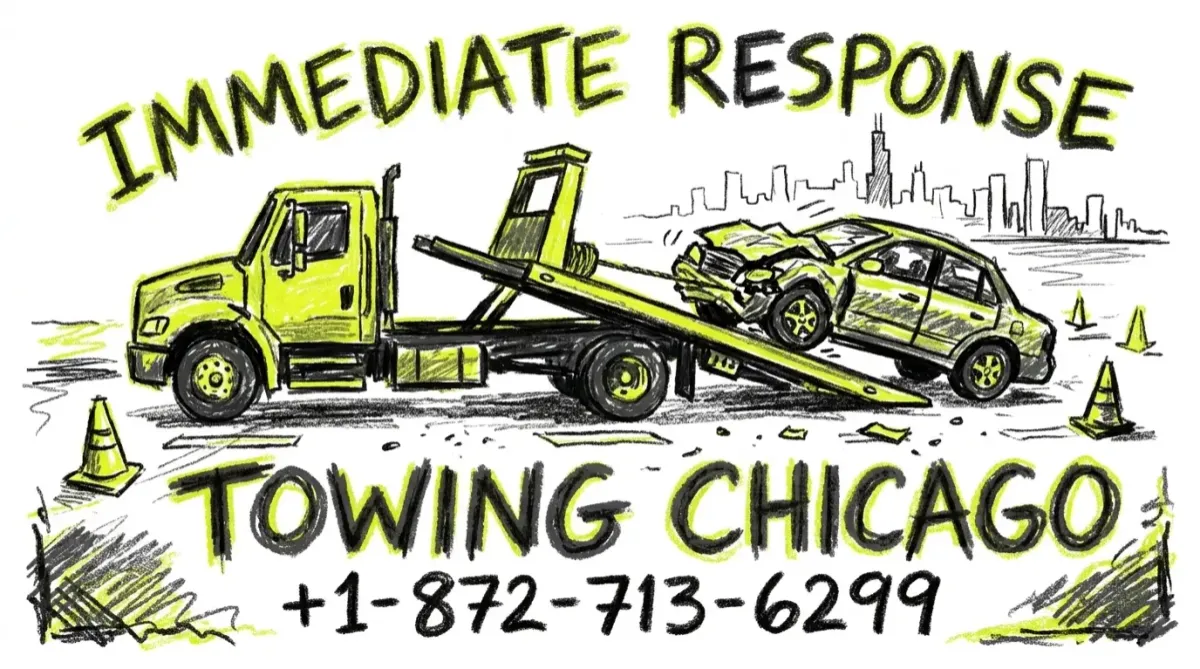
Traffic Accident Towing & Recovery Chicago
What it is:
Immediate Response Towing Chicago provides traffic accident towing and recovery for vehicles damaged in collisions, leaking fluids or unable to be driven safely after a crash.
When you need it:
Vehicle damage after a traffic accident or collision
Leaking fluids, deployed airbags or damaged wheels
A car that cannot be driven safely after a crash
Emergency towing from an accident scene
How we do it:
We arrange suitable towing or accident recovery equipment based on your vehicle's condition and location, transporting your damaged vehicle to a repair shop, body shop, or other agreed destination.
What to prepare:
Exact accident location and nearest intersection
Vehicle make, model, and visible damage
Preferred drop-off location
What should I do after a traffic accident?
Move to a safe location if possible, check for injuries, and call 911 when necessary. Avoid driving a damaged or unsafe vehicle. Once the scene is safe and vehicle removal is permitted, contact us to arrange accident towing in Chicago.
Can you tow a car with collision damage?
Yes, we can arrange towing for vehicles damaged in traffic accidents. Tell us about the damage, leaking fluids or wheel issues so we can determine the appropriate towing equipment.
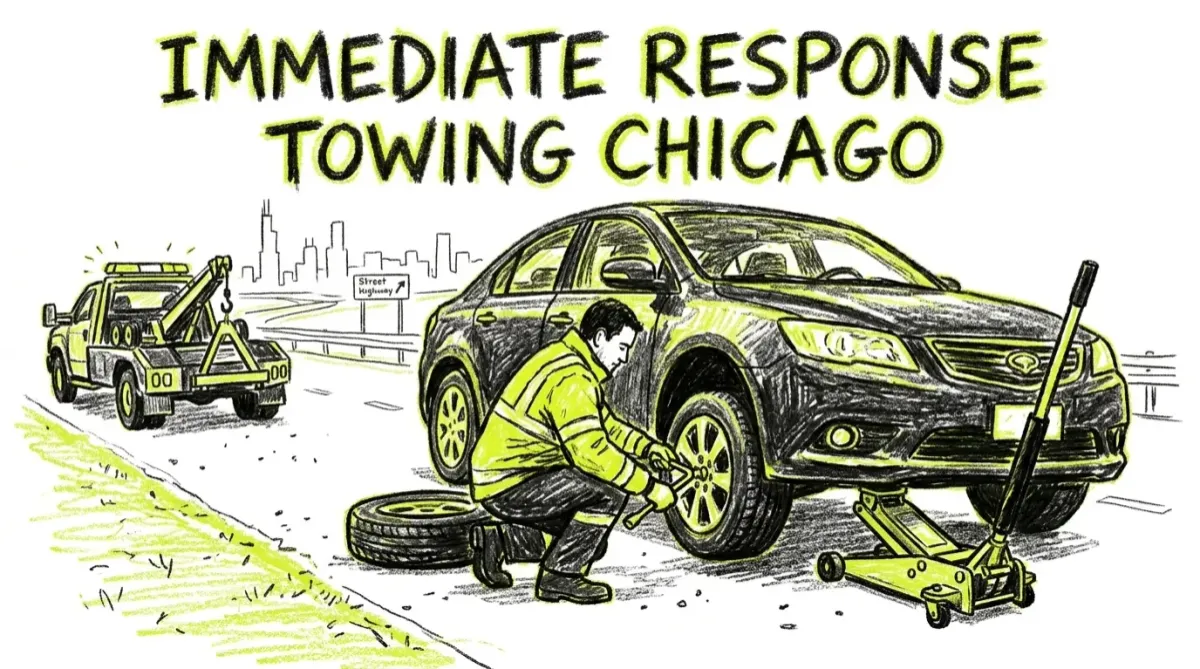
Flat Tire Change Service
What it is:
On-site tire replacement using your spare (donut or full-size).
When you need it:
Visible flat or low tire
TPMS warning light
After hitting potholes (common in Chicago spring/fall)
How we do it:
Technician removes flat, mounts spare, torques lug nuts and stores damaged tire.
What to prepare:
Confirm you have a usable spare.
Location details and vehicle info.
What if I do not have a spare?
We can tow you to a repair shop.
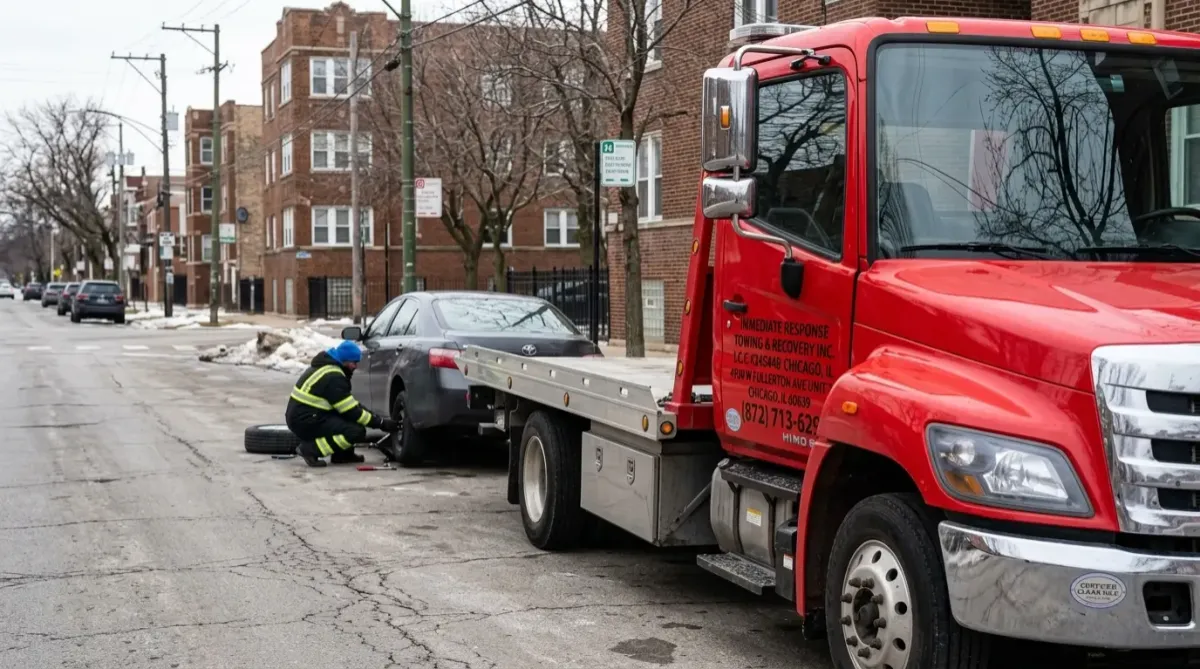
Flat Tire
A tire cannot be safely changed at the roadside, the spare is missing or unusable, or the wheel is damaged.
Blocked-traffic situations
A disabled vehicle is in a travel lane, intersection, bike lane, ramp, or shoulder and must be moved.
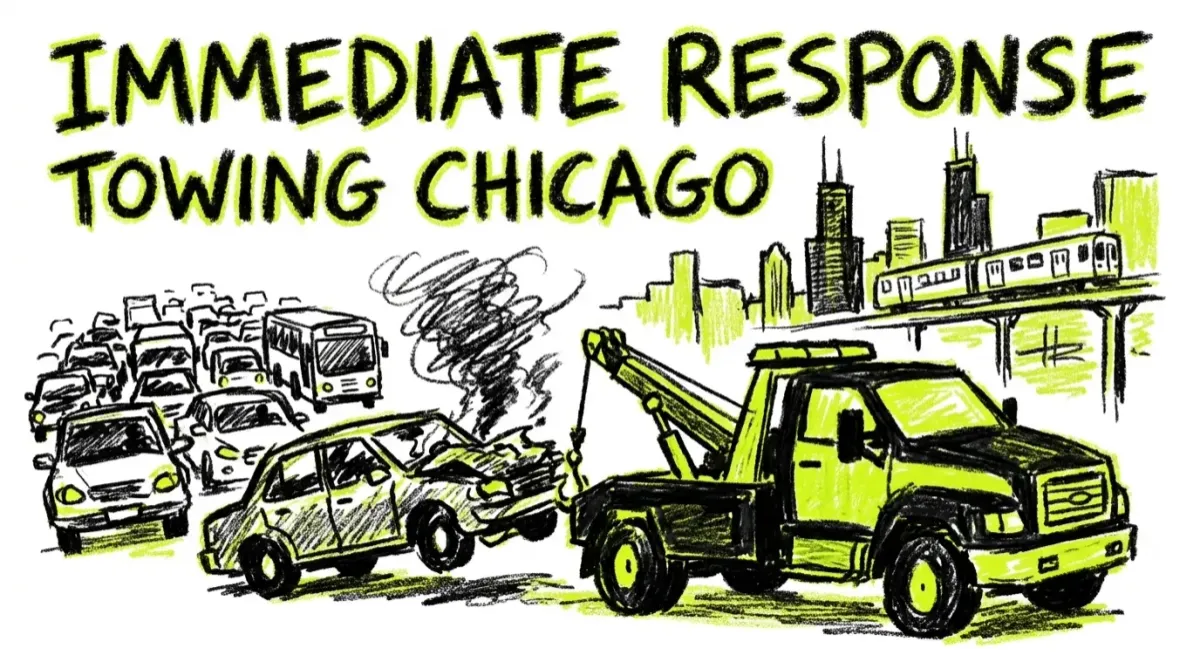
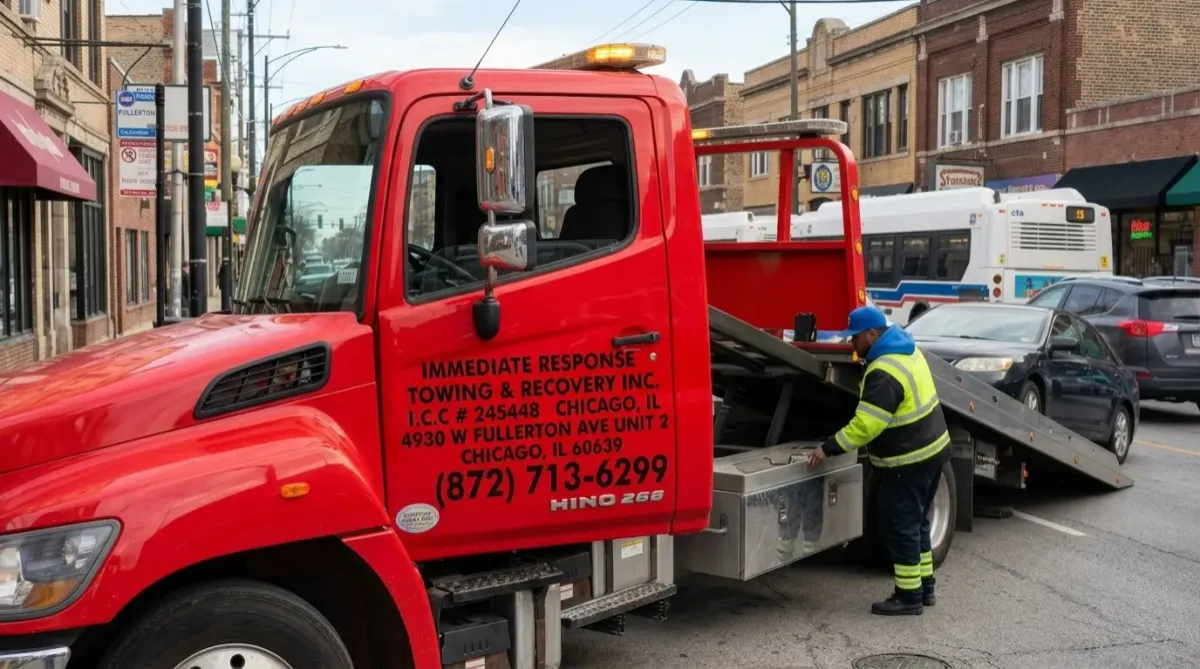
Blocked-Traffic Towing Chicago
What it is:
Our emergency towing service in Chicago helps move disabled vehicles obstructing travel lanes, intersections, bike lanes, highway ramps, or road shoulders when towing is needed and removal is permitted.
When you need it:
A broken-down vehicle blocking a traffic lane or intersection
A disabled car obstructing a bike lane
A vehicle stranded on a highway ramp or shoulder
A vehicle that must be removed to restore safe traffic flow
How we do it:
We coordinate appropriate towing equipment based on the vehicle's condition and location, then arrange removal when it is safe and authorized. Police or other emergency responders may need to secure the scene first.
What to prepare:
Exact location, road name, direction of travel, and nearest intersection or exit
Vehicle make, model, and condition
Whether the vehicle is blocking active traffic or creating a safety hazard
What should I do if my car blocks traffic?
Turn on your hazard lights and move to a safe location if possible. If there is immediate danger, an injury or a vehicle obstructing active traffic lanes, call 911. Stay away from moving traffic and arrange towing when the scene is safe.
Can you tow a vehicle from a highway shoulder or ramp?
We can help arrange towing for disabled vehicles in accessible locations, subject to availability, road conditions, and any required authorization. Provide the highway, direction of travel, and nearest exit so we can assess the situation.
Winch-Out / Recovery Service
What it is:
Vehicle extraction from snow, mud, ditches or off-road situations.
When you need it:
Stuck in Chicago snowbanks (winter)
Slid into ditch on icy roads
Off-road or soft-shoulder entrapment
How we do it:
Technicians use winch cables, snatch blocks, and recovery straps to pull vehicles safely back to pavement.
What to prepare:
Describe terrain (snow depth, ditch angle)
Exact location and vehicle type
Is winching covered by insurance?
Some policies include it; check your roadside coverage.
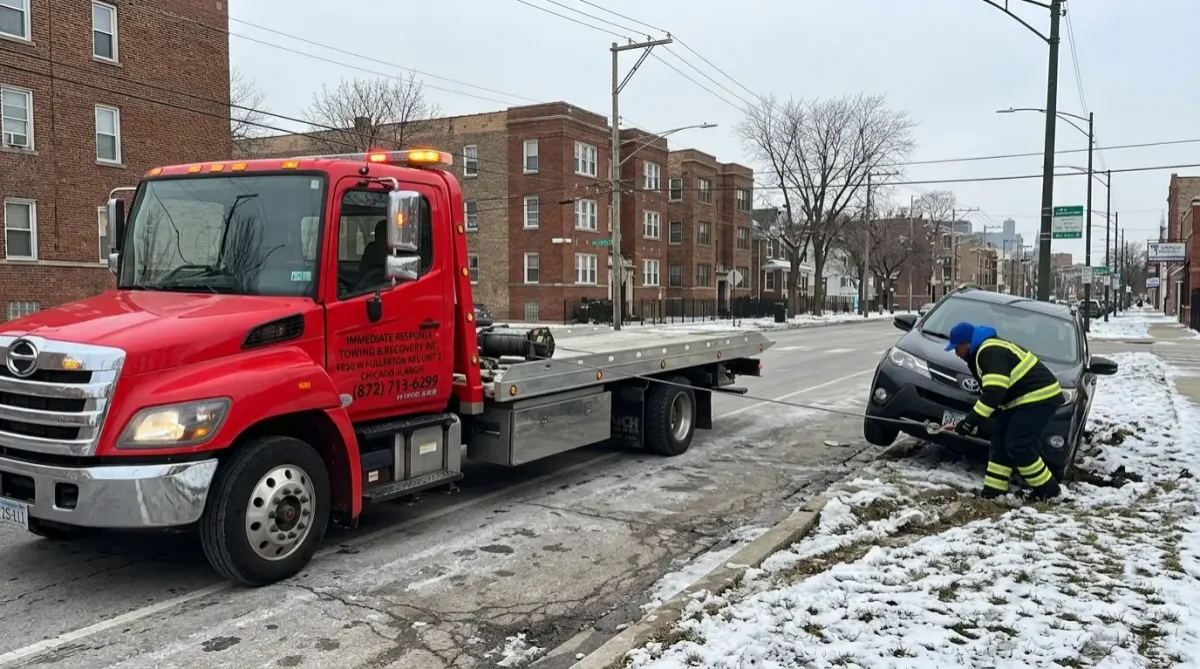
Winch Out/ Recovery
Cars stuck in snow, ice, mud, construction areas, alleys, or tight Chicago parking conditions.
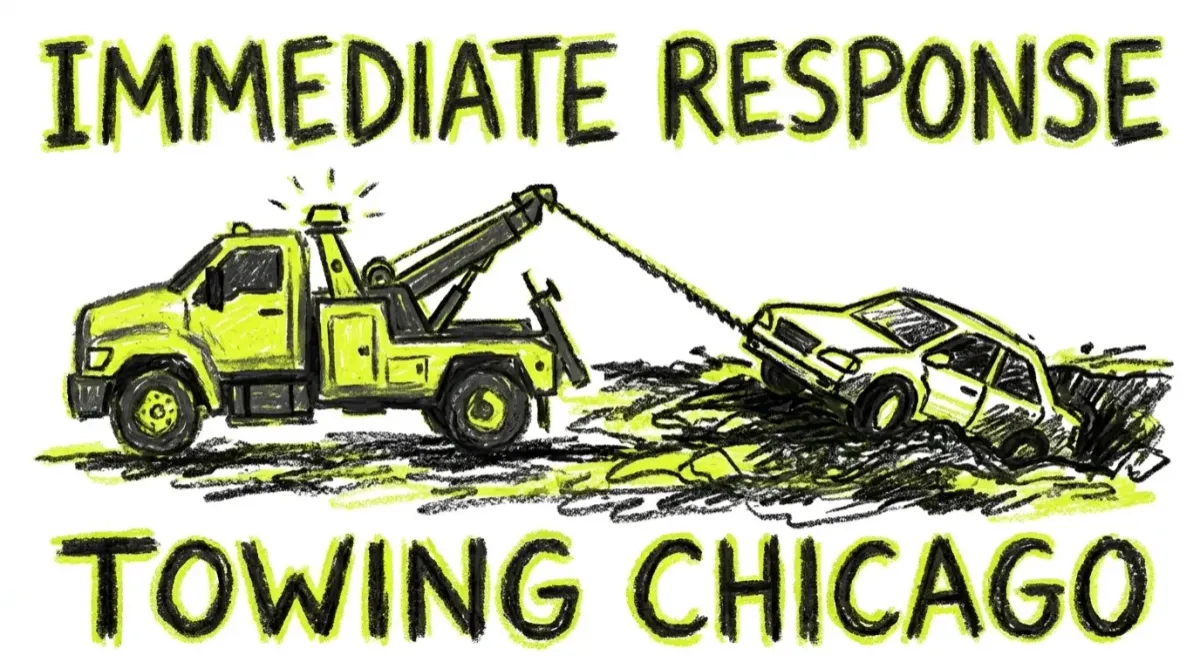
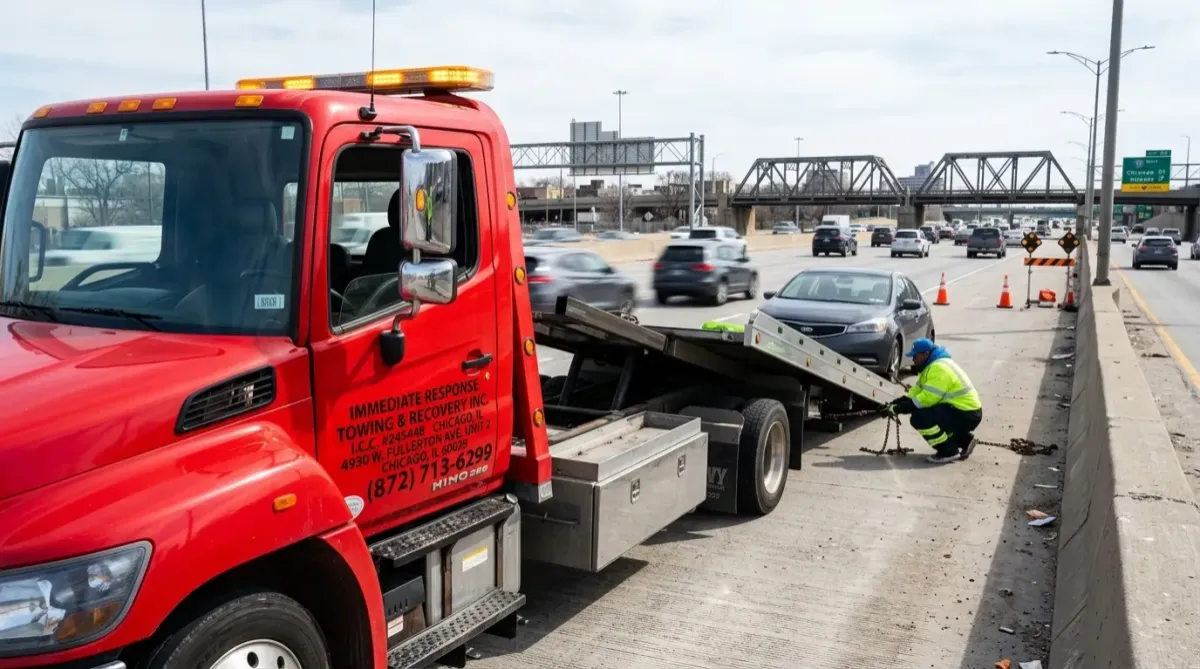
Unsafe Roadside Towing Chicago
Engine failure, transmission problems, overheating, brake issues or a vehicle that will not start. Tow truck arrive to safely remove vehicle from busy highway
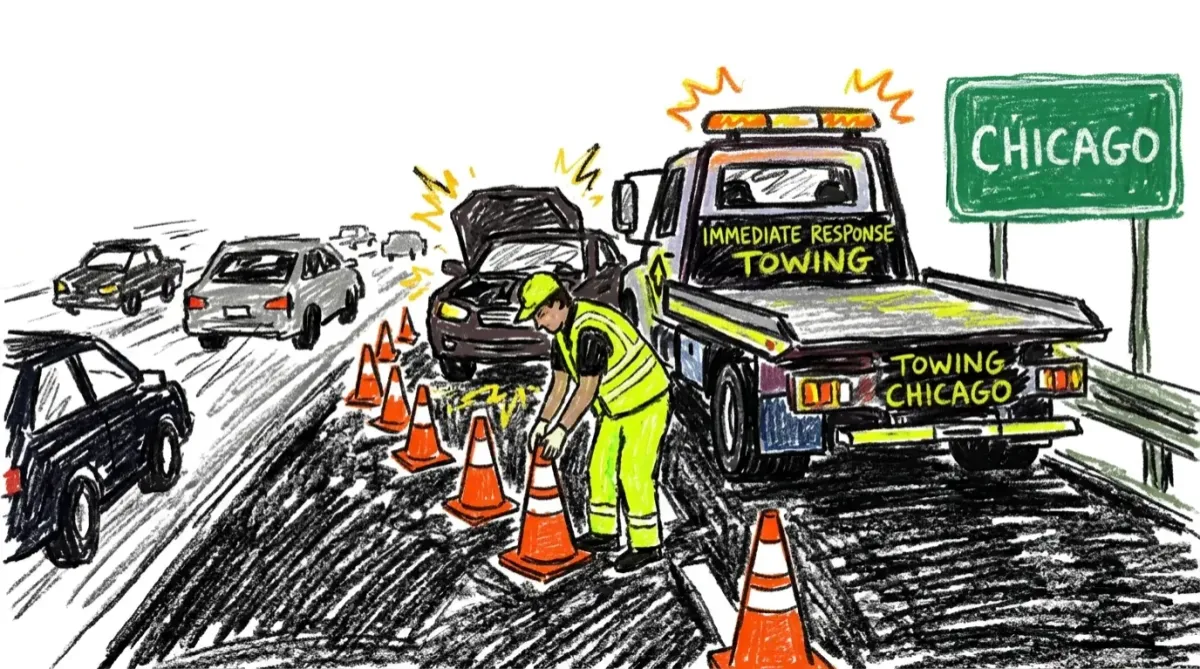
Unsafe Roadside Towing Chicago
What it is:
Our emergency towing service in Chicago helps drivers whose vehicles become stranded in unsafe roadside locations, including narrow shoulders, blind curves, and areas with fast-moving traffic or poor visibility.
When you need it:
A vehicle stopped close to fast-moving traffic
A breakdown on a narrow or unsafe road shoulder
A disabled vehicle near a blind curve or limited-visibility area
A roadside emergency where the vehicle needs to be moved to a safer location
How we do it:
We assess the vehicle's location and condition, then arrange suitable towing equipment and coordinate removal when it is safe and authorized. Police or emergency responders may need to secure hazardous roadside scenes before towing can begin.
What to prepare:
Exact location, road name, direction of travel and nearest exit or intersection
Vehicle make, model and condition
Details about traffic, visibility and roadside hazards
What should I do if my car stops in an unsafe location?
Turn on your hazard lights and move away from traffic if you can do so safely. If you are in immediate danger, on an active expressway, or blocking traffic, contact 911. Avoid attempting repairs near moving vehicles and request roadside assistance when it is safe to do so.
Can you tow a vehicle from a narrow roadside shoulder?
We can assess towing requests for vehicles stranded on roadside shoulders and other difficult-access locations. Service depends on road access, traffic conditions, available equipment, and any required authorization.
24/7 Emergency Towing for Cold-Weather Breakdowns & Winter Roadside Emergencies
What it is:
Our winter and overnight towing service in Chicago helps drivers stranded by cold-weather starting problems, snow-related incidents, frozen vehicle components, and late-night mechanical breakdowns.
When you need it:
A car that will not start in freezing temperatures
A vehicle stuck in snow or on an icy surface
Frozen components or cold-weather mechanical problems
Late-night or overnight vehicle breakdowns
How we do it:
We assess your vehicle's condition and location, then arrange appropriate roadside assistance or towing based on the problem, weather, and available equipment. If the vehicle cannot be safely driven, we can transport it to a repair shop or another agreed destination.
What to prepare:
Your exact location and preferred destination
Vehicle make, model and starting or mechanical issue
Details about snow, ice or access conditions
Can I get emergency towing late at night in Chicago?
Contact Immediate Response Towing Chicago for overnight towing availability. Tell us your location, vehicle type and breakdown details so we can confirm availability and provide an estimated arrival window.
Can you help if my car is stuck in snow?
We can assess snow-related recovery requests and determine whether towing or suitable recovery equipment is needed. Service depends on vehicle accessibility, snow conditions, and available equipment.
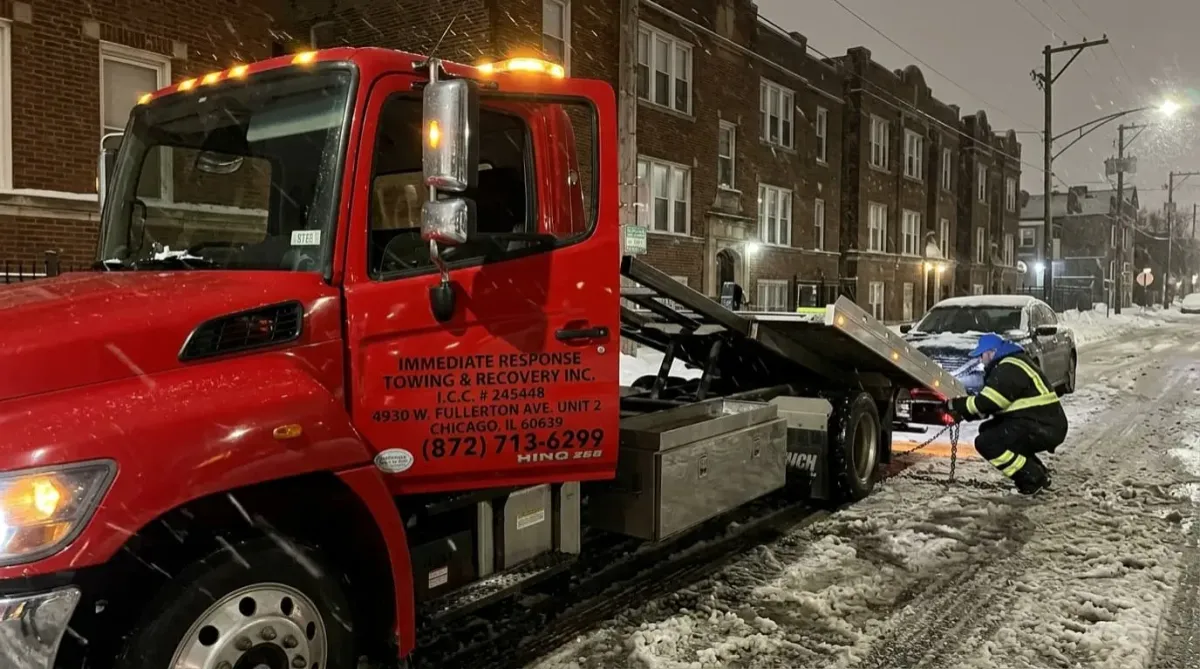
Overnight and winter failures
Cold-weather no-starts, frozen components, snow-related incidents, and late-night breakdowns.
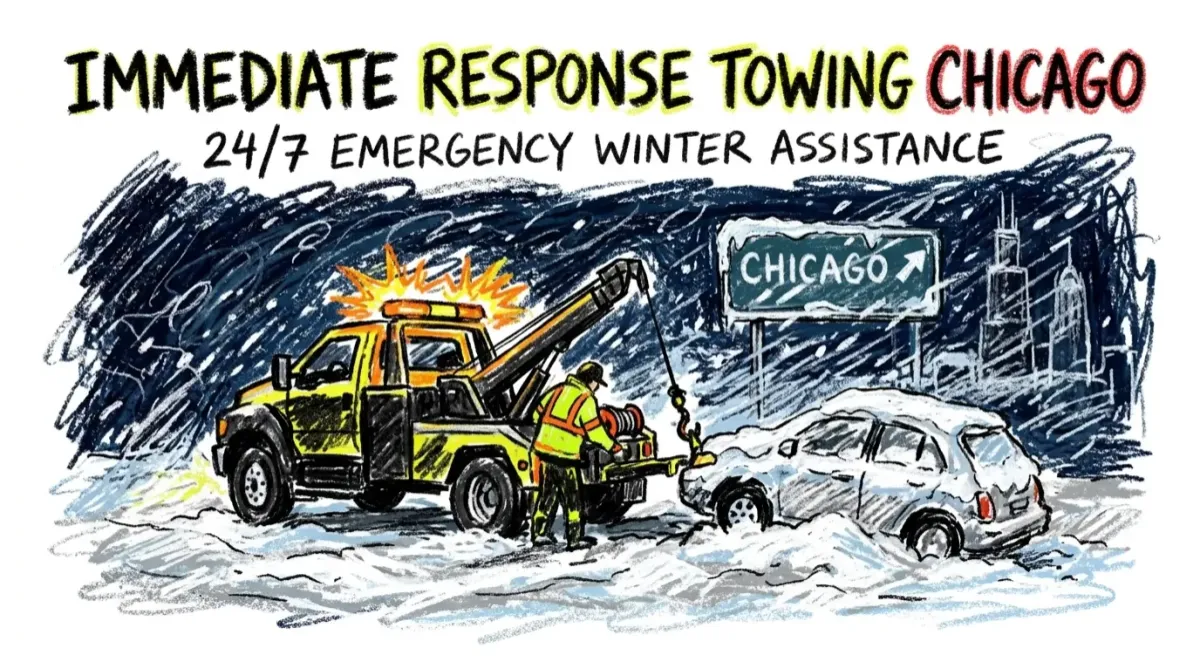
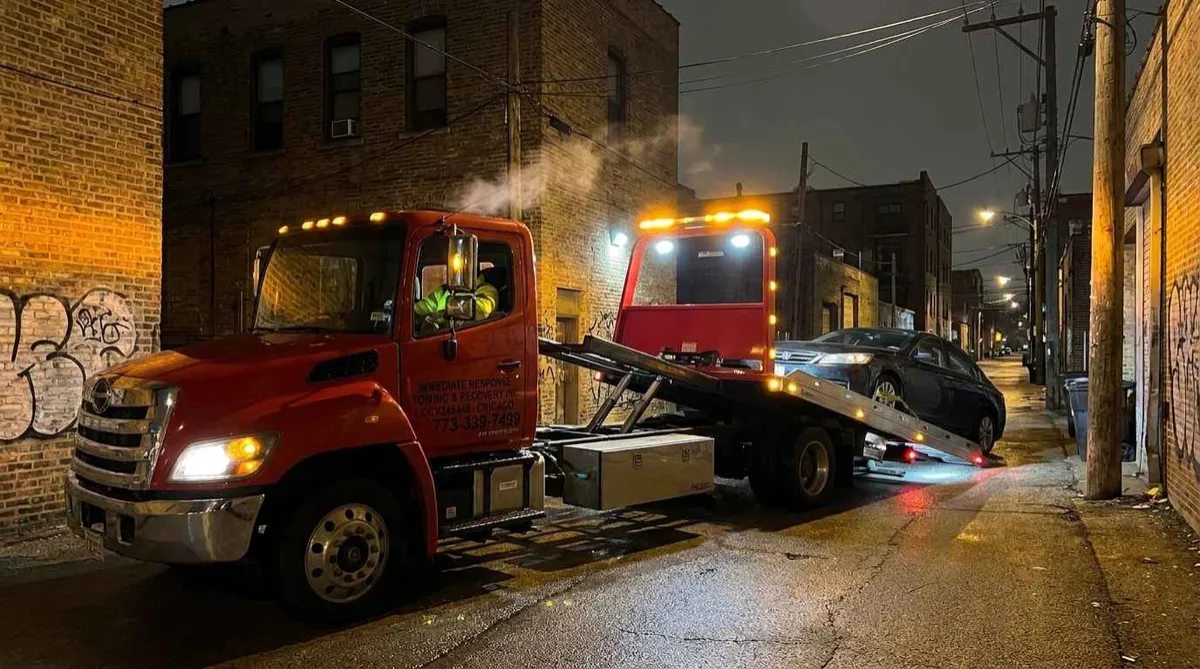
Mechanical Breakdown
Engine failure, transmission problems, overheating, brake issues, or a vehicle that will not start.
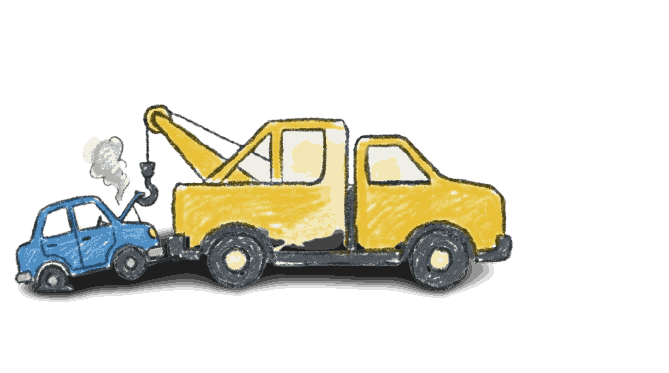
Mechanical Breakdown Towing Chicago
What it is:
Our mechanical breakdown towing service in Chicago helps drivers whose vehicles become disabled due to engine failure, transmission problems, overheating, brake issues, or starting problems.
When you need it:
Engine failure or transmission trouble
Engine overheating or warning lights
Brake problems that make driving unsafe
A vehicle that will not start or run properly
How we do it:
We assess your reported vehicle condition and arrange appropriate towing equipment to transport your disabled car, SUV or light truck to a repair shop, dealership or another agreed destination.
What to prepare:
Your exact location and destination
Vehicle make, model, and year
Description of the mechanical problem or dashboard warning
Can you tow a car that will not start?
Yes, we can arrange towing for vehicles that will not start due to mechanical or electrical problems. Share your vehicle details and location so we can determine the appropriate towing method.
Should I drive my car if the engine is overheating?
No. Stop in a safe location as soon as possible and switch off the engine. Continuing to drive can cause further damage. Contact roadside assistance or arrange towing to a repair facility.
If your vehicle is drivable and the situation is not urgent, a scheduled tow may be more appropriate. If it is unsafe to remain at the scene, call for emergency roadside assistance immediately.
STEP-BY-STEP: FROM CALL TO ARRIVAL
A SIMPLE & SMOOTH TOWING PROCESS





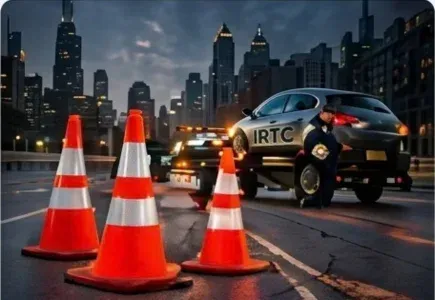

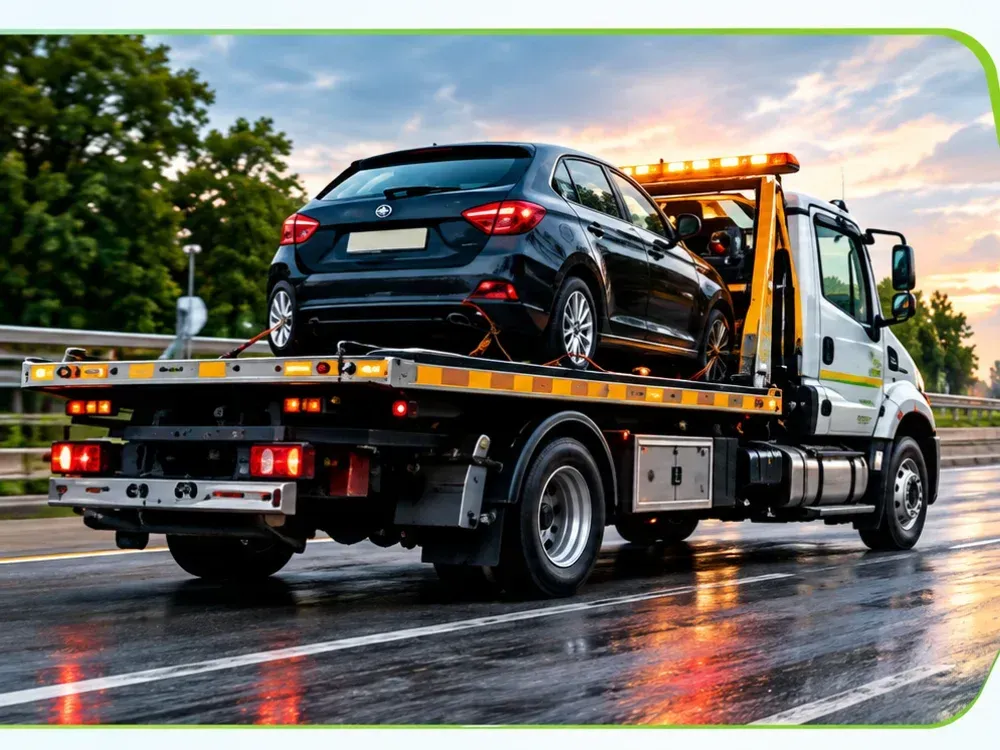
Flatbed or Hook-and-Chain: Which Is Safer?
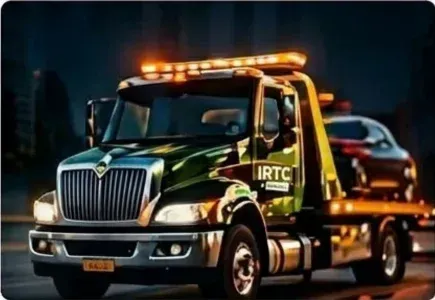
For many emergency situations, a flatbed emergency tow Chicago service is the safer option because the entire vehicle rides on the bed rather than being towed with wheels on the ground. The right method depends on the vehicle, damage, drivetrain, clearance, and road conditions.
| Situation | Flatbed Towing | Wheel-Lift / Hook-and-Chain-Style Towing |
|---|---|---|
| All-wheel drive (AWD) or 4WD vehicle | Often preferred because all wheels can be off the ground. | May require special procedures or equipment. |
| Electric or hybrid vehicle | Often preferred to address drivetrain and underbody concerns. | Requires manufacturer-safe procedures and careful equipment selection. |
| Accident-damaged vehicle | Often preferred when wheels, suspension, or steering are damaged. | May be unsuitable if the vehicle cannot roll or be secured properly. |
| Low-clearance vehicle | Can be appropriate with proper loading equipment and care. | May risk bumper, splitter, or underbody contact. |
| Luxury, classic, or specialty vehicle | Often preferred for reduced road contact. | May not provide the same level of protection. |
| Standard passenger car with functioning wheels | Can be used when appropriate. | Can be an efficient option for short, straightforward transport. |
| Vehicle blocked in traffic | Can be used for full transport. | May be useful for rapid clearing when safely possible. |
Where Does Immediate Response Towing Chicago Respond?
We provide emergency towing and roadside response across Chicago neighborhoods and nearby suburbs. Chicago is a large city with dense residential streets, alleys, expressways, construction zones, and winter weather, so precise location details help dispatch assign the right truck.
We support emergency towing requests in areas including:
If you are on an Illinois Tollway route, dial 999 for the Tollway’s roadside assistance program. The Tollway states that 999 connects drivers to roadway assistance, including H.E.L.P. Trucks and IDOT Minute Men, for incidents that are not life-threatening or critical enough for 911.
Lincoln Park: Residential streets, lakefront-adjacent routes, and busy arterial roads. See our Lincoln Park towing page.
Near West Suburbs: Nearby suburban communities and connecting routes. See our Near West Suburbs towing page.
Major expressways: I-90/I-94, I-290, ramps, shoulders, and connecting corridors. See our highway towing I-90/I-94/I-290 page.
Chicago neighborhoods citywide: Request service from your exact location, including residential streets, commercial corridors, parking facilities, and roadside locations.
How Does Illinois’ Move Over Law Protect You?
Illinois’ Move Over Law, also known as Scott’s Law, requires drivers to yield when approaching emergency vehicles displaying flashing lights. The Illinois State Police states that, beginning January 1, 2026, drivers must yield to emergency vehicles displaying flashing lights whether those vehicles are stationary or moving.
This matters when you are waiting for a tow. Our drivers use warning lights and positioning to create a safer work zone around your disabled vehicle.
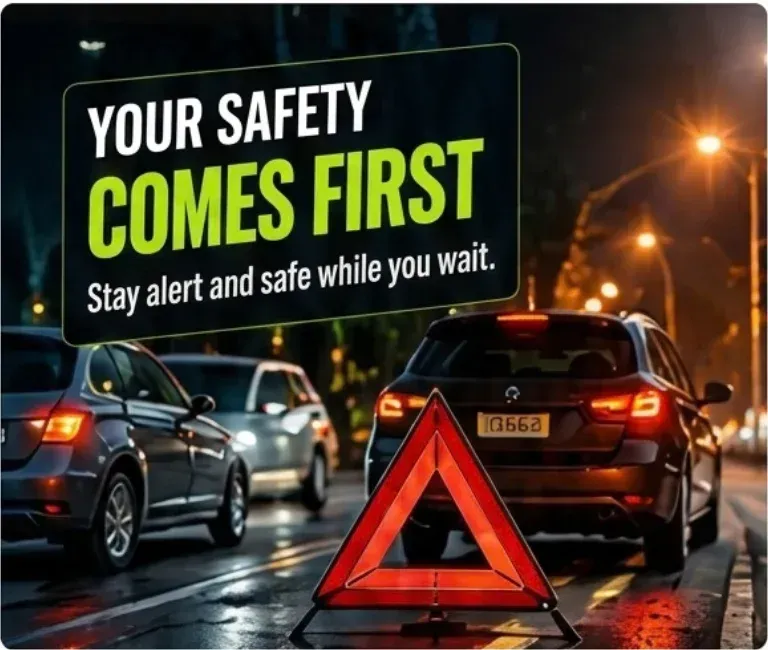
Stay safe while you wait for the tow
Turn on hazard lights as soon as it is safe to do so.
Stay out of travel lanes; move to a shoulder, parking area, or protected location only if safe.
Do not attempt to direct traffic yourself.
Remain in the vehicle with your seatbelt fastened when traffic is close and it is safer to stay inside.
If you exit, move far away from the roadway and behind a barrier when available.
Let the tow operator use warning lights, cones, truck positioning, and recovery procedures to control the scene.
A first violation of Illinois’ Move Over Law can carry a fine of $250 to $10,000, according to the Illinois State Police. The law exists to protect emergency responders, tow operators, and stranded motorists
How Much Does Emergency Towing Cost in Chicago?
Emergency towing cost depends on the specifics of the job. We confirm the rate before dispatch so you know what to expect before a driver is assigned.
Factors that can affect the quote include:
Distance: Pickup location and drop-off destination.
Vehicle type: Passenger car, SUV, van, pickup, motorcycle, EV, hybrid, AWD vehicle or specialty vehicle.
Time of service: Overnight, weekend, holiday or severe-weather conditions.
Recovery complexity: Vehicle position, damage, wheels locked, vehicle in a ditch, snow, mud, tight space or traffic exposure.
Equipment required: Flatbed, wheel-lift, recovery equipment or additional personnel.
Tolls or route requirements: Expressway routes and toll facilities may affect the final service details.
Immediate Response Towing Chicago confirms pricing details with the customer before dispatch.
We do not publish flat rates on this page because accurate emergency towing quotes depend on the factors above.
Why Chicago Drivers Trust Immediate Response Towing Chicago
Towing is a safety-sensitive and financial-risk service. We keep our business information clear and consistent so customers can verify who they are calling.
24/7 dispatch: Call +1-872-713-6299 any time for emergency towing and roadside response.
Local Chicago service area: We serve Chicago neighborhoods and nearby suburbs.
Owner-requested towing focus: This page covers emergency, consent-based towing requested by the vehicle owner or authorized representative. It does not describe private-property trespass towing or vehicle relocation.
Clear dispatch process: Dispatch confirms location, vehicle, destination and service needs before assigning a driver.
Safety-first recovery: Drivers use warning lights, positioning and appropriate towing equipment for the situation.
Licensing and insurance:
Illinois regulates commercial safety towing through the Illinois Commerce Commission. The ICC states that the Safety Towing Law regulates damaged or disabled vehicle relocations in Cook, DuPage, Kane, Will and Winnebago counties, and that commercial vehicle safety relocators conducting those relocations in those counties must register with the ICC. You can verify a safety-relocator registration through the ICC’s Safety Relocator page.
Emergency Roadside Assistance in Chicago
Not every roadside emergency requires a full tow. Immediate Response Towing Chicago also provides roadside response for situations where a vehicle may be made drivable or safely assessed at the scene.
Roadside services can include:
Jump starts for dead or weak batteries
Flat-tire assistance when a safe roadside tire change is possible
Fuel-delivery requests
Lockout assistance
Vehicle recovery from snow, ice, mud or tight spaces
Accident-related towing and transport
Breakdown towing to a repair facility, home or other destination
For non-tow roadside needs, see our roadside assistance page.
For Chicago Police non-emergency matters, the City of Chicago lists 311 as the non-emergency telephone number and directs all emergencies to 911. The City also notes that vehicle tow requests can be made by several City departments, including the Chicago Police Department, Department of Streets and Sanitation, Department of Finance, Aviation, and the Office of the City Clerk.
Chicago-Specific Roadside Challenges
Winter Conditions & Battery Failures
Chicago's first hard freeze each year triggers a massive spike in dead battery calls. Average January temperatures hover around 30°F, with hard freezes commonly hitting 0°F, accelerating battery wear and electrical issues. Salt corrosion from winter roads compounds the problem year-round.
Tip: Test batteries before November; replace if 3+ years old.
Chicago Winter Towing and Snow-Route Safety
Winter creates a higher risk of breakdowns, no-starts, stuck vehicles and unsafe roadside conditions. Chicago also enforces seasonal parking rules that can result in towing.
The City of Chicago enforces a winter overnight parking ban on approximately 107 miles of vital arterial streets from 3 AM to 7 AM, December 1 through April 1, regardless of snow. The City also enforces a separate snow-route restriction on roughly 500 miles of main streets when there are at least two inches of snow on the street, regardless of time or date.
If your vehicle has been towed by the City, Chicago 311 advises calling 311 or visiting the City’s winter snow resources for information.
Snow Route & Winter Parking Bans
The City of Chicago enforces a Winter Overnight Parking Ban on 107 miles of arterial streets from 3 AM-7 AM, December 1-April 1, regardless of snow. Violators face a minimum $150 towing fee, $60 ticket, and $25/day storage. A separate 2-inch snow ban covers 500+ miles of main streets and activates when snow exceeds 2 inches.
Winter breakdown tips
Keep hazard lights, phone charging and visibility in mind before exiting the vehicle.
Do not park on posted snow routes during restricted conditions.
If your vehicle becomes stuck, avoid spinning the wheels for long periods; call for recovery assistance.
If possible, wait inside the vehicle when traffic is close and conditions are safer than standing outside.
Give dispatch exact cross streets, direction of travel and nearby landmarks.
Emergency Towing for Accidents on I-90, I-94 and I-290
Expressway incidents require extra caution. High speeds, limited shoulders, curves, ramps and heavy traffic make it especially important to avoid standing near your disabled vehicle.
If you need a tow truck after a car accident Chicago drivers can rely on, call +1-872-713-6299. Provide the highway name, direction of travel, nearest exit or milepost, vehicle description, and whether police or emergency medical services are already on scene.
The Illinois Tollway advises drivers to call 911 for emergencies and *999 for Tollway roadside assistance. Its guidance includes providing the roadway name, direction, closest milepost, number of vehicles involved and vehicle descriptions when reporting an incident.
For highway-specific service information, see our I-90/I-94/I-290 highway towing page.
WHAT TO DO WHILE WAITING
SAFETY FIRST
Your physical safety is the priority while stranded on chicago streets or expressways.
Stay in your vehicle
if you are on a busy road or expressway shoulder; exiting
puts you at risk of being
struck by passing traffic

Turn on hazard lights
If safe, place a reflective triangle or flare behind your vehicle.
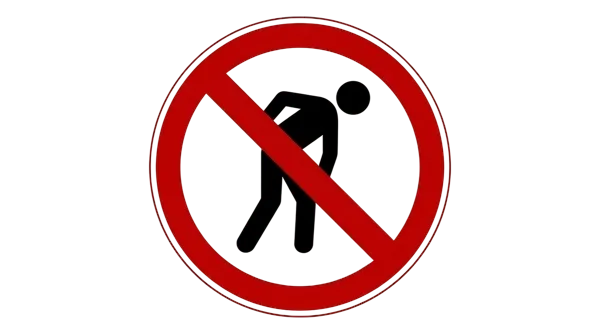
Do not stand
on the shoulder
Do not stand on the shoulder or attempt repairs in traffic lanes; IDOT's Emergency Traffic Patrol ("Minutemen") specifically warns against this on Chicago expressways

On expressways
If you are on an expressway (Dan Ryan, Kennedy, Eisenhower, etc.), IDOT's Minutemen may arrive first to clear hazards, but they do not tow; they will help you stay safe until a private tow truck arrives.

Keep doors locked
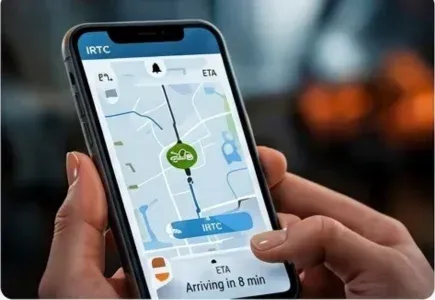
Keep doors locked and windows up if you feel unsafe; our dispatcher can share the driver's name, truck number, and live ETA for peace of mind

Winter weather
Chicago's expressways see high-speed traffic year-round and winter weather (December-February) increases breakdown volume by up to 40%, making roadside safety critical.
TYPES OF TOW TRUCKS AVAILABLE IN CHICAGO
AND WHEN EACH IS USED
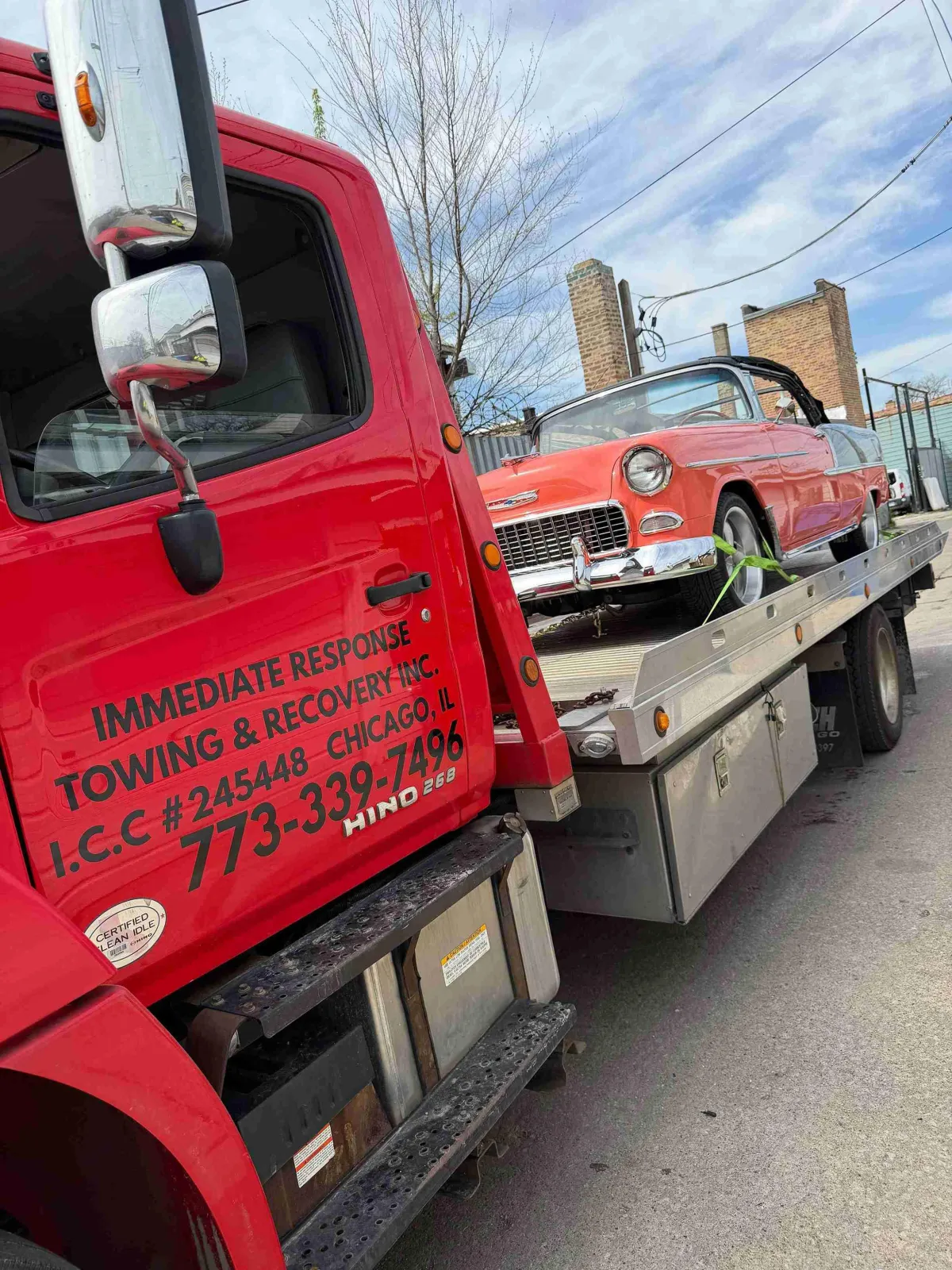
FLATBED TOWING
BEST FOR AWD, 4WD,
MOTORCYCLES & LUXURY CARS
How it works: The entire vehicle is driven or winched onto a level bed, then strapped down; no wheels touch the road during transport. For more details
Best for: All-wheel-drive (AWD) or 4WD vehicles (to avoid drivetrain damage), motorcycles, low-clearance sports cars, and vehicles with suspension/steering damage
Typical Chicago cost: $100-$175 for a short local tow (5 miles or less); longer distances add $3-$5 per mile.
TYPICAL CHICAGO COST : $100-$175 (5 Miles or less)
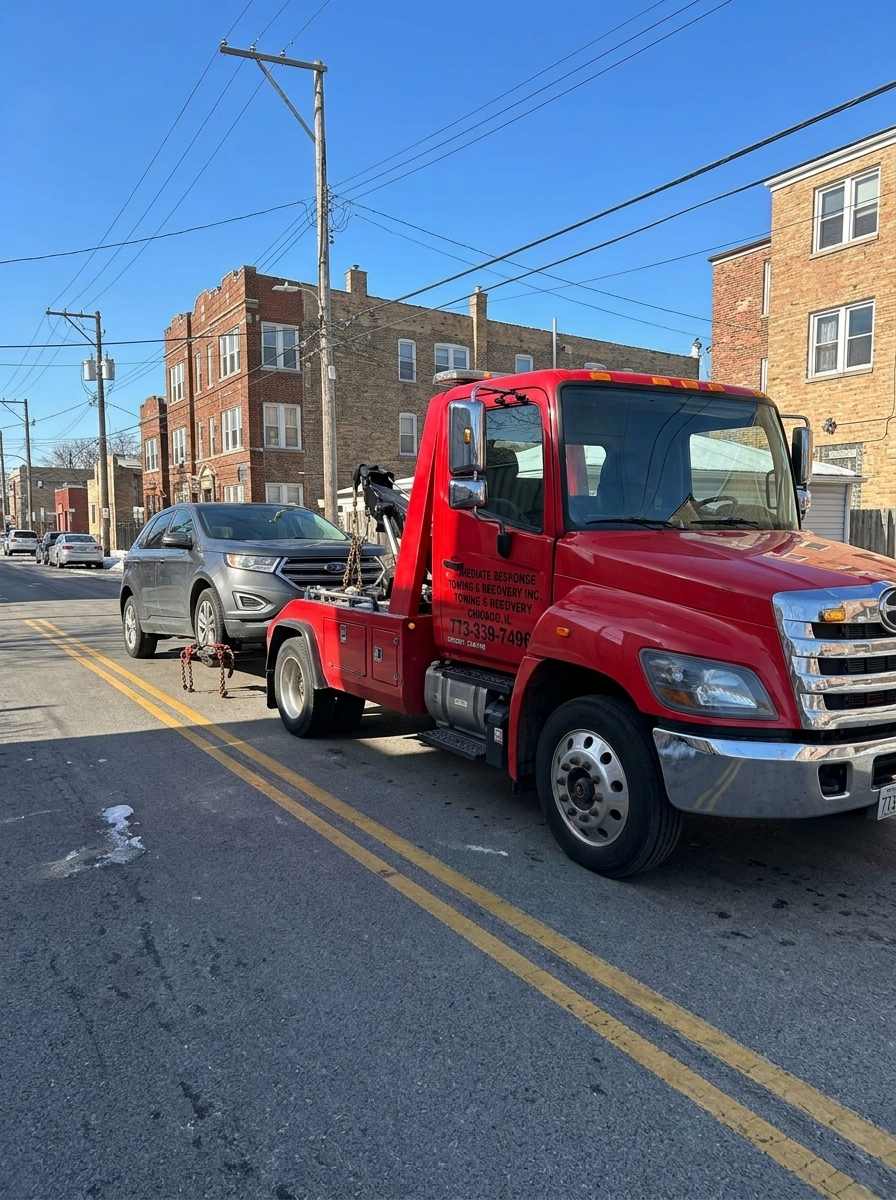
WHEEL LIFT TOWING
STANDARD FOR MOST PASSENGER CARS
How it works: A metal yoke lifts either the front or rear wheels off the ground while the opposite axle rolls; faster and more maneuverable in tight urban spaces.
Best for: Best for: Standard 2WD cars and light trucks in good running condition; not recommended for AWD/4WD unless the driveshaft is disconnected (which most drivers cannot do safely)
Typical Chicago cost: $75-$125 for the first 3-5 miles, then $4-$10 per additional mile depending on the provider.
TYPICAL CHICAGO COST : $75-$125 (First 3-5 Miles)
WHICH SHOULD YOU REQUEST?
Choose the right tow truck based on your vehicle and situation
| Vehicle Type | Recommended Truck | Why |
|---|---|---|
| AWD/4WD SUV or Crossover | Flatbed | Prevents drive-train binding and transmission damage |
| Motorcycle | Flatbed | Wheels must not touch the road; balance and stability are critical |
| Standard 2WD Sedan | Wheel-Lift or Flatbed | Both work; flatbed is gentler but may cost slightly more |
| Disabled Vehicle (would not roll) | Flatbed with Winch | Wheel-lift requires rolling wheels; winch-equipped flatbeds can pull non-running cars |
| Low-Clearance Sports Car | Flatbed | Avoids scraping front bumper or undercarriage |
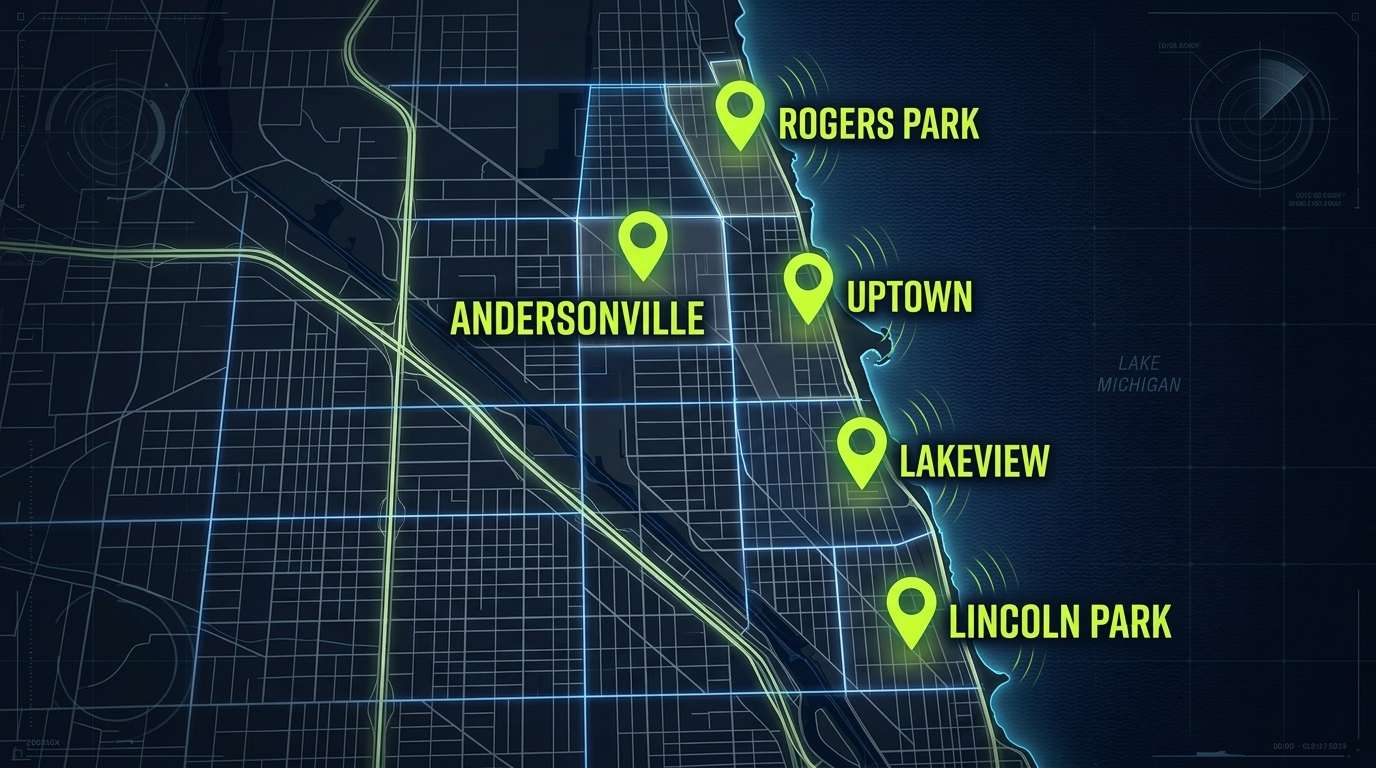
Sevice Area
Chicago Wide Coverage
Immediate Response Towing Chicago serves all neighborhoods and expressways within the city limits, including but not limited to
North Side
Lakeview
Rogers Park
Uptown
Andersonville
West Side
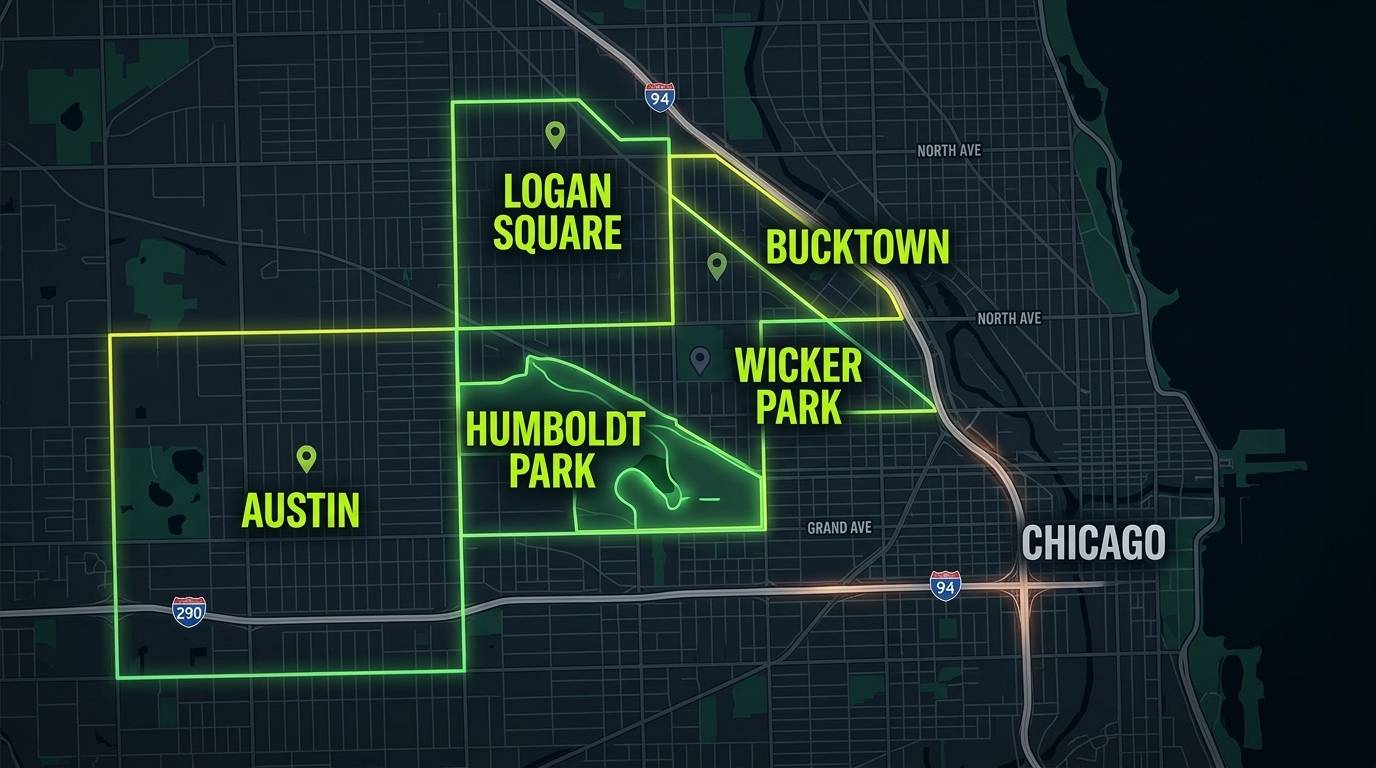
Wicker Park
Bucktown
Logan Square
Austin
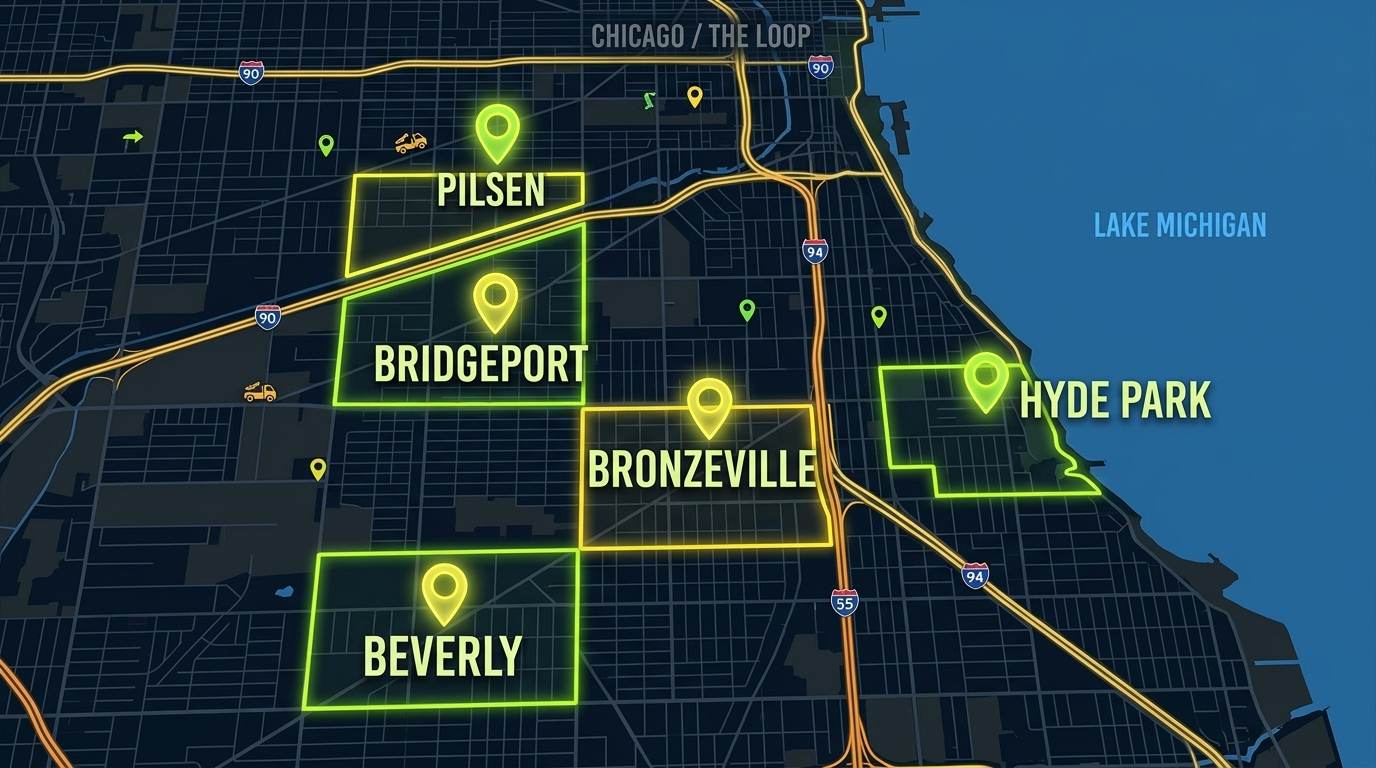
South Side
Hyde Park
Bronzeville
Pilsen
Bridgeport
Beverly
Expressways
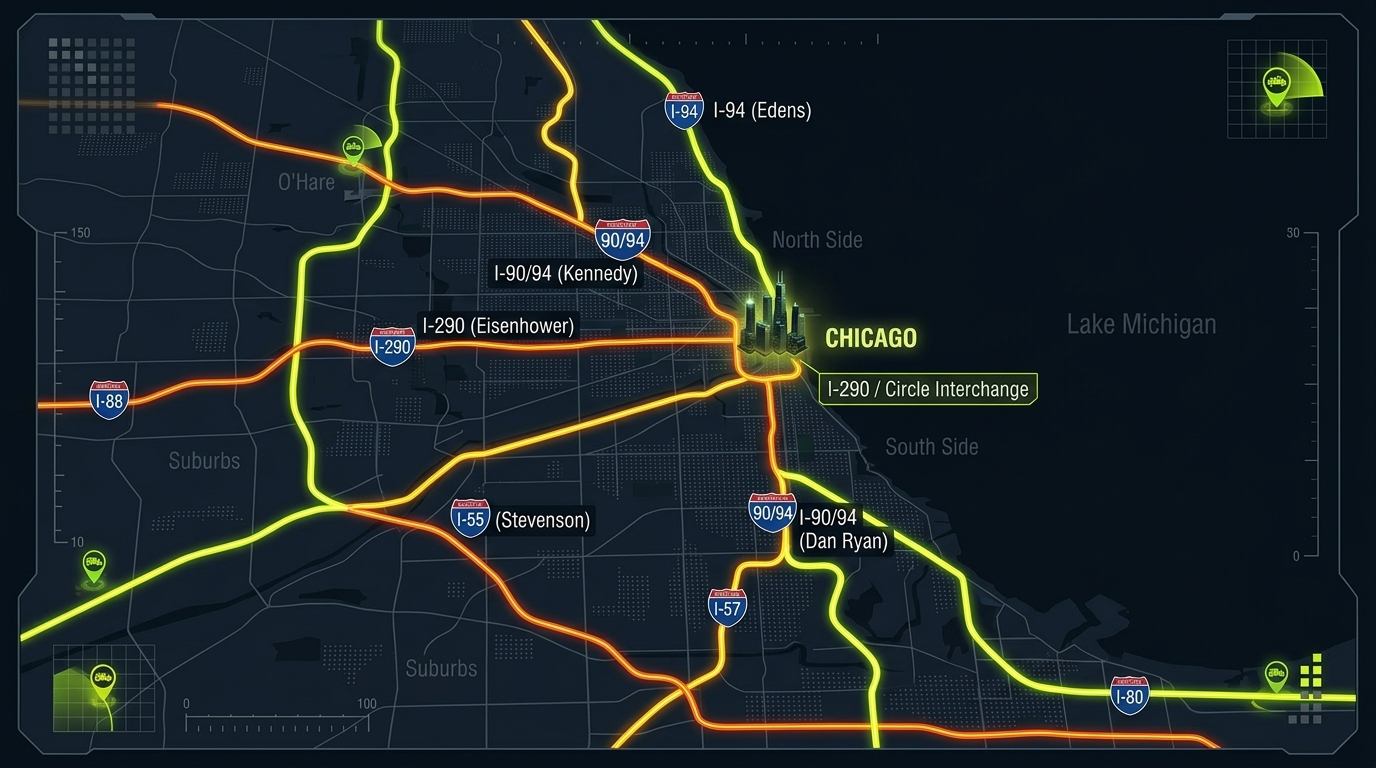
I-290 (Eisenhower)
I-55 (Stevenson)
I-94 (Edens),
I-290 (Circle Interchange)
I-88, I-57, I-80
Note: We do not tow outside Chicago city limits unless pre-arranged; for suburban destinations, confirm pricing and availability with the dispatcher before booking
What Towing Typically Costs in Chicago (Transparent Pricing)
Towing costs in Chicago vary by distance, truck type, time of day and vehicle condition; but you should always receive a confirmed quote before the truck is dispatched
Average Chicago Towing Rates (2026 Data)
| Service Type | Typical Cost Range | Notes |
|---|---|---|
| Local Tow (up to 5 miles) | $75-$125 | Base hook-up fee + first 3-5 miles included |
| Per-Mile Rate (beyond included distance) | $3-$10/mile | Varies by provider; flatbeds often charge more |
| After-Hours Surcharge (11 PM-7 AM) | +$20-$50 | Some companies charge premium rates overnight |
| Flatbed Tow (short distance) | $100-$175 | Recommended for AWD, motorcycles, luxury cars |
| Winch-Out/Recovery (if vehicle is stuck off-road) | $150-$450 | Depends on complexity and equipment needed |
| Motorcycle Towing | $100-$190 | Requires specialized flatbed or trailer |
Factors That Affect Your Final Price
Distance: Most Chicago tows under 10 miles fall in the $100-$190 range; longer distances add per-mile charges.
Time of Day: After-hours (late night/early morning) may incur a surcharge of $20-$50.
Vehicle Type: AWD/4WD, motorcycles, and heavy vehicles cost more due to equipment and labor.
Traffic & Access: Downtown locations (Lower Wacker, Circle Interchange) or tight alleys may add $25-$50 for extra time.
Seasonal Demand: Winter months (December-February) see 25-40% higher demand, which can lead to longer wait times and occasional price increases.
Why Response Speed and Driver Safety Matter
A stranded vehicle on a Chicago street or expressway is not just an inconvenience; it is a safety hazard.
The Real-World Risks
Expressway Breakdowns: Chicago's major corridors (Dan Ryan, Kennedy, Eisenhower) carry high-speed traffic 24/7; a disabled vehicle on the shoulder is at risk of being struck, especially in low visibility or winter weather.
Winter Weather: December through February sees up to 40% more towing calls due to battery failures, tire blowouts and accidents caused by snow/ice.
Pedestrian Danger: Drivers who exit their vehicles to "wave down help" or attempt roadside repairs are at significant risk of being hit by passing cars; IDOT's Minutemen explicitly warn against this.
How a Professional Tow Service Reduces Harm
Fast, Coordinated Dispatch: A dedicated 24/7 line 872-713-6299 ensures your call is answered immediately and a truck is assigned without delay.
Trained Drivers: Licensed, insured operators know how to secure vehicles safely, use proper equipment and follow Chicago DOT and IDOT safety protocols.
Safety-First On-Scene Protocol: Professional drivers set up cones, lights and flares before approaching your vehicle, protecting both you and passing traffic.
Disclaimer: This page provides general information about towing services and local parking regulations. It is not legal advice. For emergencies, call 911. Towing fees, response times, and availability vary based on conditions. Verify all licensing and insurance information directly with our office.
WHAT OUR CUSTOMERS SAY
FAQ'S
Emergency Towing Chicago
How fast can an emergency tow truck reach me in Chicago?
We dispatch as quickly as possible after confirming your location, vehicle, destination and service needs. Actual arrival time depends on traffic, weather, distance, road closures and the equipment required. We do not promise a specific arrival time because safety and accurate dispatch come first.
Do you provide towing after a car accident in Chicago?
Yes. We provide accident-related towing for vehicles that cannot be safely driven after a collision. If anyone is injured, there is fire or smoke, or the scene is dangerous, call 911 first. Once the scene is safe, call us at +1-872-713-6299 for accident towing and transport.
Can you tow at night or during snow?
Yes. Immediate Response Towing Chicago operates 24/7, including nights, weekends, holidays and winter weather. Snow, ice, limited visibility, and traffic can affect dispatch and recovery conditions, so provide exact location details and remain in a safe position while waiting.
Do you use a flatbed or hook-and-chain tow truck?
We select the appropriate method based on the vehicle and situation. Flatbed towing is often preferred for AWD vehicles, EVs, hybrids, low-clearance vehicles, and accident-damaged cars. Wheel-lift service may be appropriate for certain standard vehicles when it can be done safely.
Can you tow my car to my mechanic or home?
Yes. You may choose the drop-off destination when you call, subject to access, safety, and distance. Common destinations include a repair shop, dealership, home, storage facility, or another approved location. We confirm the destination before dispatch.
What information should I give when I call?
Provide your exact location, nearby cross streets or highway exit, vehicle make and model, color, condition, whether it is AWD or electric, and your destination. If you are on an expressway, include the direction of travel and nearest milepost if known.
What if the police ordered my vehicle towed?
Police-ordered towing follows a different City process. Chicago 311 states that vehicle tow requests can be made by the Chicago Police Department and other City departments. For a City-ordered tow, contact 311 or the relevant agency for vehicle location and release information.
Can you tow electric, hybrid and AWD vehicles?
Yes. EVs, hybrids, and AWD vehicles often require careful equipment selection and secure loading. Flatbed towing is frequently the preferred method because it keeps all wheels off the ground. Tell dispatch the vehicle type when you call so the correct truck can be assigned.
How do I know a towing company is legitimate in Illinois?
Ask for the company name, phone number, service details, destination and pricing before authorizing the tow. Illinois requires commercial vehicle safety relocators conducting damaged or disabled vehicle relocations in certain counties, including Cook County, to register with the Illinois Commerce Commission.
What happens to my car after a police-ordered tow?
For a police-ordered tow, the vehicle may be taken to a City-designated facility or another location determined by the involved agency. Chicago 311 provides information about the City’s towing process and advises contacting 311 for assistance.
WHAT OUR CUSTOMERS SAY
PROUDLY SERVING
CHICAGO &
SURROUNDING AREAS
From downtown to the suburbs,
we've got you covered.

Chicago
Evanston
Skokie
Cicero
Oak Lawn
and more!
PROUDLY SERVING
CHICAGO AND SURROUNDING AREAS
From downtown to the suburbs,
we've got you covered.

Chicago
Evanston
Skokie
Cicero
Oak Lawn
and more!
DON'T WAIT.
JUST CALL.
Fast help is closer than you think.
872-713-6299
24/7 Emergency Service
OUR AVERAGE
RESPONSE TIME
DON'T WAIT .JUST CALL.
Fast help is closer than you think.

872-713-6299
24/7 Emergency Service
OUR AVERAGE RESPONSE TIME




SERVICES
All Towing Services
Roadside Assistance
Junk Cars For Cash
Local & Lond Distance Towing
Accident Recovery
CONTACT US



SERVICES
All Towing Services
Roadside Assistance
Junk Cars For Cash
Local & Long Distance Towing
Accident Recovery