24/7 HEAVY-DUTY TOWING & SEMI TRUCK RECOVERY IN CHICAGO
JUMP STARTS.LOCKOUTS.FLAT TIRES.FUEL DELIVERY & MORE
Immediate Response Towing Chicago provides heavy-duty towing, semi-truck recovery and commercial roadside assistance throughout Chicago, Illinois. When a tractor-trailer, box truck, bus or construction vehicle is disabled, call +1-872-713-6299 for 24/7 dispatch.

24/7 EMERGENCY SERVICE
15-30 Min
Avg Response
LICENSED & ENSURED

NO HIDDEN FEES

LOCAL EXPERT OPERATORS
24/7 HEAVY-DUTY TOWING & SEMI TRUCK RECOVERY IN CHICAGO
JUMP STARTS. LOCK OUTS. FLAT TIRES. FUEL DELIVERY & MORE.
24/7 Emergency Service
15-30 Mins
Avg Response
Fully Equipped & Professional
Trusted By Industry Experts
Immediate Response Towing Chicago provides heavy-duty towing, semi-truck recovery and commercial roadside assistance throughout Chicago, Illinois. When a tractor-trailer, box truck, bus or construction vehicle is disabled, call +1-872-713-6299 for 24/7 dispatch.
WE DO
MORE THAN
JUST TOWING

TOWING
ROAD SIDE ASSISTANCE

JUMP START SERVICE
FUEL DELIVERY

LOCK OUT SERVICE

FLAT TIRE SERVICE

AND MORE!
WE DO MORE THAN JUST TOWING
TOWING
ROAD SIDE ASSISTANCE
JUMP
START
FUEL DELIVERY
LOCK OUT SERVICE
FLAT TIRE SERVICE
AND MORE!
WHO PROVIDES HEAVY-DUTY TOWING IN CHICAGO?
Immediate Response Towing Chicago provides 24/7 heavy-duty towing and commercial recovery in Chicago, Illinois. The company assists disabled tractor-trailers, box trucks, buses, construction equipment, and other heavy vehicles. Call +1-872-713-6299 for dispatch and a transparent quote.
Emergency notice:
If there is an injury, fire, fuel leak, hazardous-material concern or immediate traffic danger, call 911 first.
VEHICLE CLASSES AND EXAMPLES
| Duty Class | Common Vehicles | Equipment Typically Required | Typical Use |
|---|---|---|---|
| Light-Duty | Cars, SUVs and small pickup trucks | Wheel-lift or flatbed tow truck | Passenger-vehicle towing, vehicle lockouts, jump-starts and basic roadside assistance |
| Medium-Duty | Delivery vans, smaller box trucks, and some buses | Medium-duty wrecker or flatbed tow truck | Local delivery vehicle breakdowns, service-vehicle towing and recovery |
| Heavy-Duty | Semi-trucks, tractor-trailers, large buses, dump trucks and construction equipment | Heavy wrecker, rotator, air-cushion recovery equipment or lowboy trailer, depending on the recovery requirements | Commercial truck breakdowns, rollover recovery, heavy-vehicle recovery and construction equipment transport |
OUR CHICAGO HEAVY-DUTY TOWING SERVICES
Fast 24/7 Commercial Vehicle, Semi-Truck Towing & Heavy-duty Recovery in Chicago
Semi-Truck & Tractor-Trailer Towing
24/7 semi-truck towing & tractor-trailer transport for breakdowns, tire blowouts & engine failures across Chicago expressways & logistics corridors.
What it is:
Heavy-duty towing engineered specifically for Class 7 and Class 8 commercial rigs.
When you need it:
Engine breakdowns
Transmission failures
Air line issues
Roadside disablements on I-90/94, I-290, I-55 or I-80.
What we dispatch:
Heavy wreckers with under-lifts, specialized rigging and experienced heavy-recovery operators.
What to prepare:
Vehicle make, model, year, and color
Exact location or nearest landmark
Direction of travel (if on expressway)
Callback number
Can you tow a fully loaded semi-truck and trailer on Chicago highways?
Yes. We assess cargo weight, axle configuration and bridge clearance to dispatch heavy wreckers capable of towing loaded tractor-trailers safely off I-90/94, I-290, I-55 and I-80.
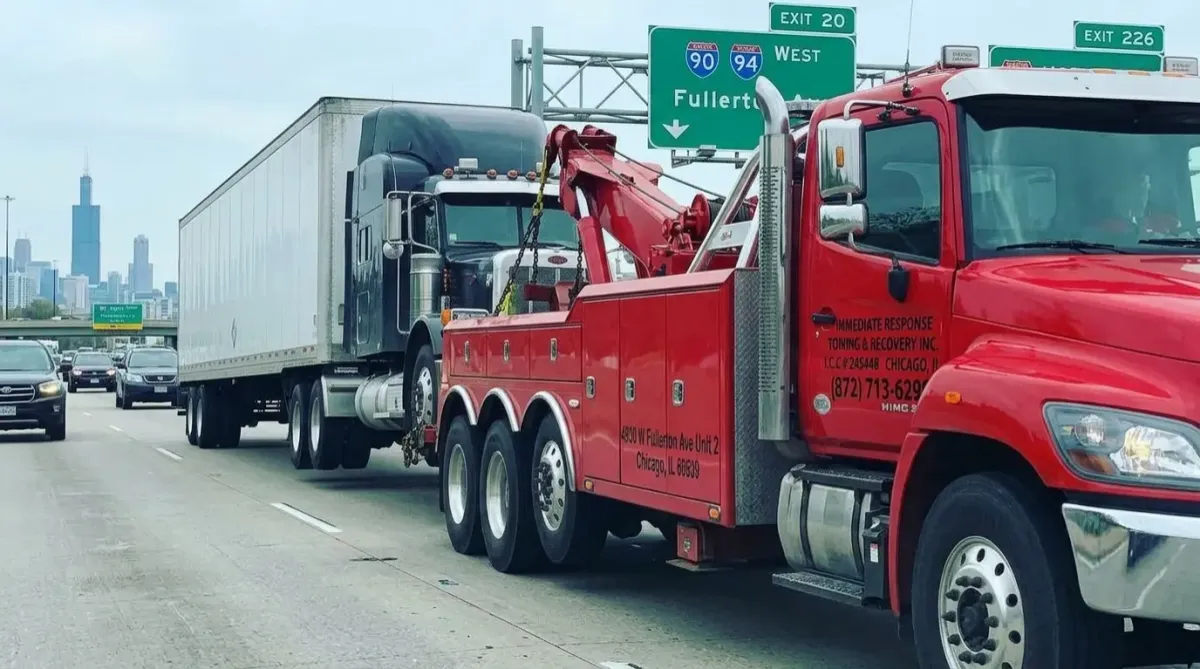
Semi-Truck & Tractor-Trailer Towing
Heavy wreckers with under-lifts, specialized rigging and experienced heavy-recovery operators
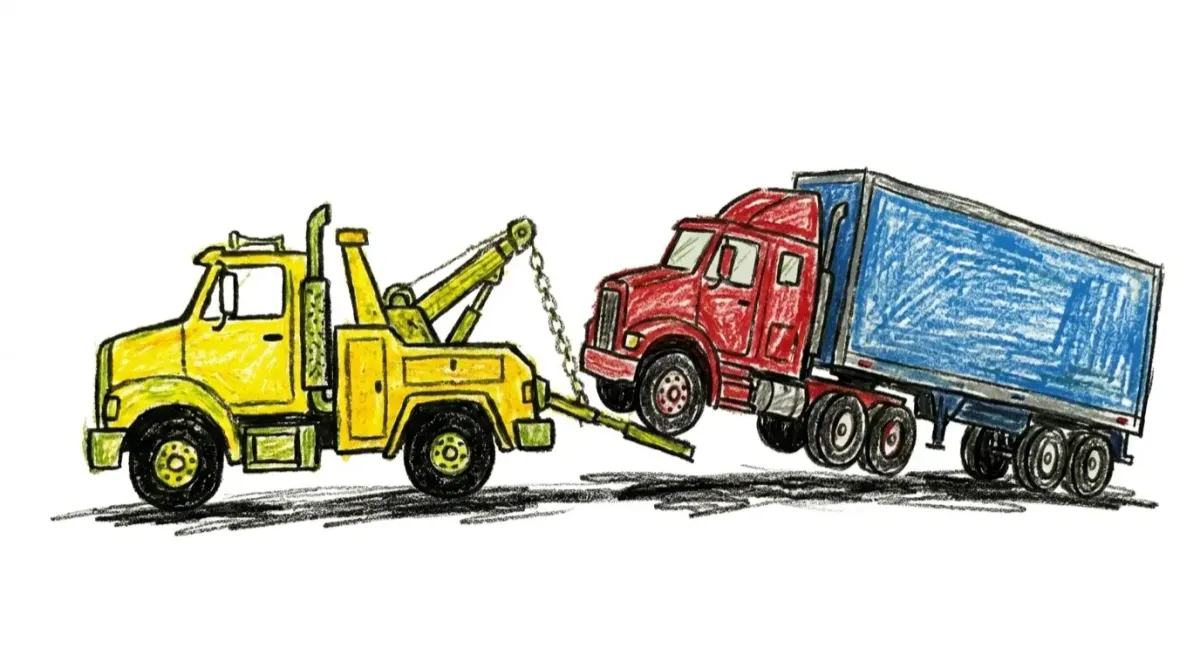
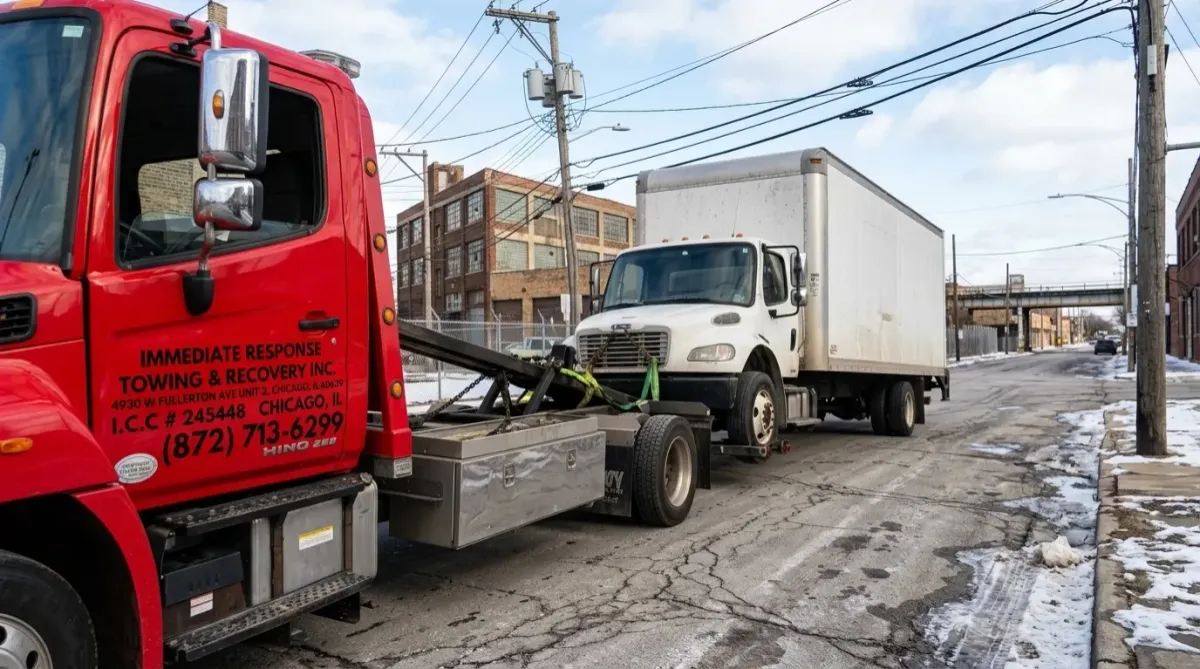
Box Truck & Commercial Vehicle Towing
Tight alleyways, loading dock access, low clearances and safe load-handling requirements
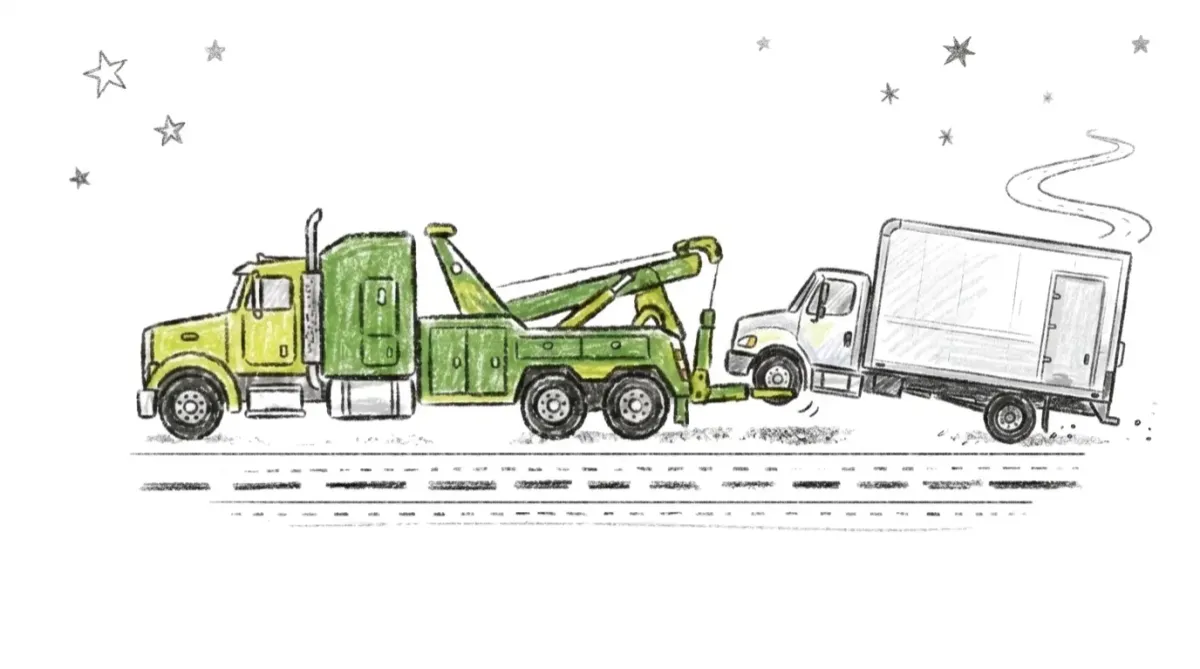
Box Truck & Commercial Vehicle Towing
Professional towing for box trucks, delivery vans and commercial fleet vehicles operating in tight urban areas and loading docks.
What it is:
Safe transport for medium and heavy commercial vehicles needing precise maneuverability.
When you need it:
Disabled delivery trucks
Dock lockouts
Low-clearance failures
Fleet Mechanical breakdowns.
What we handle:
Tight alleyways, loading dock access, low clearances and safe load-handling requirements.
What to prepare:
Proof of ownership (registration, ID)
Vehicle make/model/color
Exact location
How do you handle box trucks disabled in tight Chicago alleys or loading docks?
Our operators use medium and heavy-duty wreckers equipped for tight urban maneuvers, low overhead clearance and precise dock angles without damaging vehicle overhangs or cargo.
Heavy Equipment Towing Chicago
Heavy equipment towing and transport for construction site machinery, job-site industrial equipment and heavy trucks across Chicago.
What it is:
Transport and relocation of heavy job-site equipment, machinery and non-standard heavy vehicles.
When you need it:
Relocating dump trucks, skid steers, loaders or heavy construction machinery between job sites or repair yards.
What we provide:
Heavy-duty transport equipment, proper anchor points and high-weight capacity haulers.
What to prepare:
Proof of ownership (Registration, ID)
Vehicle make/model/color
Exact location
What types of construction equipment and heavy machinery can you transport?
We transport job-site machinery including dump trucks, skid steers, wheel loaders and heavy construction equipment between job sites, yards or repair facilities throughout Chicago and surrounding suburbs.
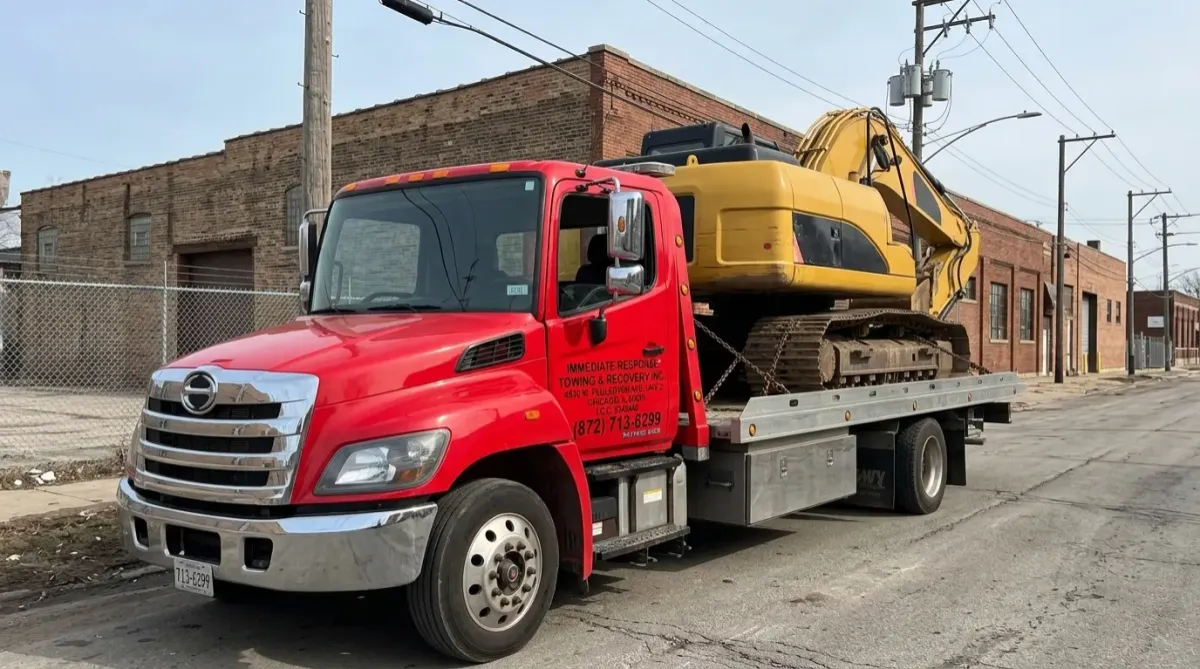
Heavy Equipment Towing Chicago
Heavy-duty transport equipment, proper anchor points and high-weight capacity haulers
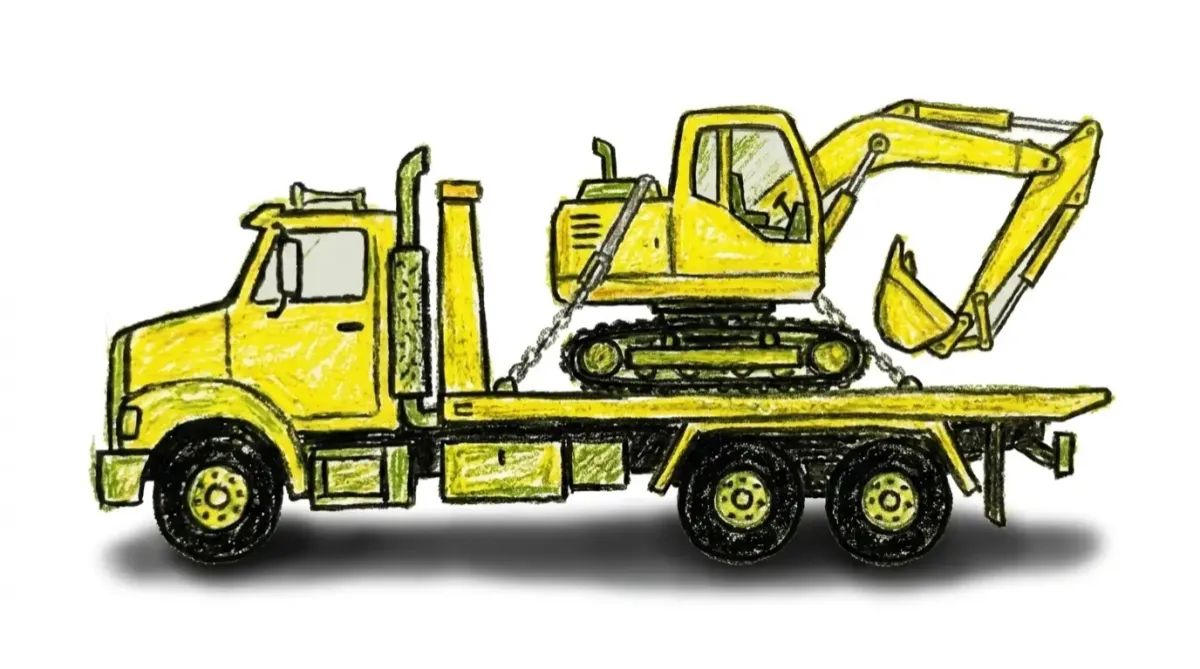
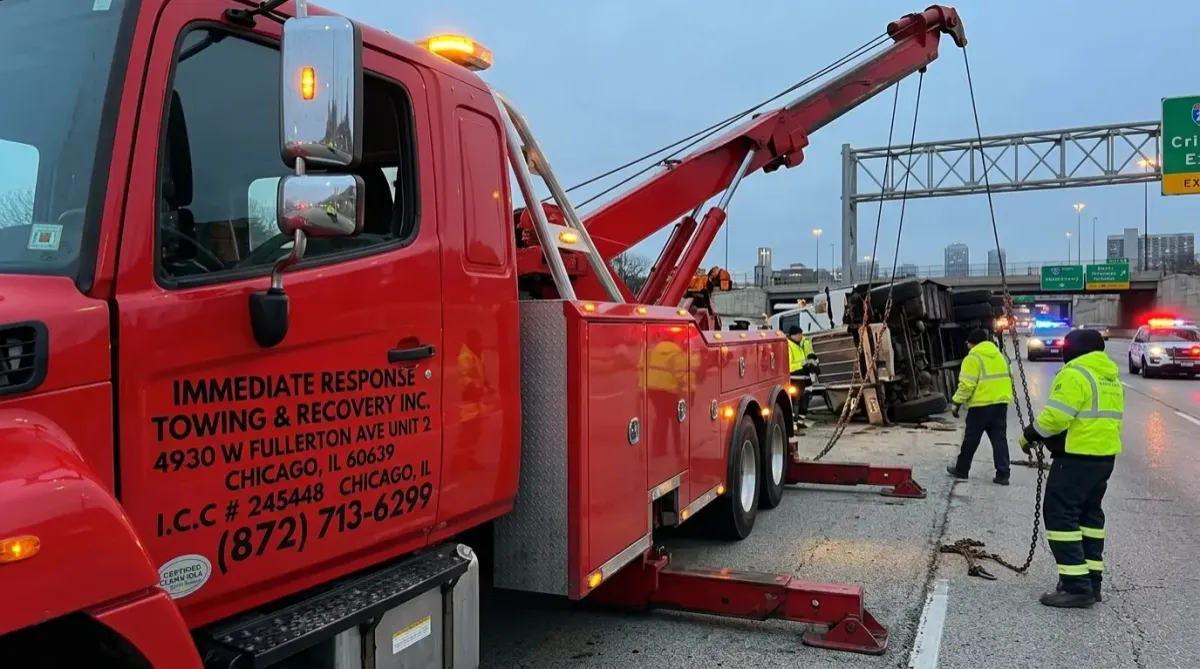
Heavy Truck Accident Recovery
On-scene risk assessment, proper rigging, vehicle stabilization and coordination with emergency crews
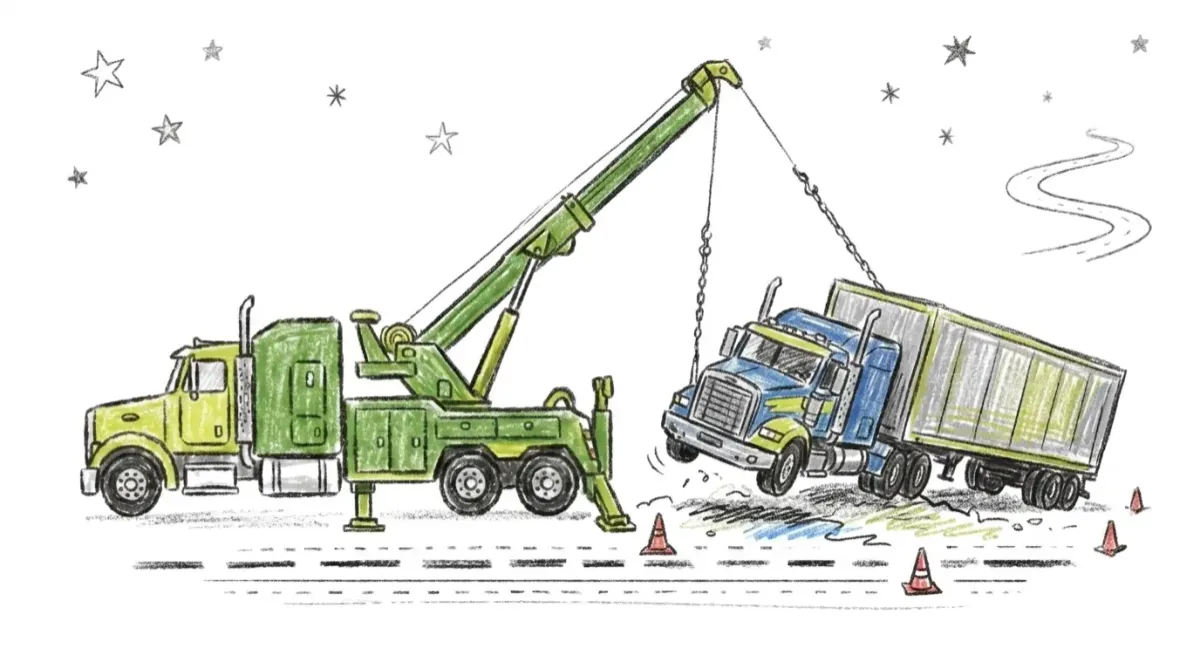
Heavy Truck Accident Recovery
24/7 emergency recovery for jackknifed, overturned, off-road or crash-damaged commercial trucks and trailers.
What it is:
Specialized heavy recovery using heavy wreckers, winches and stabilization rigging.
When you need it:
Rollovers, jackknifed tractor-trailers, ditch recoveries, or trucks stuck in mud/snow at job sites or loading docks.
How we do it:
On-scene risk assessment, proper rigging, vehicle stabilization and coordination with emergency crews.
What to prepare:
Proof of ownership (Registration, ID)
Location and vehicle detail
What should I do if a commercial truck jackknifes or rolls over?
First, call 911 if there are injuries, fires, or leaking hazardous fluids. Once the scene is safe, call our 24/7 dispatch at +1-872-713-6299 for heavy winching, rigging, stabilization, and full accident recovery.
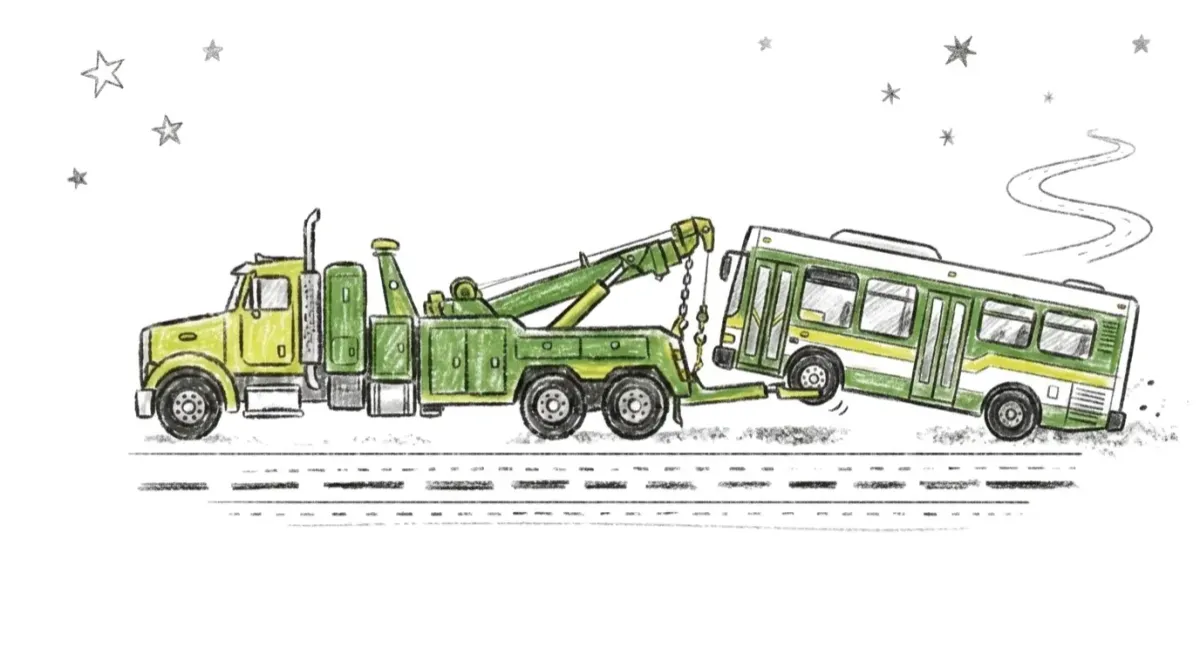
Bus & Municipal Vehicle Towing
Safe towing and recovery for transit buses, school buses, charter buses and municipal fleet vehicles throughout Chicago.
What it is:
Specialized towing designed for extended-length, high-weight passenger and municipal transport vehicles.
When you need it:
Mechanical failure on suburban routes
Tire blowouts
Electrical issues on city streets
What we consider:
Clearance limitations, weight distribution, frame protection and passenger area safety.
What to prepare:
Proof of ownership (Registration, ID)
Exact location and vehicle type
Do you provide towing for charter buses, transit buses and municipal fleets?
Yes. We handle charter buses, school buses, shuttles and municipal transport vehicles with specialized rigging designed to protect extended vehicle length, frame stability and undercarriage clearances.
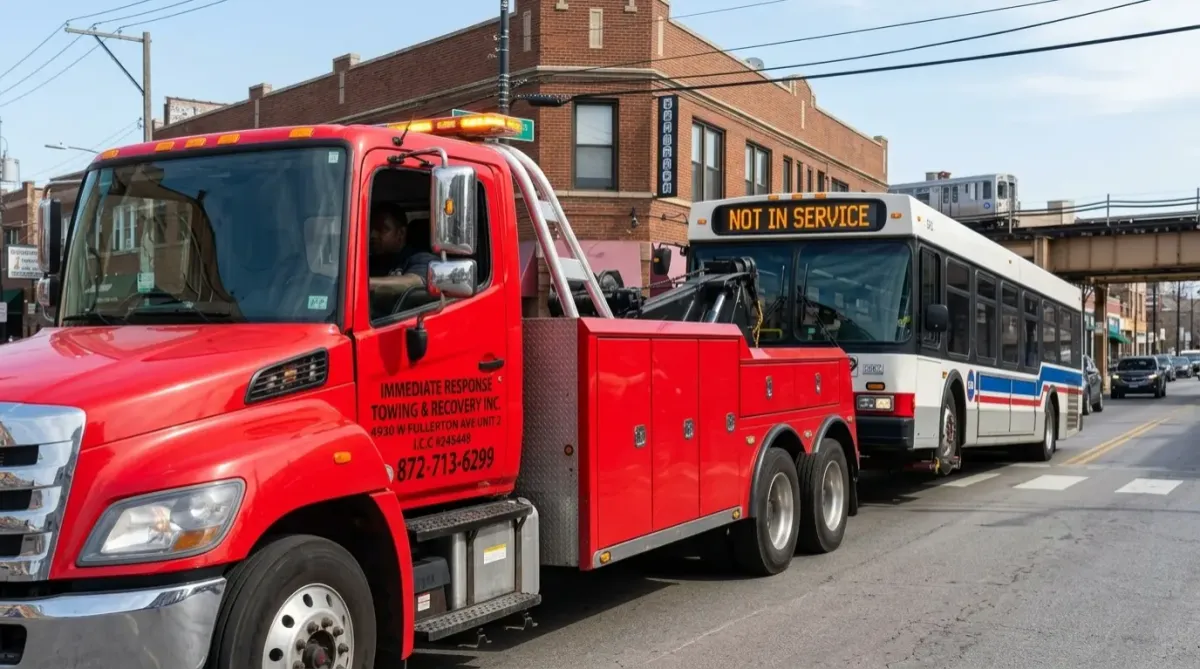
Bus & Municipal Vehicle Towing
Clearance limitations, weight distribution, frame protection and passenger area safety
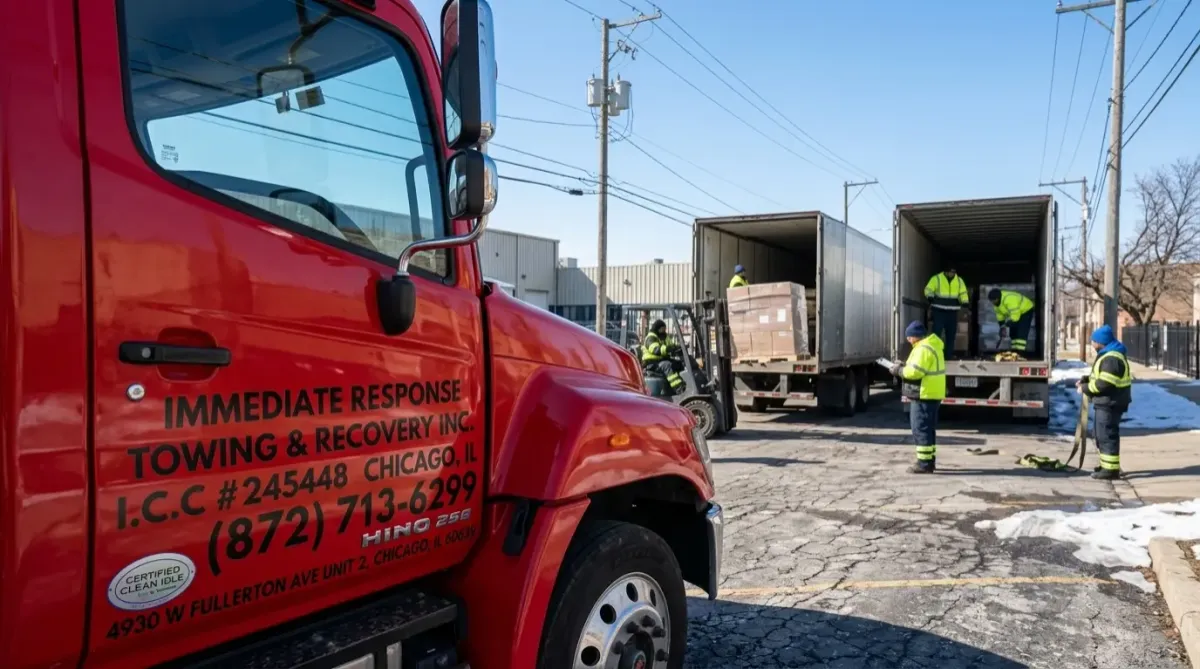
Load Transfer & Cargo Handling
Fleet coordination, safe trailer transfers and secure site management without risking cargo damage
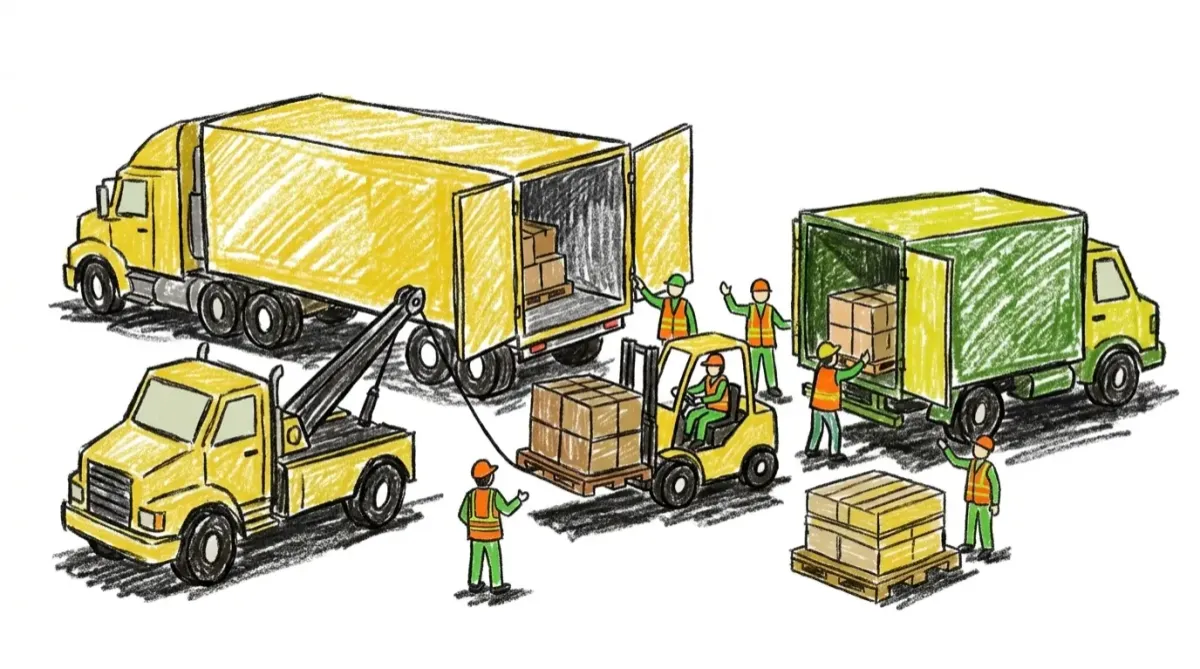
Load Transfer & Cargo Handling
Professional cargo shifts, load transfers and payload stabilization to safely rebalance or unbind heavy freight before towing or recovery.
What it is:
On-site freight management and load rebalancing for overweight or shifted trailer payloads.
When you need it:
Shifted cargo after a sharp turn, jackknife, axle weight violation or prior to lifting/towing a compromised trailer.
What we handle:
Fleet coordination, safe trailer transfers and secure site management without risking cargo damage.
What to prepare:
Destination address
Vehicle details and condition
When is a load transfer required before towing a semi-truck?
A load transfer is required if cargo has shifted dangerously, if trailer weight exceeds safe towing limits, or if lifting an overturned trailer requires reducing payload weight to prevent vehicle or structural damage.
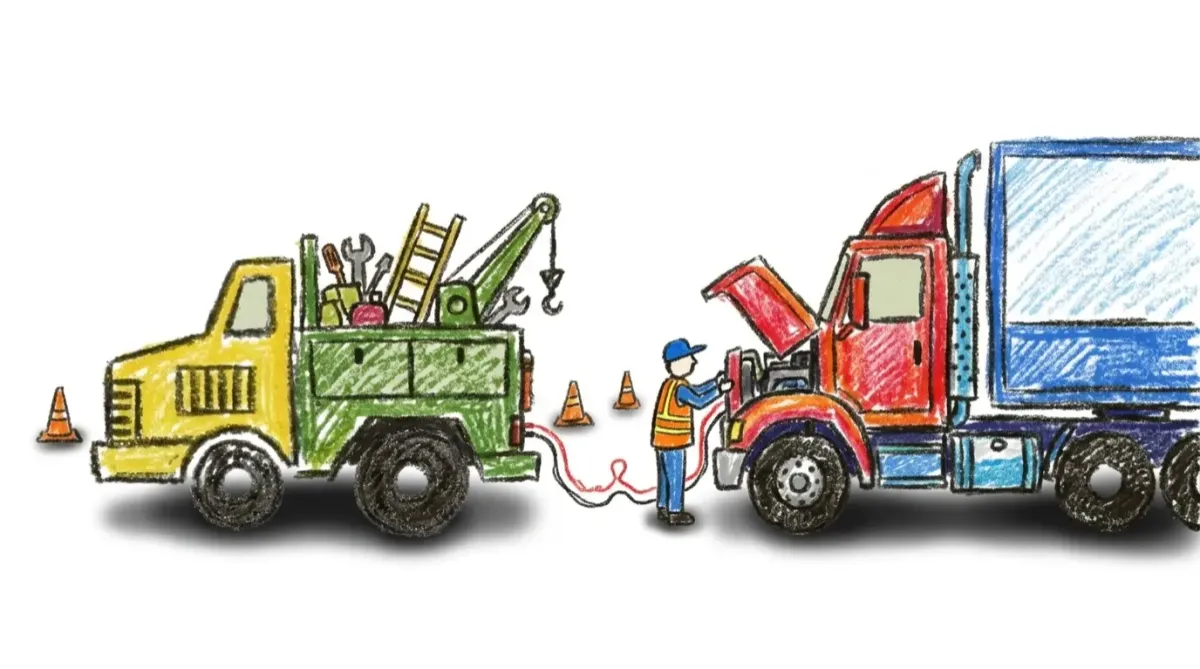
Heavy-Duty Roadside Assistance
Mobile roadside services for commercial trucks to fix minor issues on-site and get your fleet moving without full towing.
What it is:
On-demand roadside support engineered for high-voltage and heavy commercial systems.
When you need it:
Dead commercial batteries needing heavy jump-starts
Commercial lockout
Emergency fuel delivery
What we offer:
24/7 mobile assistance units equipped for commercial vehicle emergency needs.
What to prepare:
Destination address
Vehicle details and condition
Can you jump-start a commercial semi-truck with a dead multi-battery system?
Yes. Our mobile assistance units carry heavy commercial jump-start equipment specifically rated for 12V/24V multi-battery commercial diesel systems to get your rig started on site.
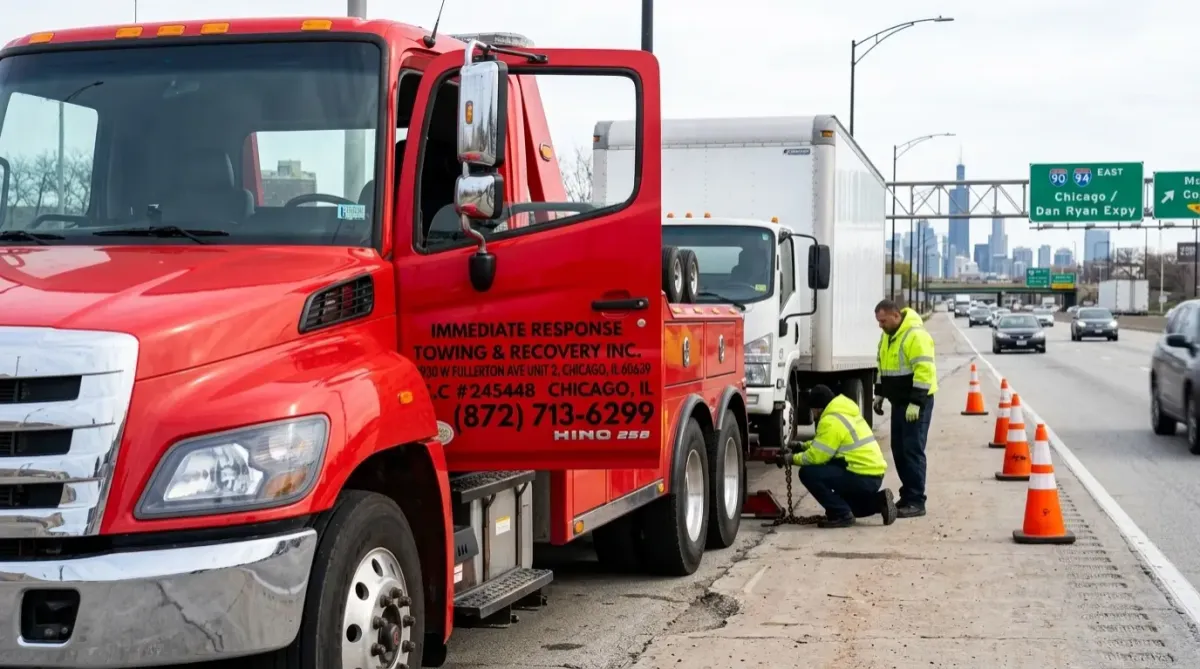
Heavy-Duty Roadside Assistance
24/7 mobile assistance units equipped for commercial vehicle emergency needs
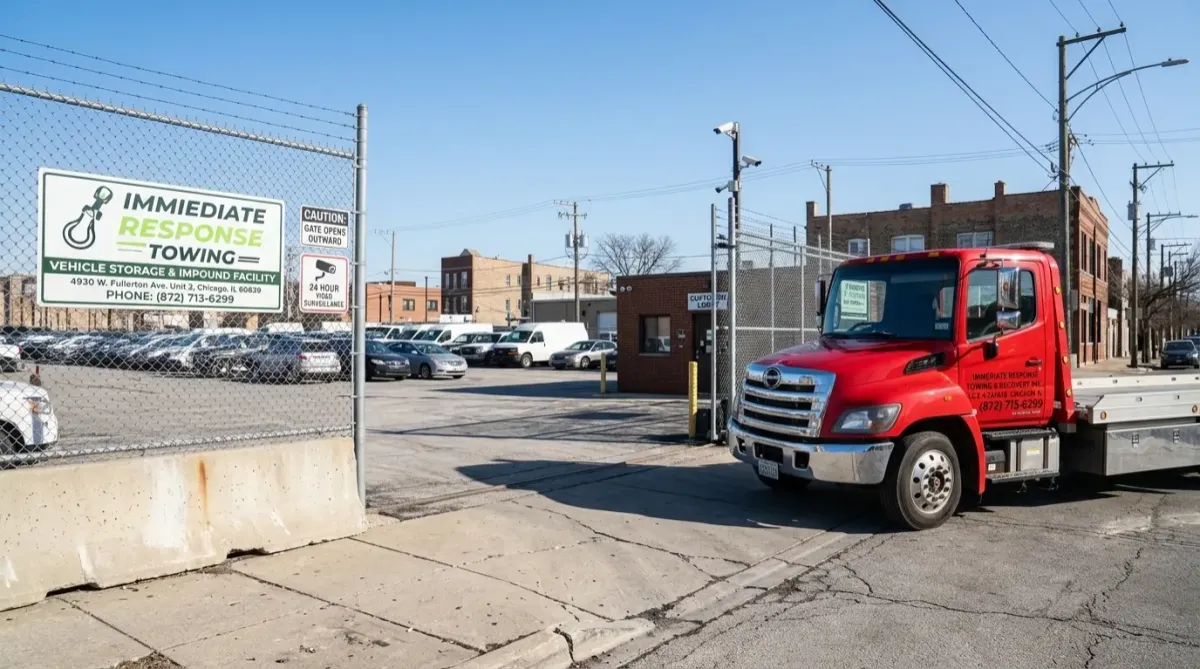
Secure Vehicle Storage Facility
Transparent daily storage rates, simple release protocols and secure access for authorized adjusters and drivers
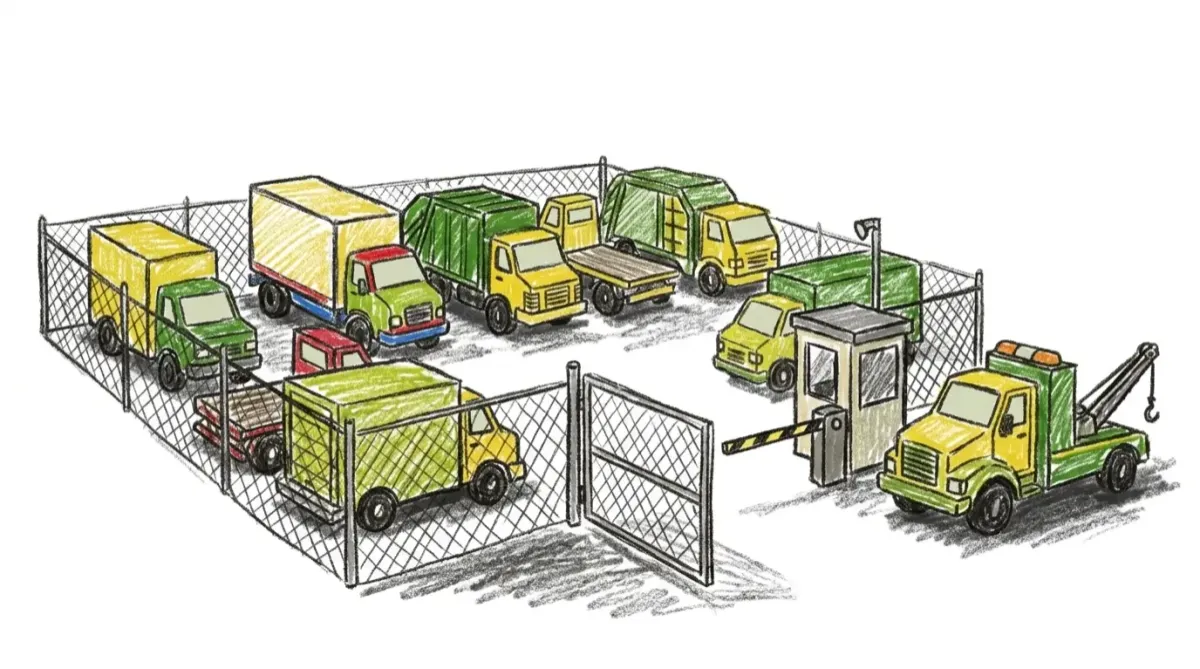
Secure Vehicle Storage Facility
Safe, monitored impound and holding facilities for heavy commercial trucks, trailers, buses and equipment following recovery or breakdown.
What it is:
Gated, insured and monitored vehicle holding yards designed for large commercial rigs and heavy loads.
When you need it:
Post-accident investigations
Insurance processing delays
After-hours breakdowns
Overnight fleet staging.
What we offer:
Transparent daily storage rates, simple release protocols and secure access for authorized adjusters and drivers.
What to prepare:
Destination address
Vehicle details and condition
How do storage fees and vehicle releases work for commercial trucks?
Storage fees accrue on a daily basis, and terms are fully explained prior to vehicle delivery. Vehicles are released to authorized owners, fleet managers or insurance representatives upon receipt of clearance and payment verification.
STEP-BY-STEP: FROM CALL TO ARRIVAL
A SIMPLE & SMOOTH TOWING PROCESS




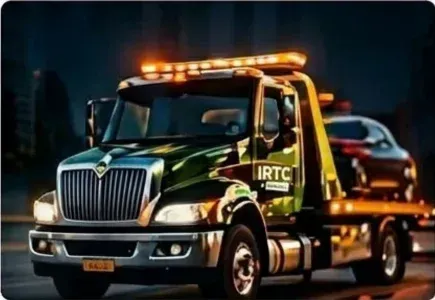

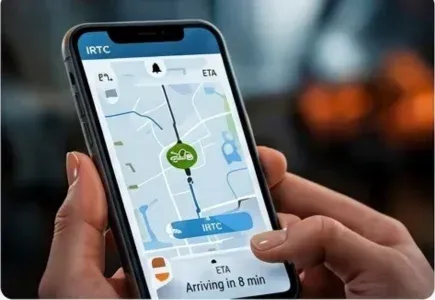
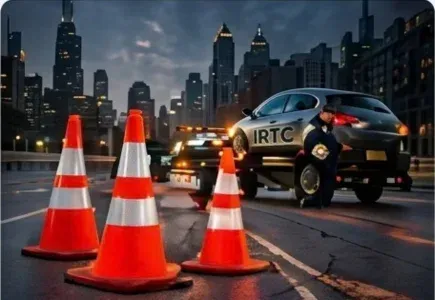

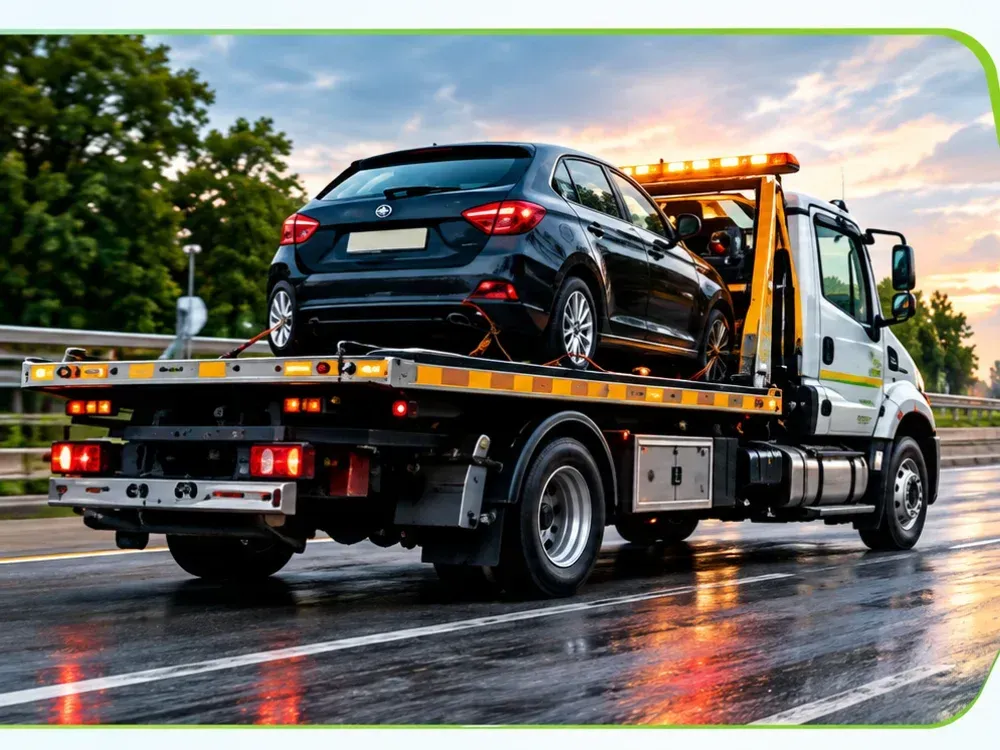
HOW OUR HEAVY-DUTY TOW PROCESS WORKS
Our heavy-duty towing process begins with a detailed dispatch call, followed by scene assessment, safe rigging, recovery or transport, and clear paperwork.
Call or text dispatch: Call +1-872-713-6299 or text your location. Provide the cross street, highway direction, nearest exit, vehicle type and whether the truck is loaded.
Share vehicle and cargo details: Tell dispatch the tractor/trailer type, axle configuration, GVWR if known, damage, tire condition and whether cargo is hazardous, perishable or high-value.
Receive dispatch confirmation: We confirm the service needed, destination if known, and the appropriate heavy-duty response.
On-scene safety assessment: The operator checks traffic exposure, vehicle stability, leaks, cargo shift, ground conditions, overhead clearance and safe recovery points.
Rigging and recovery: The operator uses appropriate chains, straps, recovery points, winching or wrecker equipment based on the vehicle and situation.
Towing or recovery: The vehicle is transported to the repair shop, dealer, fleet yard, storage location or another destination you authorize.
Paperwork and payment clarity: You receive documentation for the service i.e. confirm invoice, payment methods, insurance-billing process and written estimates etc.
Chicago-Specific Roadside Challenges
Winter Conditions & Battery Failures
Chicago's first hard freeze each year triggers a massive spike in dead battery calls. Average January temperatures hover around 30°F, with hard freezes commonly hitting 0°F, accelerating battery wear and electrical issues. Salt corrosion from winter roads compounds the problem year-round.
Tip: Test batteries before November; replace if 3+ years old.
Expressways & Scott's Law (Move Over Law)
Illinois’ Move Over Law, also called Scott’s Law, requires drivers approaching a stationary emergency vehicle with flashing lights to reduce speed, proceed with caution, maintain a safe distance and change lanes when safe. Illinois State Police says the law covers tow trucks and other authorized vehicles displaying flashing lights.
IDOT also notes that drivers must slow down and, when possible, change lanes for emergency, construction, and maintenance vehicles and workers. Illinois' Scott's Law (Move Over Law) requires drivers to slow down and move over for any emergency vehicle with flashing lights; stationary or moving; as of January 1, 2026. Penalties: $250-$10,000 fine (first offense), $750-$10,000 (subsequent), license suspension up to 2 years, and felony charges if injury/death occurs.
Tip: If broken down on I-90/94, I-290, I-55, or Lake Shore Drive, stay in your vehicle with seat-belt on unless you can exit safely away from traffic.
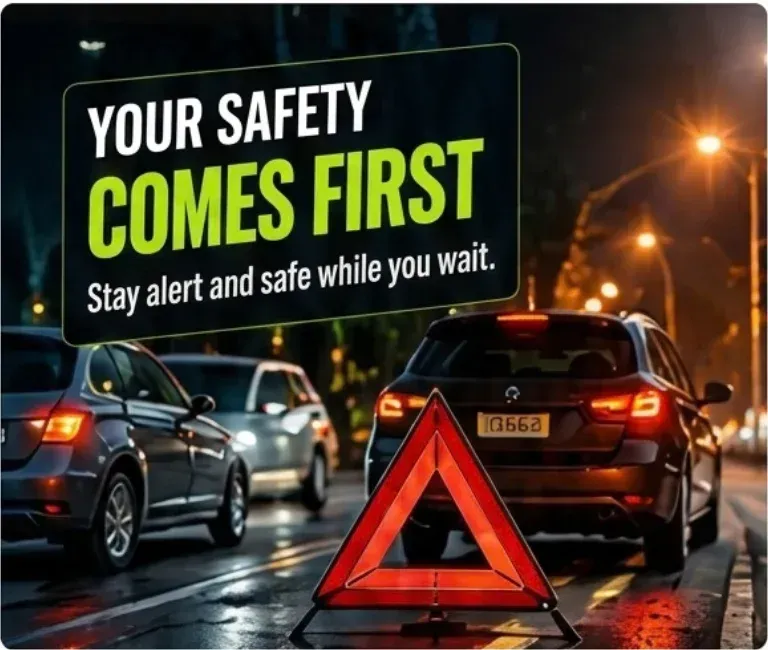
WHAT TO DO WHILE WAITING
SAFETY FIRST
If your heavy truck is disabled on a Chicago highway, move as far from traffic as safely possible, activate hazard lights, set warning devices if required, and stay clear of live lanes until help arrives.
Stay in your vehicle
if you are on a busy road or expressway shoulder; exiting
puts you at risk of being
struck by passing traffic

Turn on hazard lights
If safe, place a reflective triangle or flare behind your vehicle.
Do not stand
on the shoulder
Do not stand on the shoulder or attempt repairs in traffic lanes; IDOT's Emergency Traffic Patrol ("Minutemen") specifically warns against this on Chicago expressways

On expressways
If you are on an expressway (Dan Ryan, Kennedy, Eisenhower, etc.), IDOT's Minutemen may arrive first to clear hazards, but they do not tow; they will help you stay safe until a private tow truck arrives.
Keep doors locked
Keep doors locked and windows up if you feel unsafe; our dispatcher can share the driver's name, truck number, and live ETA for peace of mind

Winter weather
Chicago's expressways see high-speed traffic year-round, and winter weather (December-February) increases breakdown volume by up to 40%, making roadside safety critical.
TYPES OF TOW TRUCKS AVAILABLE IN CHICAGO
AND WHEN EACH IS USED
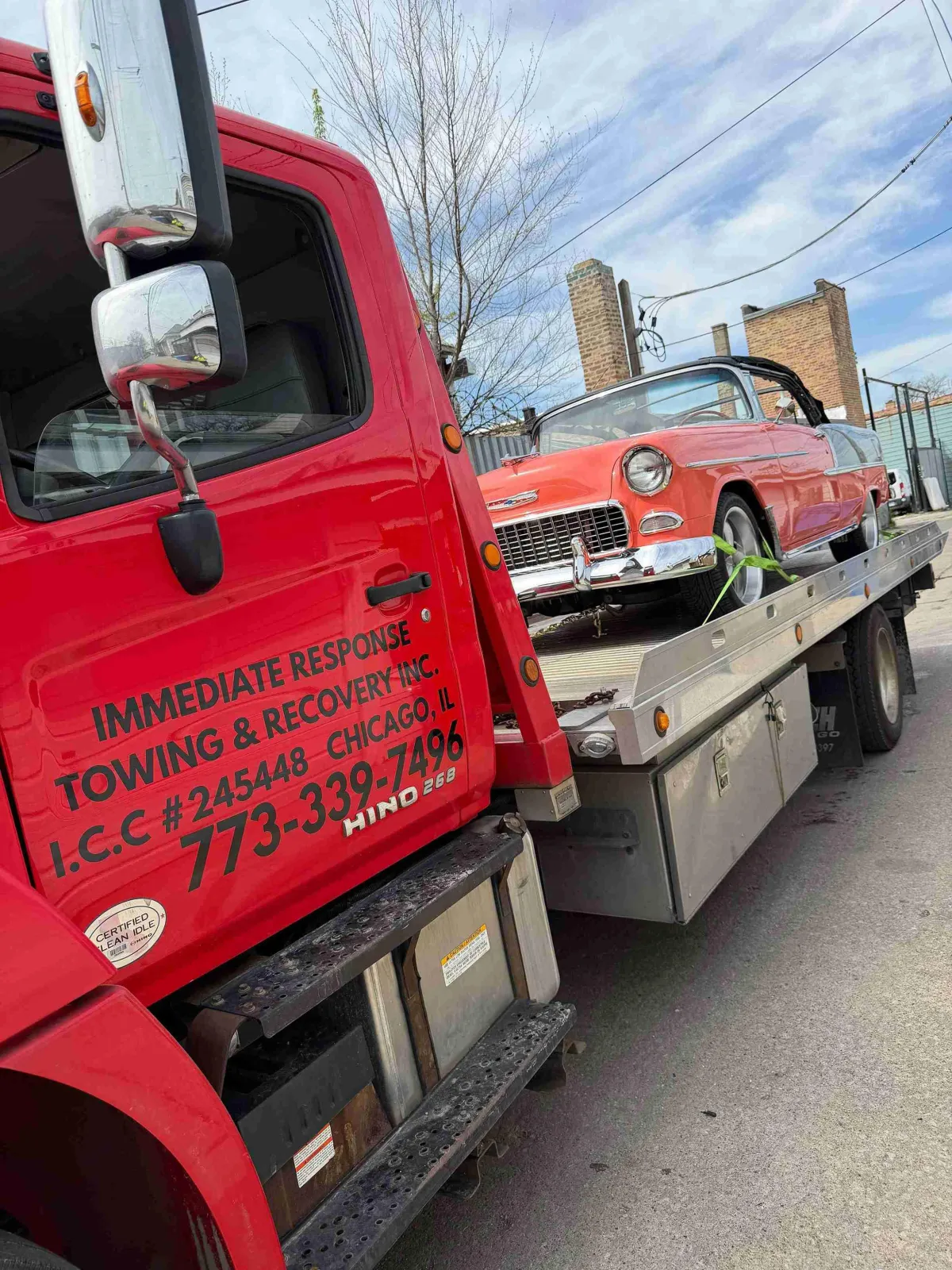
FLATBED TOWING
BEST FOR AWD, 4WD,
MOTORCYCLES & LUXURY CARS
How it works: The entire vehicle is driven or winched onto a level bed, then strapped down; no wheels touch the road during transport. For more details, please visit flatbed service page
Best for: All-wheel-drive (AWD) or 4WD vehicles (to avoid drivetrain damage), motorcycles, low-clearance sports cars, and vehicles with suspension/steering damage
Typical Chicago cost: $100-$175 for a short local tow (5 miles or less); longer distances add $3-$5 per mile.
TYPICAL CHICAGO COST : $100-$175 (5 Miles or less)
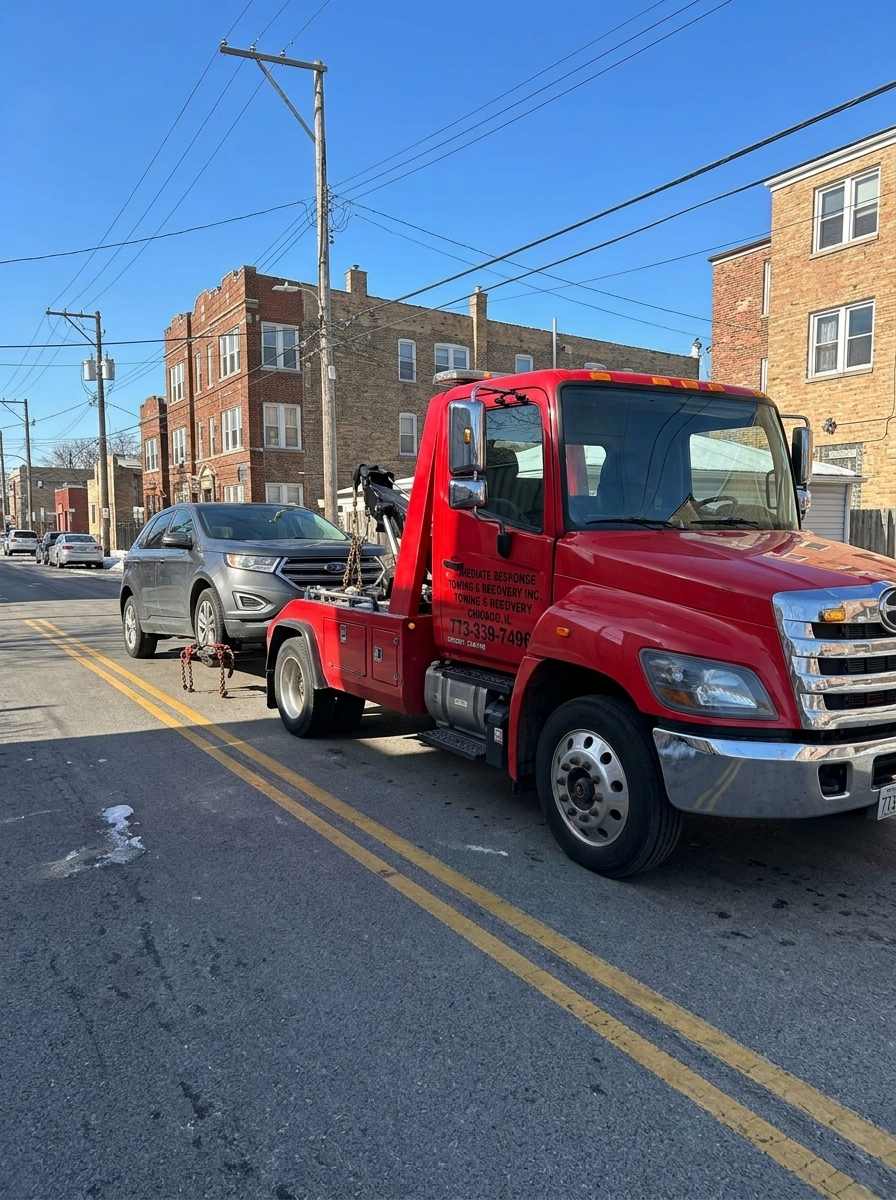
WHEEL LIFT TOWING
STANDARD FOR MOST PASSENGER CARS
How it works: A metal yoke lifts either the front or rear wheels off the ground while the opposite axle rolls; faster and more maneuverable in tight urban spaces.
Best for: Best for: Standard 2WD cars and light trucks in good running condition; not recommended for AWD/4WD unless the driveshaft is disconnected (which most drivers cannot do safely)
Typical Chicago cost: $75-$125 for the first 3-5 miles, then $4-$10 per additional mile depending on the provider.
TYPICAL CHICAGO COST : $75-$125 (First 3-5 Miles)
WHICH SHOULD YOU REQUEST?
Choose the right tow truck based on your vehicle and situation
| Vehicle Type | Recommended Truck | Why |
|---|---|---|
| AWD/4WD SUV or Crossover | Flatbed | Prevents drive-train binding and transmission damage |
| Motorcycle | Flatbed | Wheels must not touch the road; balance and stability are critical |
| Standard 2WD Sedan | Wheel-Lift or Flatbed | Both work; flatbed is gentler but may cost slightly more |
| Disabled Vehicle (would not roll) | Flatbed with Winch | Wheel-lift requires rolling wheels; winch-equipped flatbeds can pull non-running cars |
| Low-Clearance Sports Car | Flatbed | Avoids scraping front bumper or undercarriage |
Sevice Area
Chicago Wide Coverage
Immediate Response Towing Chicago provides heavy-duty towing across Chicago, including major expressways, industrial corridors, and surrounding areas.
HEAVY-DUTY TOWING COVERAGE ACROSS CHICAGO
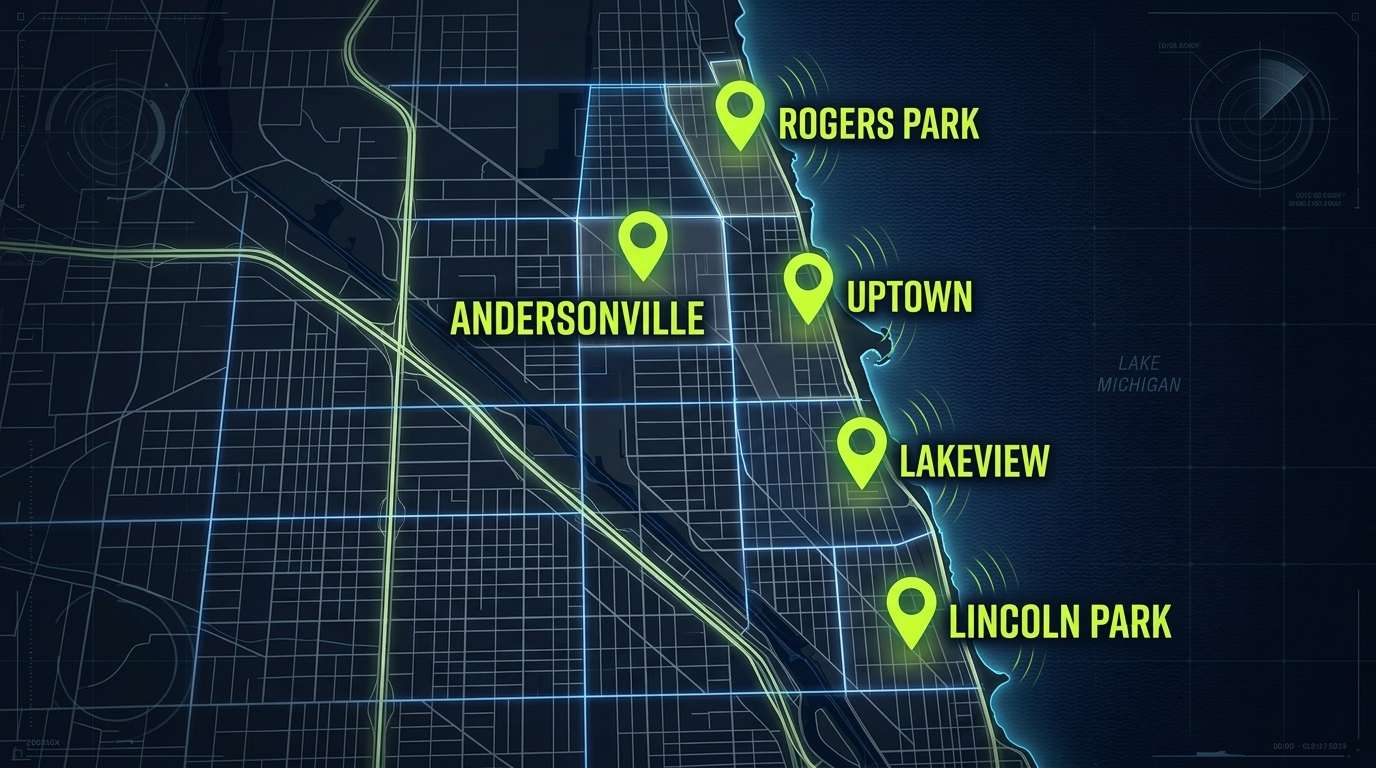
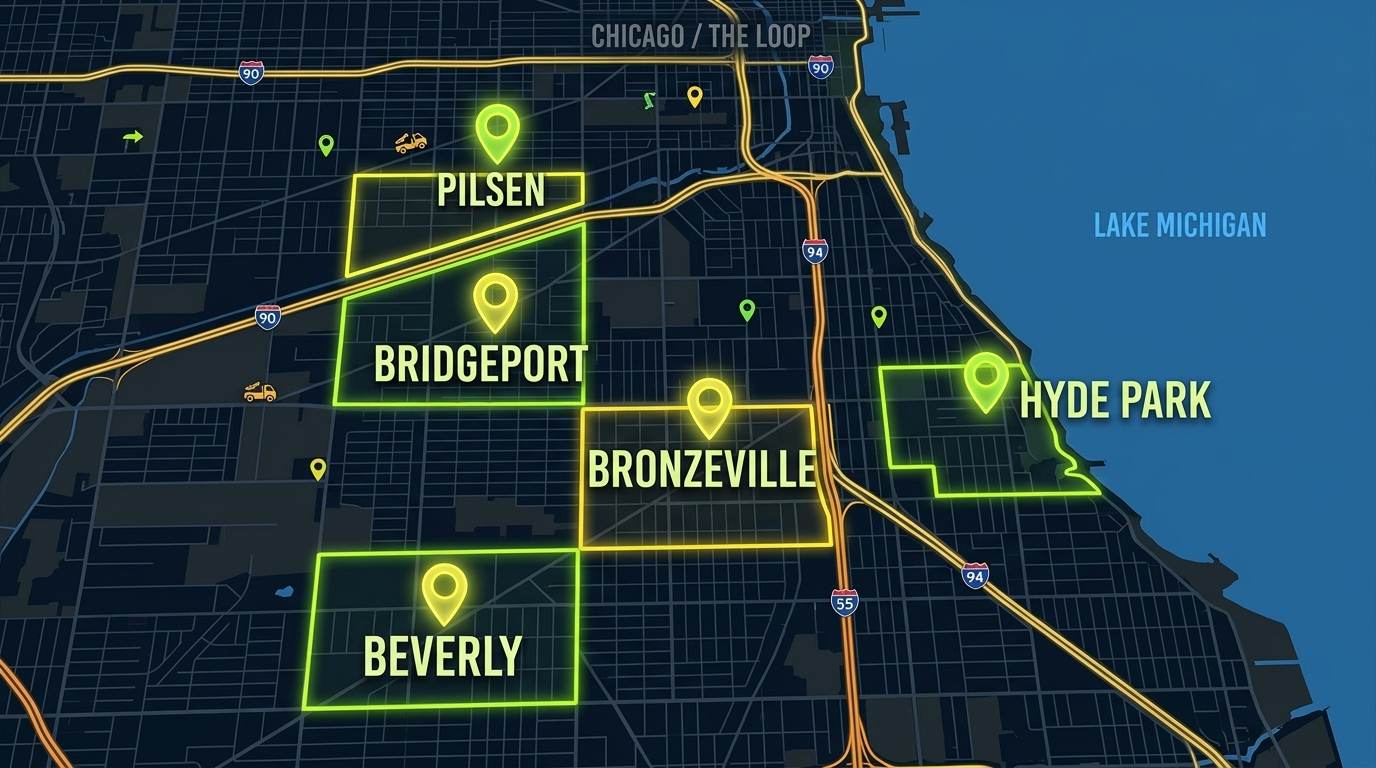
We serve all Chicago neighborhoods: Loop, River North, Lincoln Park, Wicker Park, Logan Square, Hyde Park, South Loop, O'Hare area, Midway vicinity and suburbs. High-call zones include downtown (parking garages, tight streets), lakefront (Lake Shore Drive), and airport corridors (I-90 to O'Hare, I-55 to Midway).
CHICAGO AREAS WE SERVE
Near North Side, Loop, River North and downtown Chicago.
West Side neighborhoods including Humboldt Park, Belmont Central and areas near the company’s Fullerton Avenue location.
Southwest Side and industrial corridors, including Little Village, Pilsen, Brighton Park and Archer Heights.
Southeast Side industrial and freight areas.
O’Hare-area freight and logistics corridors.
SUBURBS AND SURROUNDING COMMUNITIES
Suburbs which are served are such as Cicero, Berwyn, Oak Park, Elk Grove Village, Schiller Park, Franklin Park, Melrose Park, Stickney, Summit, Bedford Park, Burbank and others.
North Side
Lincoln Park
Lakeview
Rogers Park
Uptown
Andersonville
West Side
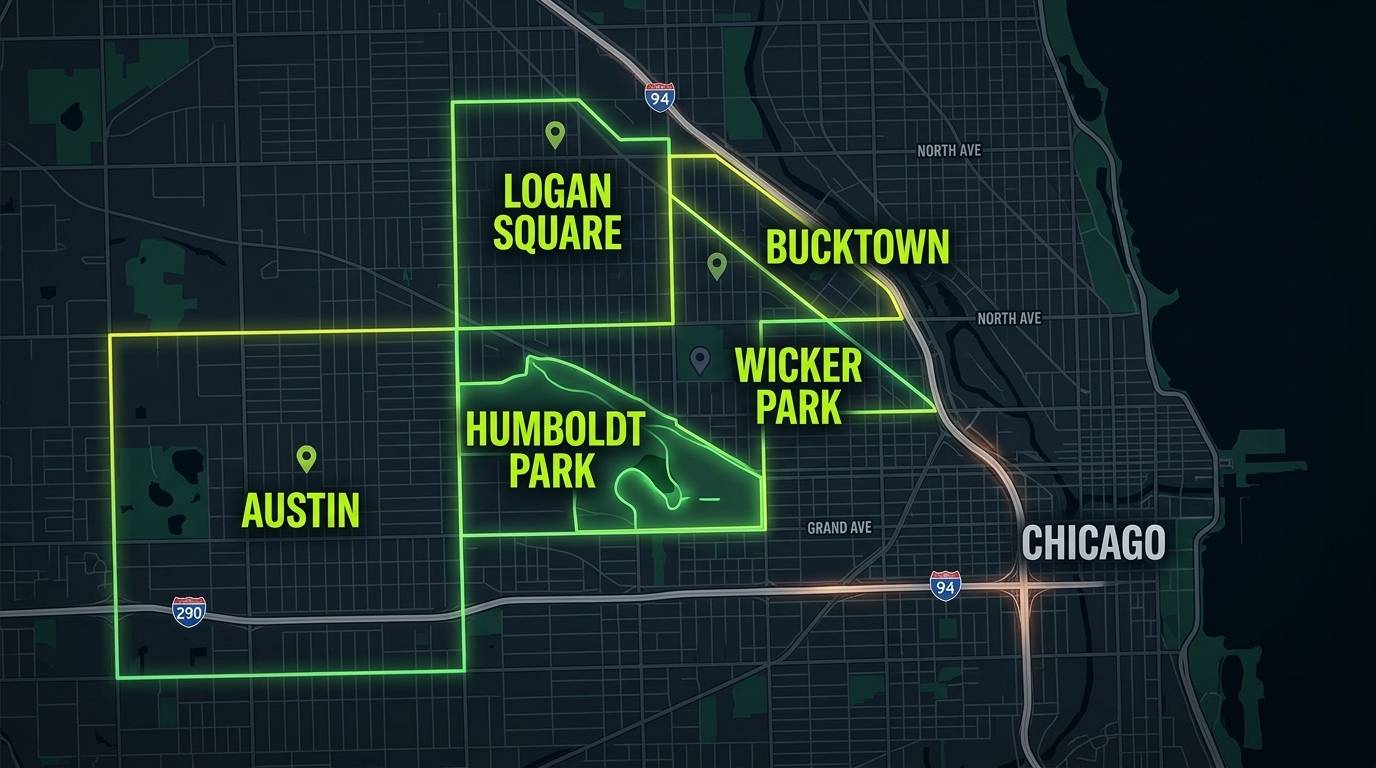
Wicker Park
Bucktown
Logan Square
Humboldt Park
Austin
South Side
Hyde Park
Bronzeville
Pilsen
Bridgeport
Beverly
Expressways
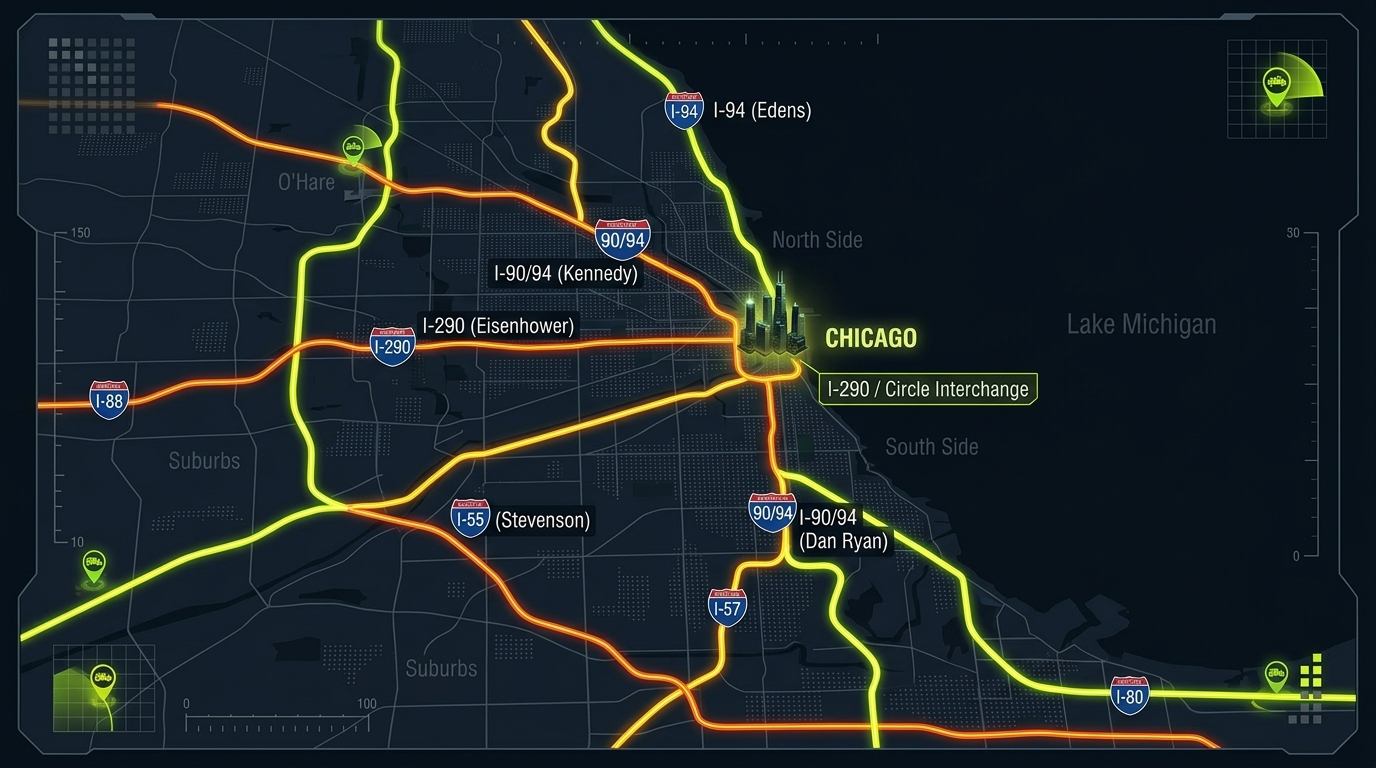
I-90/94 (Dan Ryan/Kennedy Expressway)
I-290 (Eisenhower Expressway)
I-55 (Stevenson )
I-94 (Edens / Bishop Ford corridor)
I-290 (Circle Interchange)
I-88, I-57, I-80
Lake Shore Drive
Lower Wacker Drive
Note: We do not tow outside Chicago city limits unless pre-arranged; for suburban destinations, confirm pricing and availability with the dispatcher before booking
HEAVY-DUTY TOWING COST IN CHICAGO (Transparent Pricing)
Heavy-duty towing cost in Chicago depends on vehicle weight, recovery complexity, distance, time of day, equipment required, and whether winching, load transfer or storage is needed.
There is no single fair price for every heavy-duty tow. A straightforward transport differs greatly from an overturned tractor-trailer recovery, a winch-out at a construction site, or a bus recovery in a tight urban area.
Average Chicago Towing Rates (2026 Data)
| Service Type | Typical Cost Range | Notes |
|---|---|---|
| Local Tow (up to 5 miles) | $75-$125 | Base hook-up fee + first 3-5 miles included |
| Per-Mile Rate (beyond included distance) | $3-$10/mile | Varies by provider; flatbeds often charge more |
| After-Hours Surcharge (11 PM-7 AM) | +$20-$50 | Some companies charge premium rates overnight |
| Flatbed Tow (short distance) | $100-$175 | Recommended for AWD, motorcycles, luxury cars |
| Winch-Out/Recovery (if vehicle is stuck off-road) | $150-$450 | Depends on complexity and equipment needed |
| Motorcycle Towing | $100-$190 | Requires specialized flatbed or trailer |
FACTORS THAT AFFECT HEAVY-DUTY TOWING COST
Vehicle class and weight: A loaded tractor-trailer requires more equipment and planning than an empty box truck.
Recovery complexity: Rollovers, jackknifes, off-road recoveries, and vehicles in ditches require more time and specialized rigging.
Distance: Mileage to the repair shop, dealer, fleet yard or storage facility affects the total.
Time and conditions: After-hours calls, severe weather, traffic incidents and limited access can increase labor time.
Equipment required: Heavy wrecker, rotator, lowboy, air cushions or additional recovery units affect cost.
Winching and recovery labor: Winch-outs, stabilization and multi-unit recoveries are usually priced differently from a simple tow.
Cargo handling: Load shifts, load transfers, refrigerated loads and hazmat-related restrictions can require additional coordination.
Storage: Daily storage may apply if the vehicle remains at a yard. Chicago’s published municipal impound information lists $50 per day for vehicles, 8,000 lbs or more, up to a $1,000 maximum, but that applies to City-related towing/storage; not automatically to private heavy-recovery jobs.
Request a Transparent Quote
Call +1-872-713-6299 and ask for a clear explanation of;
Base service or hook-up charge
Mileage or distance charge
Recovery, winching, or labor charges
After-hours, weekend, or holiday charges
Equipment charges for a rotator, lowboy or additional unit
Storage fees and release process
Accepted payment methods
Whether insurance billing or direct billing to a fleet account is available
Questions To Ask Any Heavy Towing Company
What is included in the quoted price?
Is the quote for towing only, or does it include recovery labor?
What equipment will be sent for my vehicle?
Are there additional charges if the job takes longer than expected?
Where will the truck be taken, and who authorizes the destination?
Can you provide an itemized invoice?
How To Choose a Legitimate Heavy-Duty Tow Company
Choose a heavy-duty tow company that can clearly explain its credentials, equipment, pricing, insurance and safety process before you authorize the job.
Heavy-duty towing affects safety, cargo, business downtime and significant expense. Ask direct questions before allowing a company to hook up your truck.
Credentials To Verify
Company identity: Confirm the business name, phone number, and physical service location.
Licensing and registration: Ask for applicable Illinois towing/relocator registration and commercial operating details. The ICC states that commercial vehicle safety relocators conducting damaged or disabled vehicle relocations in Cook, DuPage, Kane, Will, and Winnebago counties must register with the Commission.
Insurance: Ask for proof of commercial auto, on-hook/cargo, and general liability coverage appropriate for heavy-duty work.
Equipment suitability: Ask whether the company has the correct wrecker, underlift, winch, rigging, and transport equipment for your vehicle class.
Operator training: Ask whether operators hold industry training or certification. TRAA and WreckMaster operate the Towing & Recovery Operator Certification Program (TROCP), but you should only advertise certification if your operators actually hold it.
Written pricing: Request a clear explanation of charges before authorizing service.
Professional conduct: A legitimate operator should identify the company, explain the plan, and avoid high-pressure tactics.
Red Flags
Refusal to explain pricing components.
No clear business name or contact information.
Pressure to authorize immediate extra services.
Unclear destination for the truck or cargo.
No explanation of insurance, storage, or release procedures.
Claims of hazmat cleanup or specialized cargo services without proper training or authorization.
WHY CHICAGO DRIVERS AND FLEETS CALL US
Chicago drivers, dispatchers, and fleet managers call Immediate Response Towing Chicago for 24/7 heavy-duty dispatch, clear communication, and commercial recovery support.
24/7 availability: Heavy-truck problems do not follow business hours.
Chicago-based dispatch: The company operates from 4930 W Fullerton Ave Unit 2, Chicago, IL 60639.
Commercial-vehicle focus: We handle semi-trucks, tractor-trailers, box trucks, buses and heavy equipment.
Clear dispatch process: We gather location, vehicle, cargo, and access details before dispatch.
Fleet and logistics support: We can work with dispatchers, fleet managers, repair facilities, and insurance contacts
Note: This page is reviewed and updated regularly to reflect current Chicago towing safety data from IDOT, AAA and local traffic reports. Last updated: October 20, 2026
Disclaimer: This page provides general information about towing services and local parking regulations. It is not legal advice. For emergencies, call 911. Towing fees, response times and availability vary based on conditions. Verify all licensing and insurance information directly with our office.
WHAT OUR CUSTOMERS SAY
FAQ'S
HEAVY-DUTY TOWING CHICAGO
How much does heavy-duty towing cost in Chicago?
Heavy-duty towing cost depends on vehicle weight, distance, recovery complexity, equipment needed, time of day, and storage. A basic transport costs less than a rollover recovery, winch-out, or multi-unit recovery. Call +1-872-713-6299 for a quote based on your exact situation.
How fast can a heavy-duty tow truck reach me?
Response time depends on your exact location, traffic, weather, equipment availability, and the type of recovery required. We do not promise a fixed arrival time; call dispatch at +1-872-713-6299 for current availability and an estimated arrival window.
Do I need a rotator for my truck?
A rotator is usually considered for complex recoveries such as overturned trailers, severe jackknifes, difficult lift points, or limited-access scenes. Many breakdowns and standard tows do not require one. Dispatch will determine the appropriate equipment after reviewing your vehicle and scene details.
Can you tow a loaded semi-truck?
Yes, loaded semi-trucks can often be towed, but cargo weight, axle configuration, load shift, and destination affect the plan. Tell dispatch whether the trailer is loaded and what type of cargo it carries.
What happens if my cargo is hazardous?
If cargo may be hazardous, leaking, smoking, or involved in a fire, call 911 first. Towing companies should not perform hazardous-material cleanup unless they are properly trained, equipped, and authorized. We can coordinate towing after emergency responders determine the scene is safe.
Do you bill insurance directly?
Insurance billing may be available depending on the insurer, claim type, and authorization. Ask dispatch before service begins, and keep your claim number, policy details, and repair-shop information available.
Do you provide service after hours?
Yes. Immediate Response Towing Chicago provides heavy-duty towing and commercial roadside assistance 24/7. Call +1-872-713-6299 at any hour for dispatch.
Can you help with a truck accident in Chicago?
Yes, we provide heavy truck accident recovery and towing. If there are injuries, fire, leaking fluids, or hazardous materials, call 911 first. Once the scene is safe, we can assist with recovery and transport.
What is the difference between a breakdown and an accident tow?
A breakdown tow usually involves a mechanical failure, tire issue, electrical problem, or other non-collision disablement. An accident tow may involve collision damage, recovery, stabilization, police involvement, insurance documentation, and possible storage.
Where will my truck be taken?
You may direct the truck to your preferred repair shop, dealership, fleet yard, or another authorized destination when practical. If no destination is provided, dispatch will discuss available storage or repair options before the vehicle is moved.
Do you serve Chicago suburbs?
Suburbs which are served are Cicero, Berwyn, Oak Park, Elk Grove Village, Schiller Park, Franklin Park, Melrose Park, Stickney, Summit, Bedford Park, Burbank and others.
What information should I give when I call?
Provide your exact location, direction of travel, nearest exit or cross street, vehicle type, axle configuration, whether the truck is loaded, cargo type, damage, and destination if known. This helps dispatch send the right heavy-duty equipment.
WHAT OUR CUSTOMERS SAY
PROUDLY SERVING
CHICAGO &
SURROUNDING AREAS
From downtown to the suburbs,
we've got you covered.

Chicago
Evanston
Skokie
Cicero
Oak Lawn
and more!
PROUDLY SERVING
CHICAGO AND SURROUNDING AREAS
From downtown to the suburbs,
we've got you covered.

Chicago
Evanston
Skokie
Cicero
Oak Lawn
and more!
DON'T WAIT.
JUST CALL.
Fast help is closer than you think.
872-713-6299
24/7 Emergency Service
OUR AVERAGE
RESPONSE TIME
DON'T WAIT .JUST CALL.
Fast help is closer than you think.

872-713-6299
24/7 Emergency Service
OUR AVERAGE RESPONSE TIME




SERVICES
All Towing Services
Roadside Assistance
Junk Cars For Cash
Local & Lond Distance Towing
Accident Recovery
CONTACT US



SERVICES
All Towing Services
Roadside Assistance
Junk Cars For Cash
Local & Long Distance Towing
Accident Recovery